Andrew Todd Marcus
Teaching

Andrew Todd Marcus

Design educator · 25 years teaching design and building the systems that let others teach it

I have taught design for twenty-five years, to first-year architecture students and thesis candidates, to middle and high school students at NuVu, and to the teachers who run programs of their own. The studios here represent four approaches. Design learning systematized as an intuitive unfolding, so that non-designers arrive at the iterative process and at critical thought. Collaboration with subject experts far from design, so that the design process can be turned on emerging technologies. Complex ideas from critical theory put in front of young people. And a long-standing interest in accessible and empathic design, from the conceptual to the built: design as advocacy.

A sample of studios

I conceived of, designed, coordinated, and led or oversaw each of these studios. Teaching and subject-matter-expert collaborators are indicated.

Jump todesigning meaningdesign senseafter playbreaking breadbioreactorsvideo gamesvideoscatalystadditionalrecord
Studios
designing meaningdesign senseafter playbreaking breadbioreactorsvideo gamesvideoscatalystadditionalrecord
IImage & Line
The subject5 lines20–30 lines50+ lines
IIEmotion & Shape
Emotion in closed shapes, oneEmotion in closed shapes, two
IIIPoem & Text
Ozymandias, re-setOzymandias, re-setOzymandias, re-set
IVMusic & Narrative
In progressFour states"To You," Andy Shauf
VForm Making & Methods
Confusion, fear, trust, aweThe cohort's objects
VIRule-Based Systems
The objectInstructions, drawnInstructions, notatedInstructions, writtenScored
VIIRedesigning the Politics of Chess
Subtle IndividualityPrecedentWhat each piece holdsIn handGame of KingsPawns of the GovernmentContemporary BiasPartisan Fracture

NuVu Studio, Cambridge · Fall 2018 · prototype introductory design course · 10 days · designed with James Addison · I conceived of, designed, prepared, and oversaw the execution

A studio for students who could already fabricate but had never been taught to design. NuVu's long-term students arrived proficient in process and tools; this prototype gave them the foundations. It was built as a model studio for NuVuX partner programs and as a training studio for curriculum designers, and it became a core studio, adapted since for students and for teachers. Seven exercises, each a day or two, each answering a piece of three questions: What is design? How do we design? How does design shape our world?

I
Image & Line

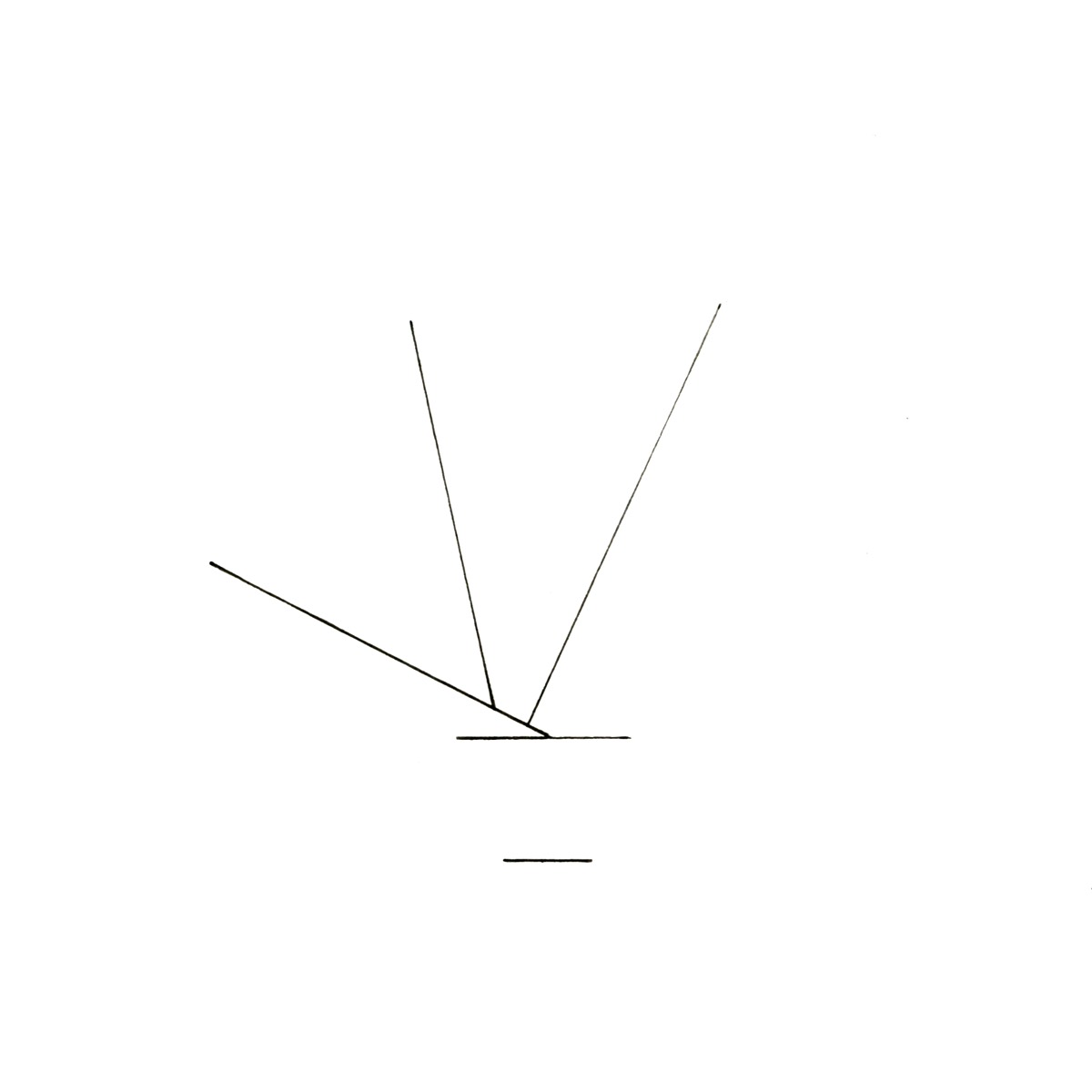
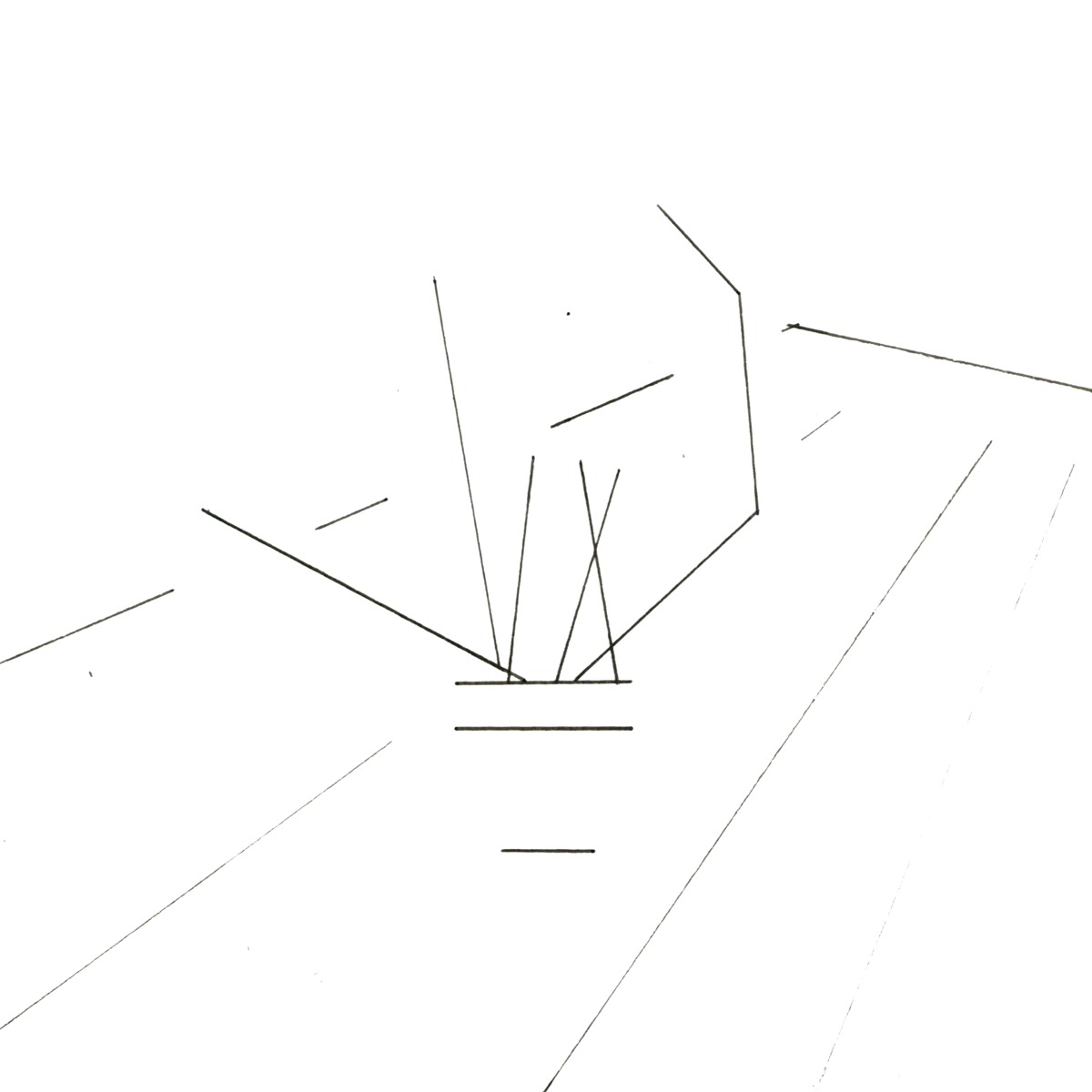
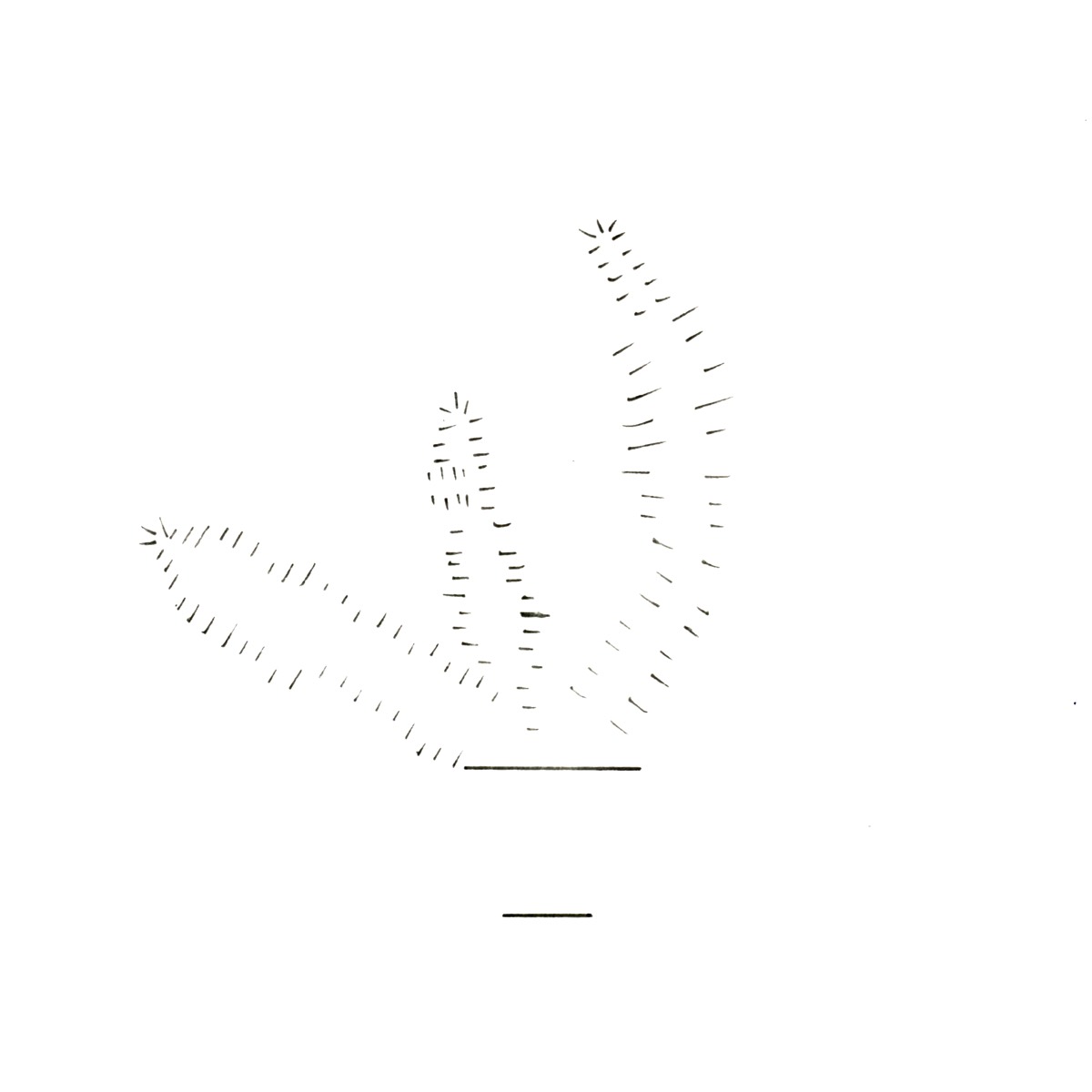
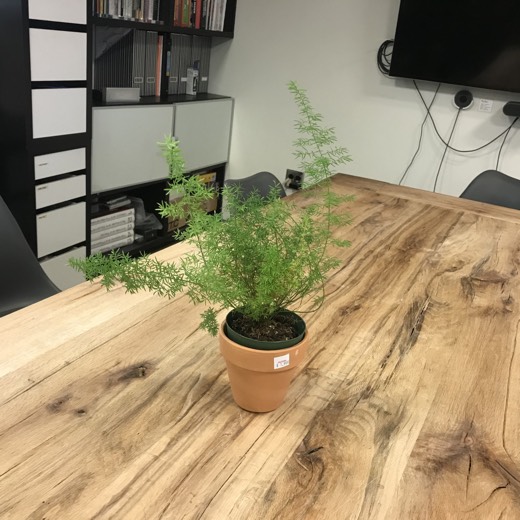
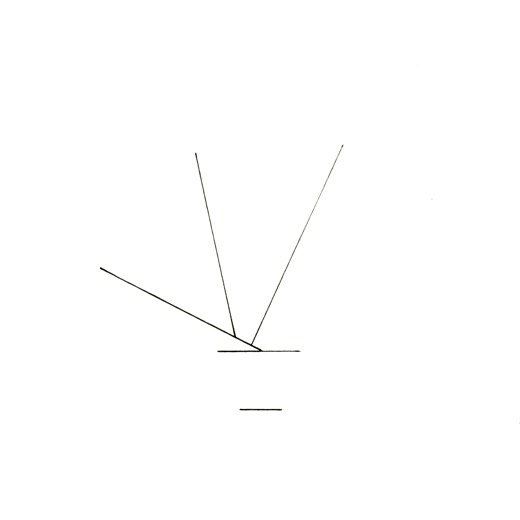
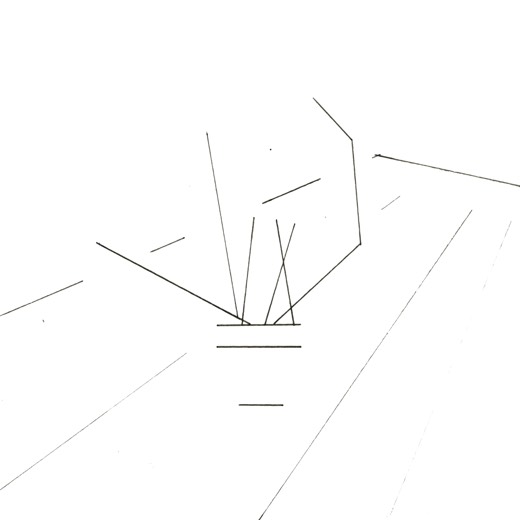
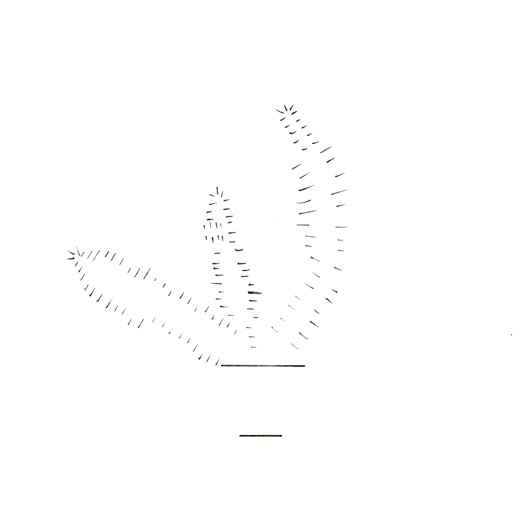
Abstract a photograph into three line drawings: 5 lines, 20–30 lines, 50 or more.
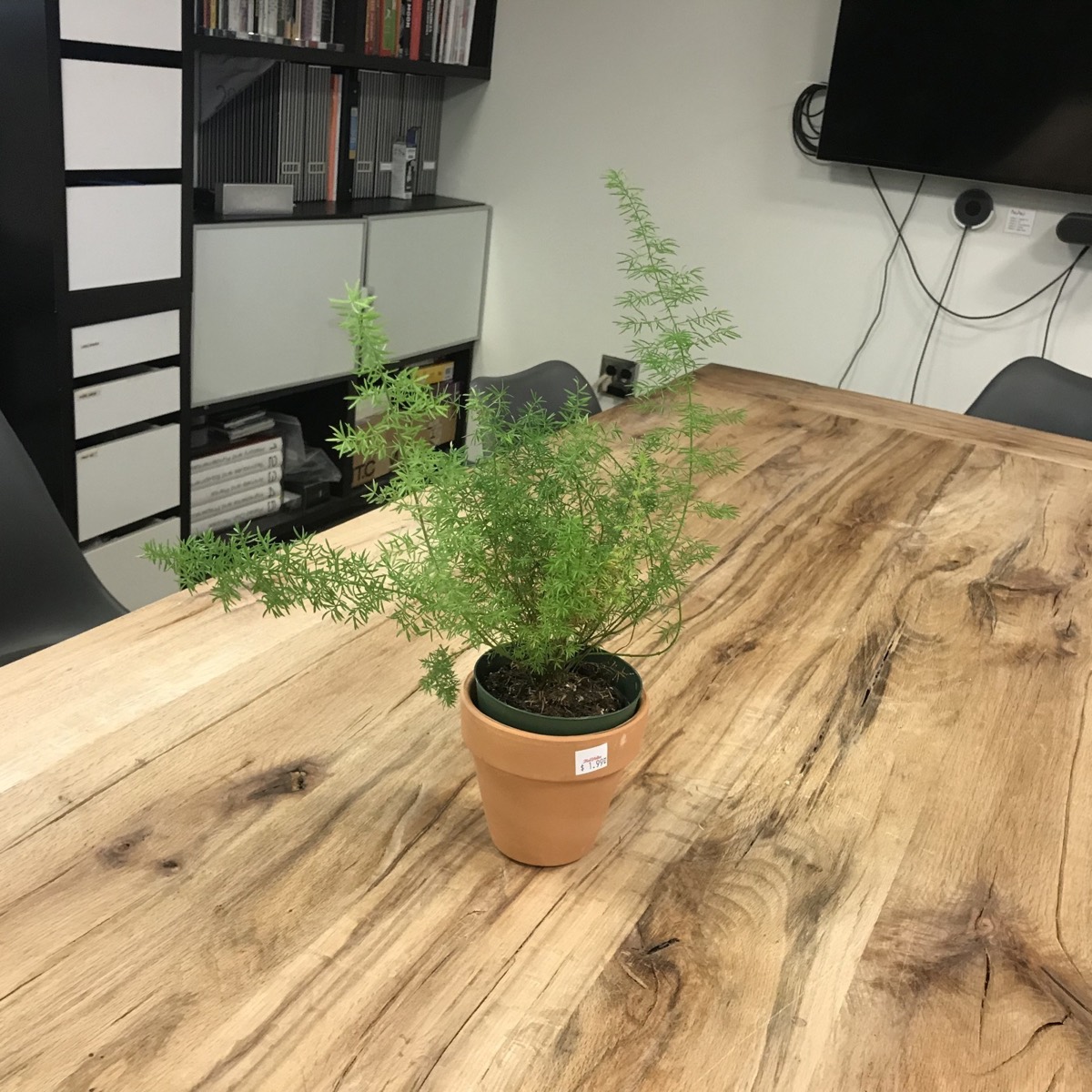
A potted asparagus fern on a wood studio table in front of shelves of black boxes
The subject
Five thin pen lines splaying up from a small base
5 lines
A cluster of fine lines suggesting fronds over a pot, with a table edge and shelf lines
20–30 lines
Dense feathered strokes forming three fronds
50+ lines
II
Emotion & Shape

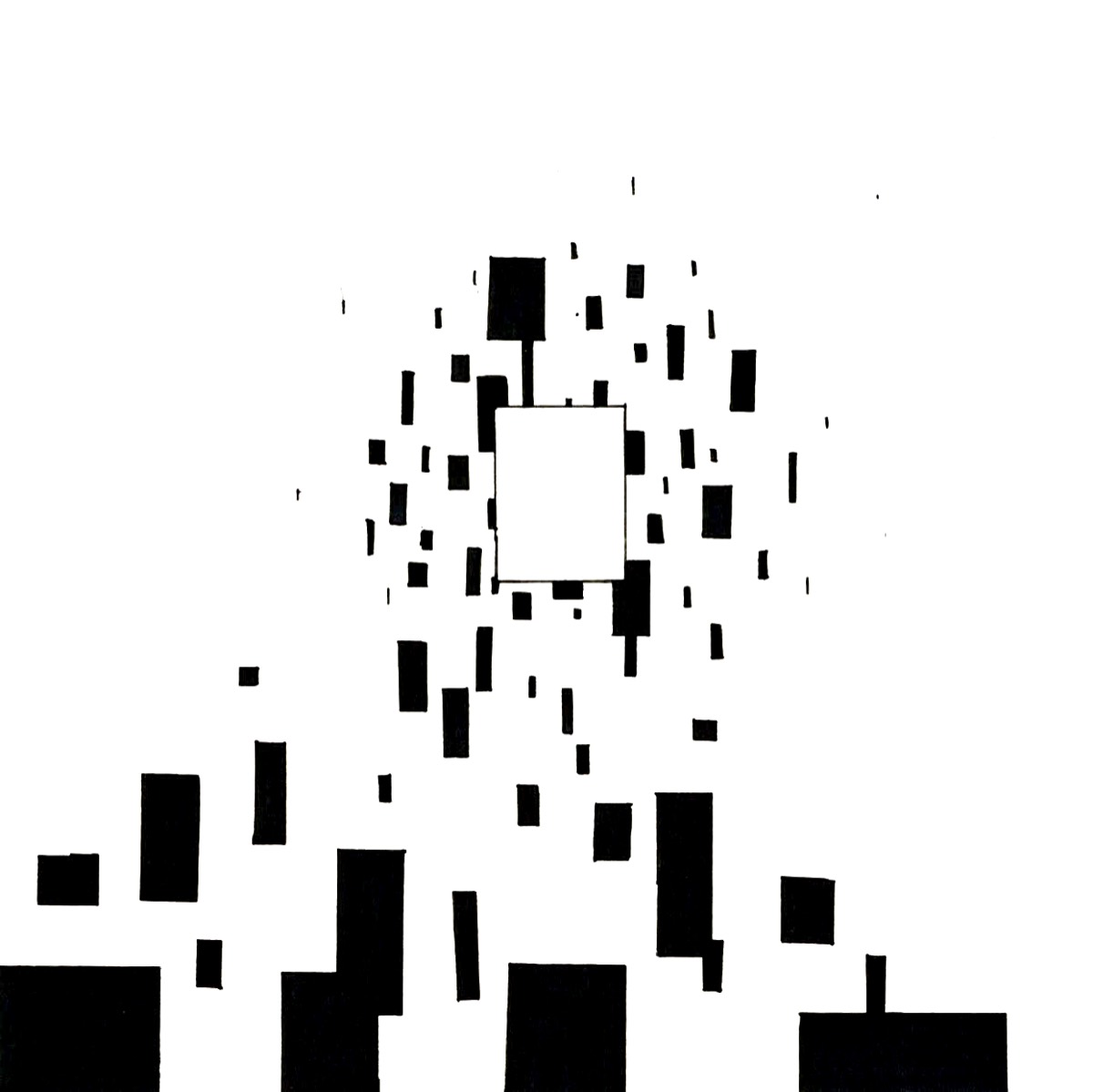
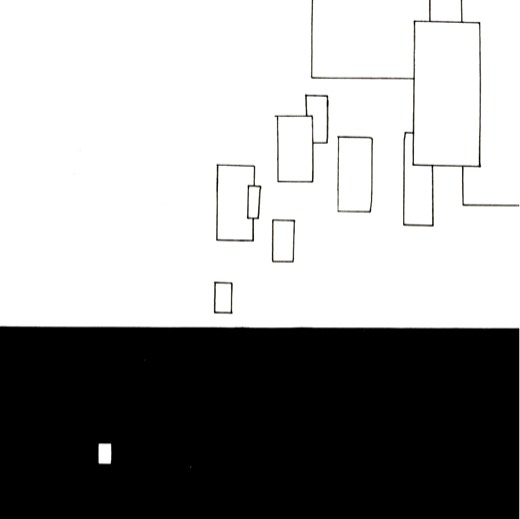
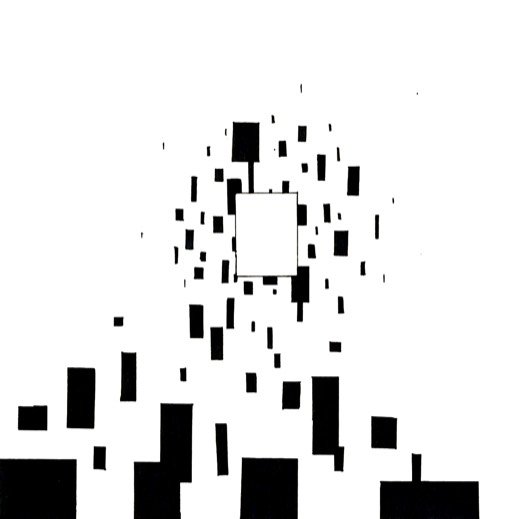
Abstract a pair of emotions into two drawings using only closed shapes and one tool.
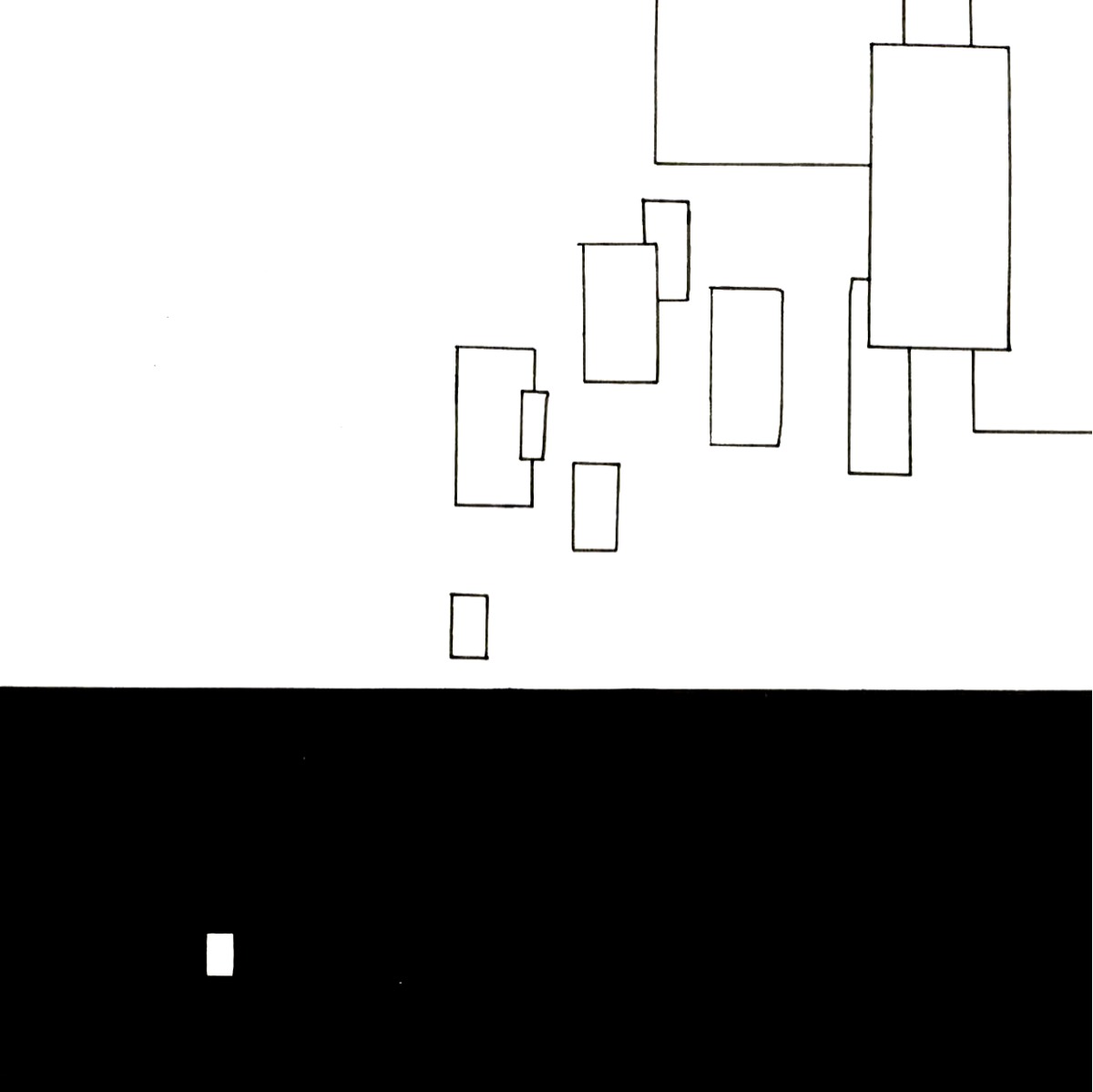
Outlined rectangles lifting off a solid black band with a single white square in it
Emotion in closed shapes, one
A swarm of small black rectangles crowding around one empty outlined square
Emotion in closed shapes, two
III
Poem & Text

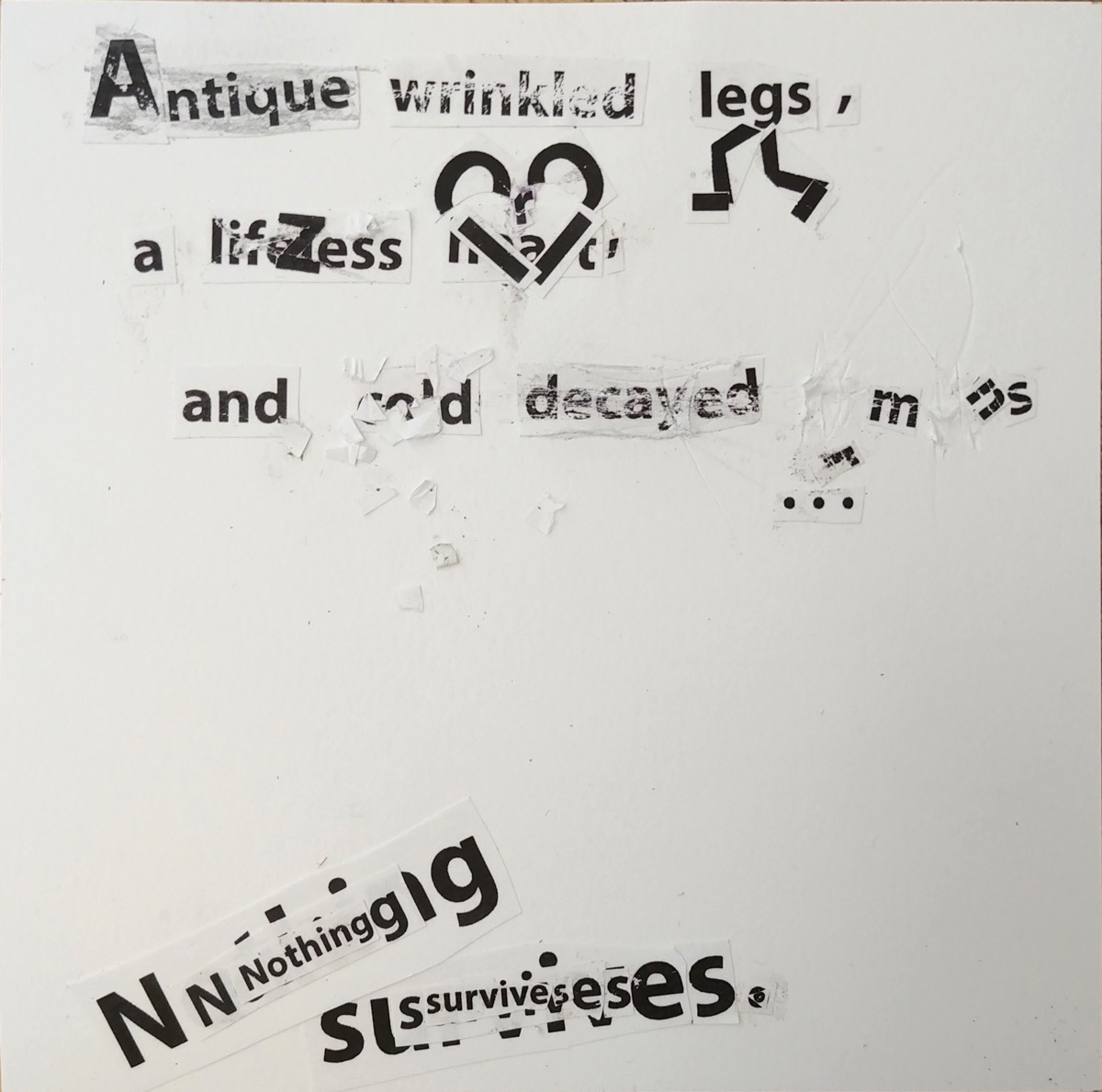
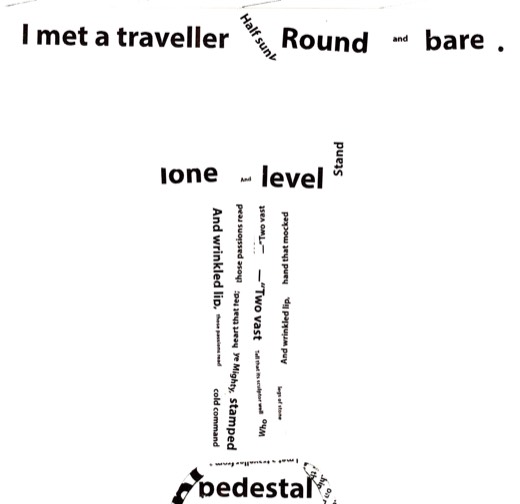
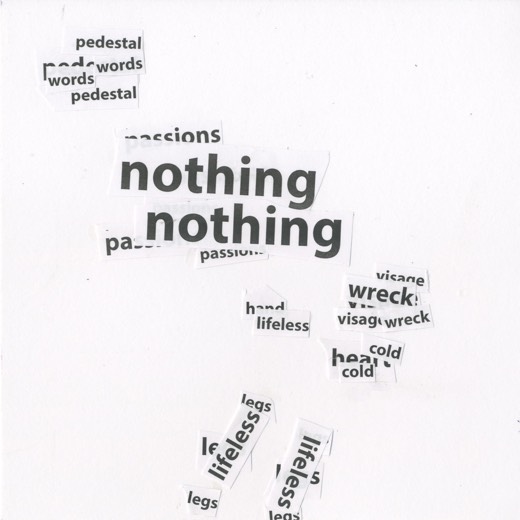
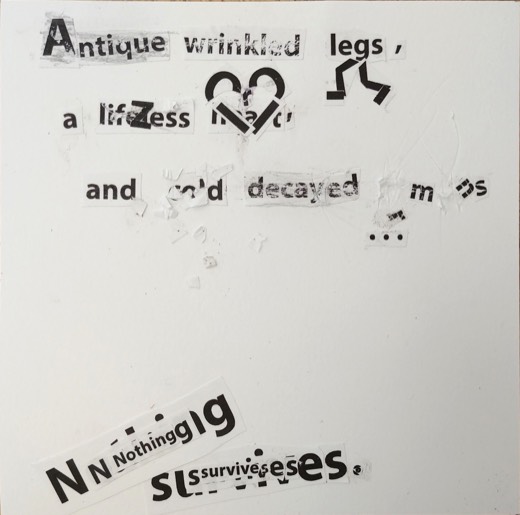
Selectively reorganize the words of Shelley's "Ozymandias" into a visual composition that gives them a new meaning.
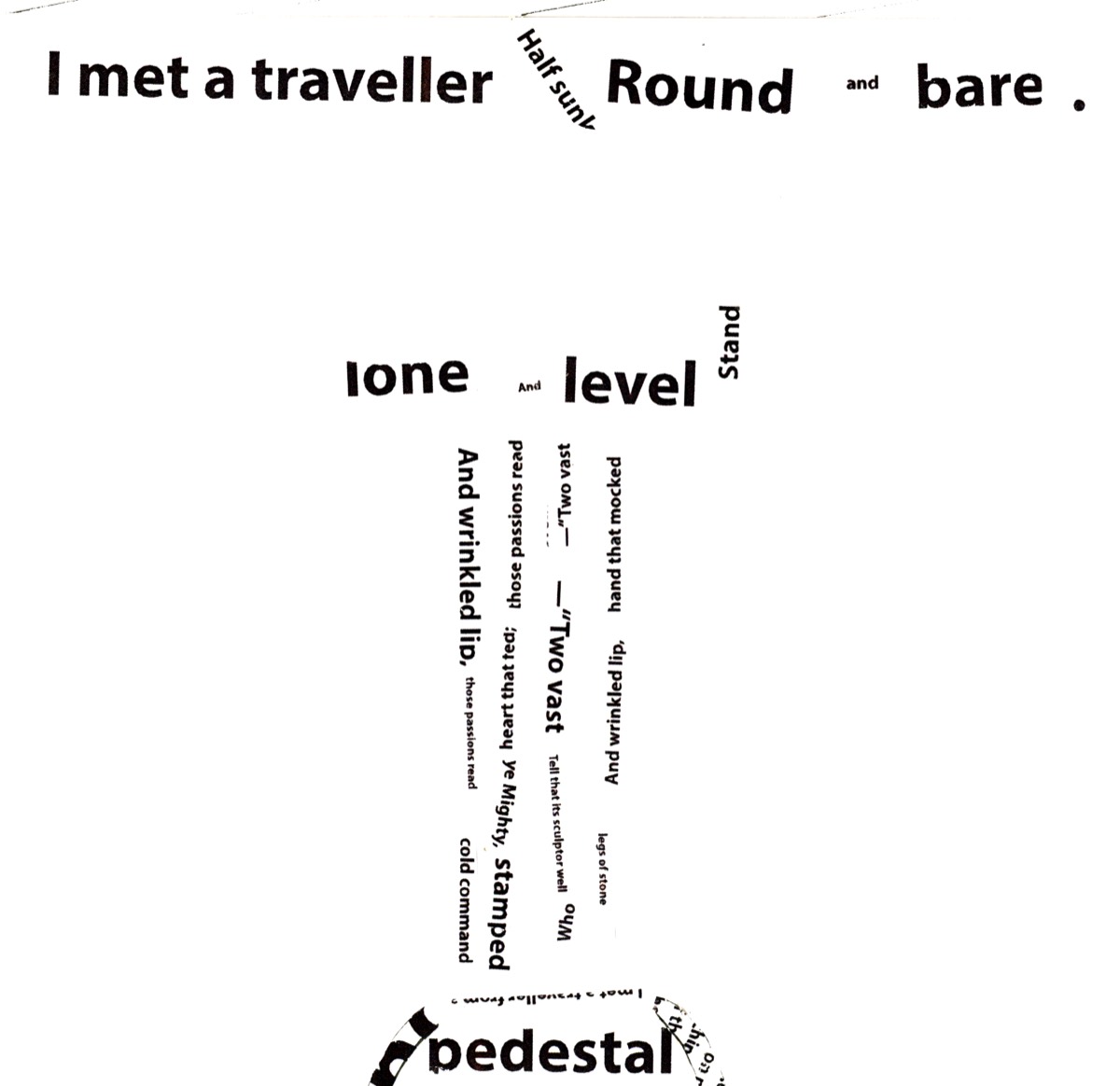
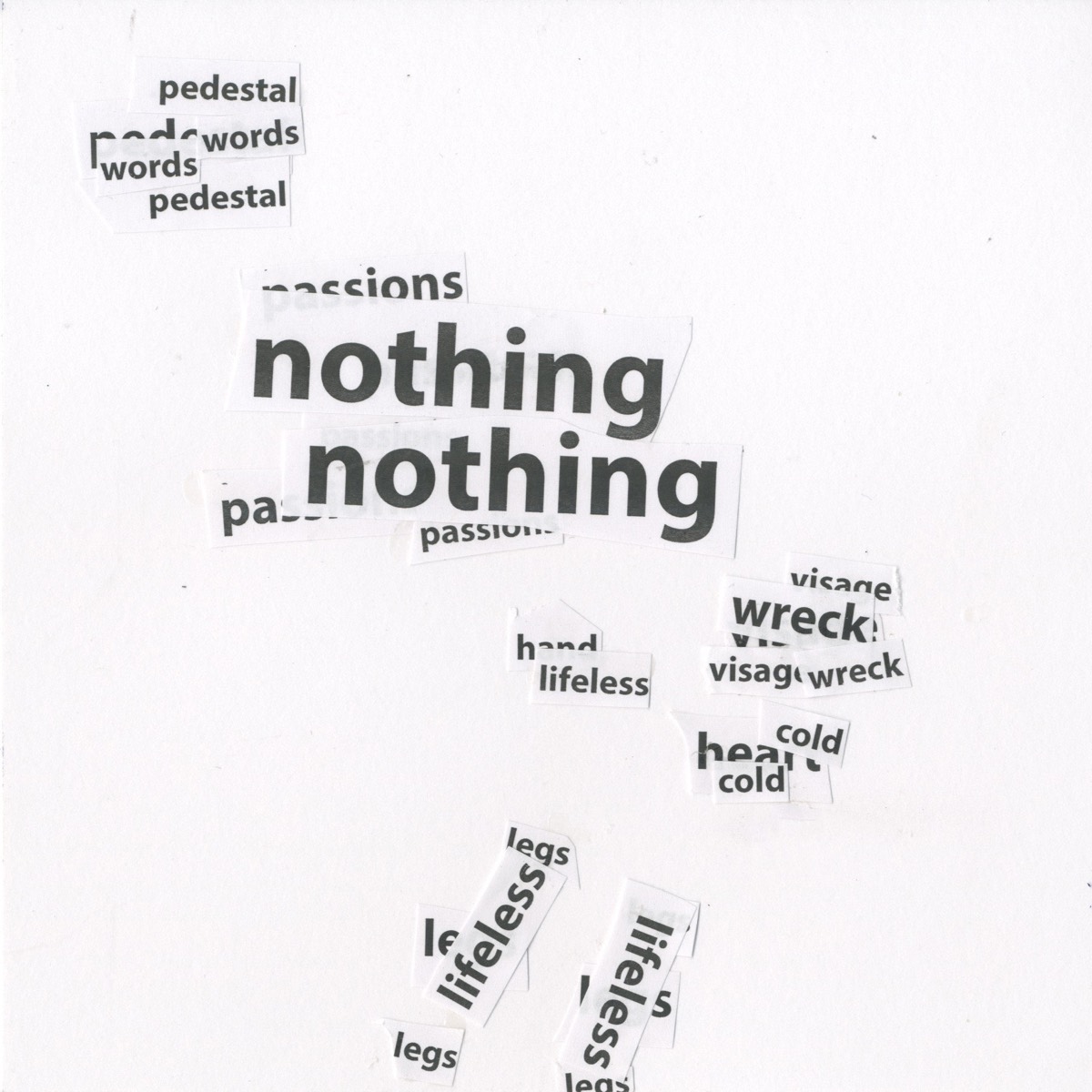
Cut-out words arranged as a standing figure: "I met a traveller," "Round," "bare," a column of tiny text for the body
Ozymandias, re-set
Cut words scattered on white; "nothing / nothing" large at the centre, "wreck," "lifeless," "cold" falling below
Ozymandias, re-set
Words pasted at odd angles, "Antique," "lifeless," "decayed," letters overlapping at the foot
Ozymandias, re-set
IV
Music & Narrative

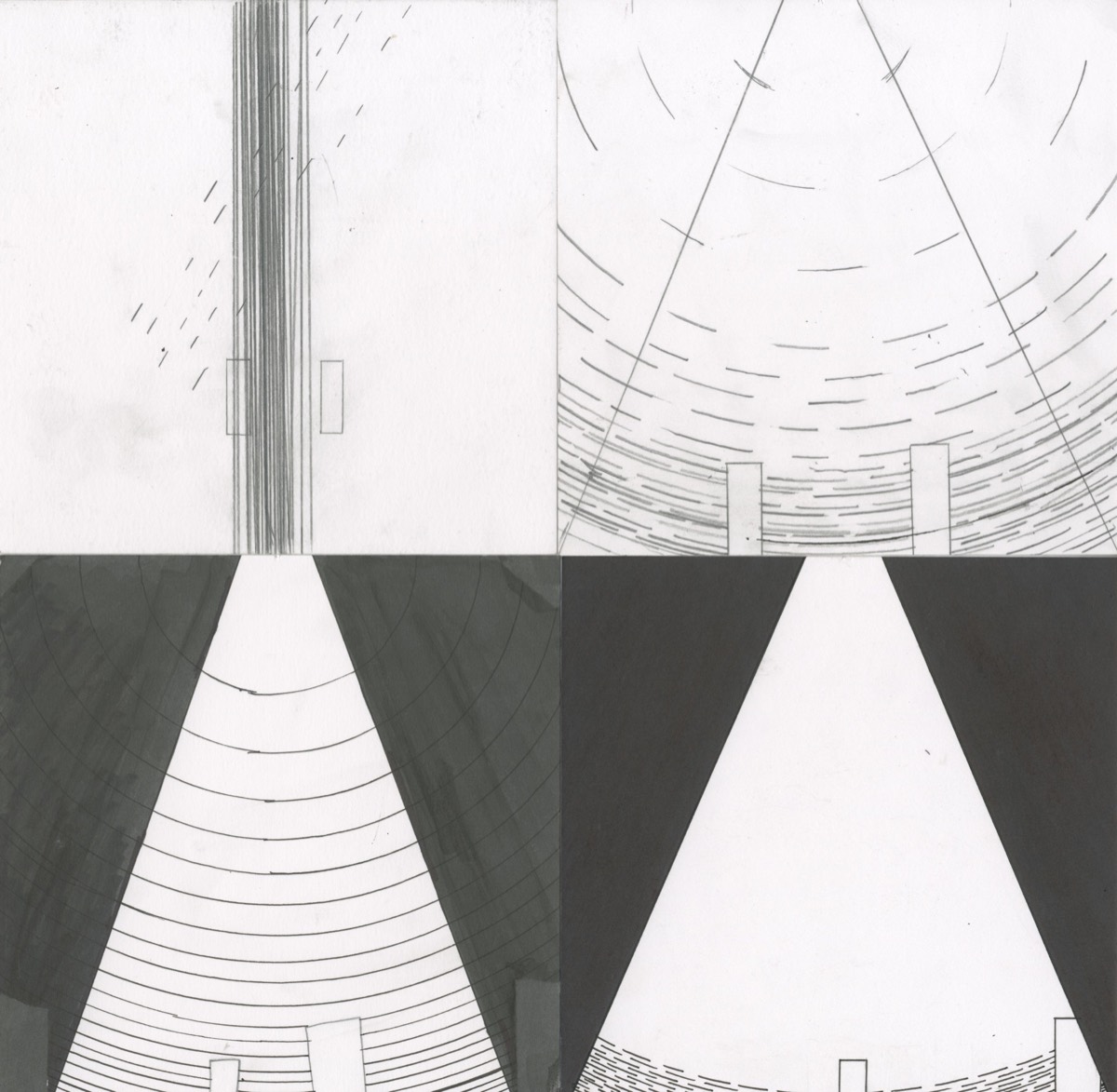
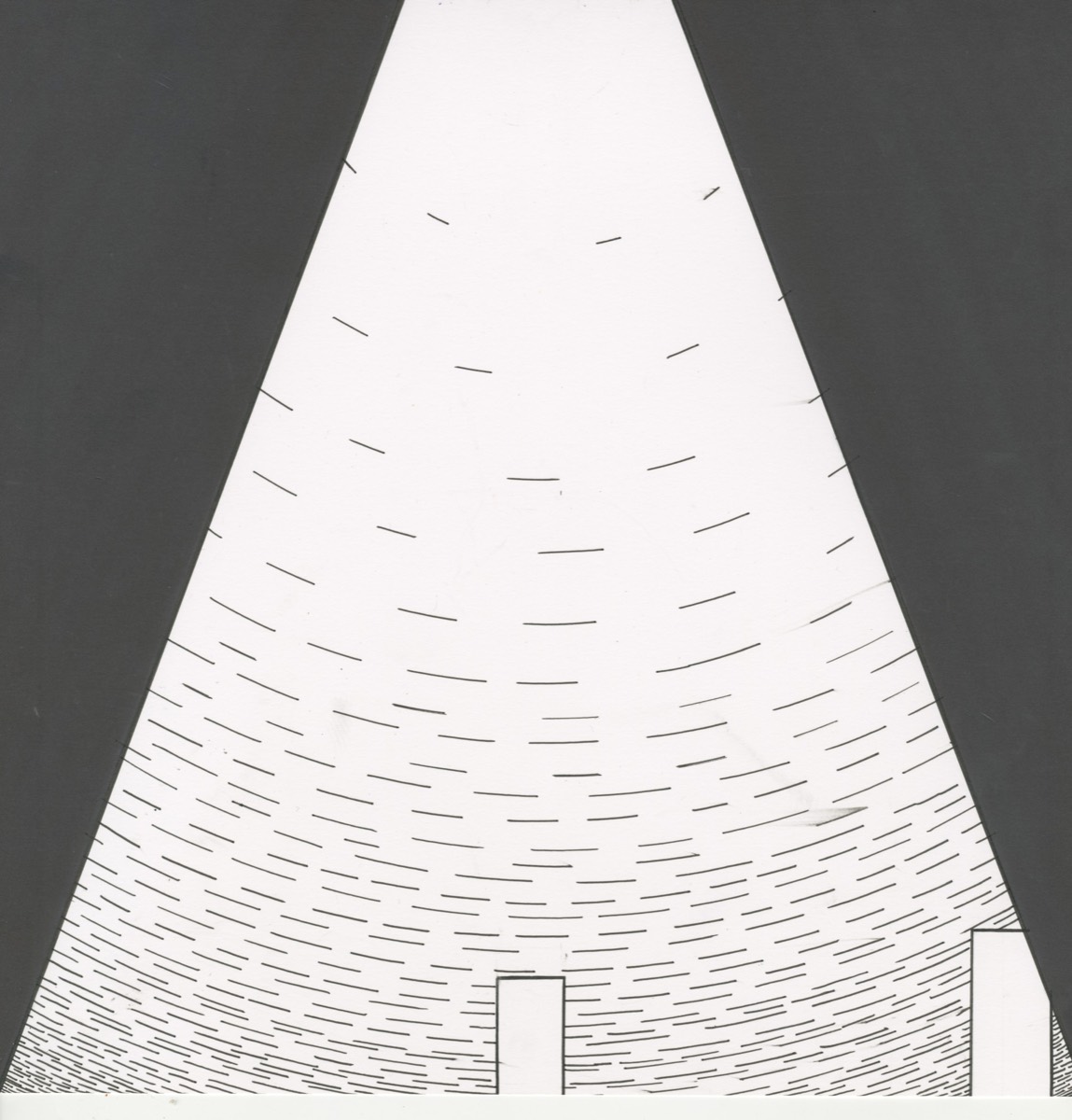
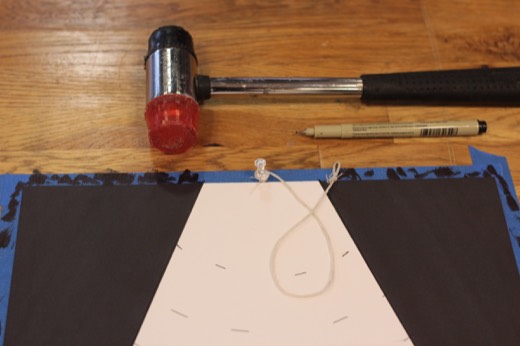
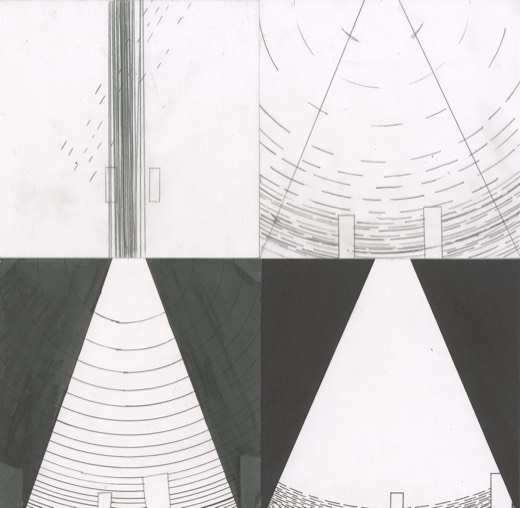
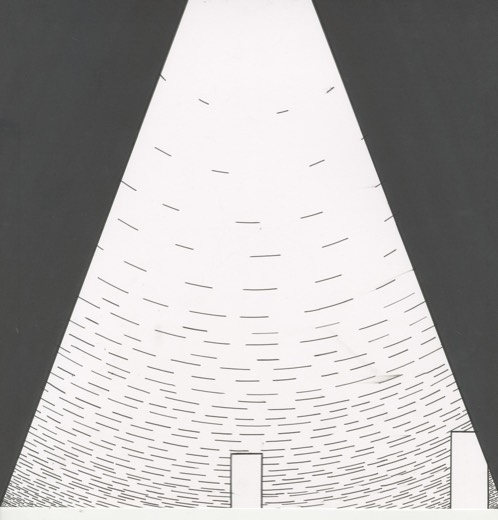
Select a song and abstract it into a visual composition of lines, shapes, and text.
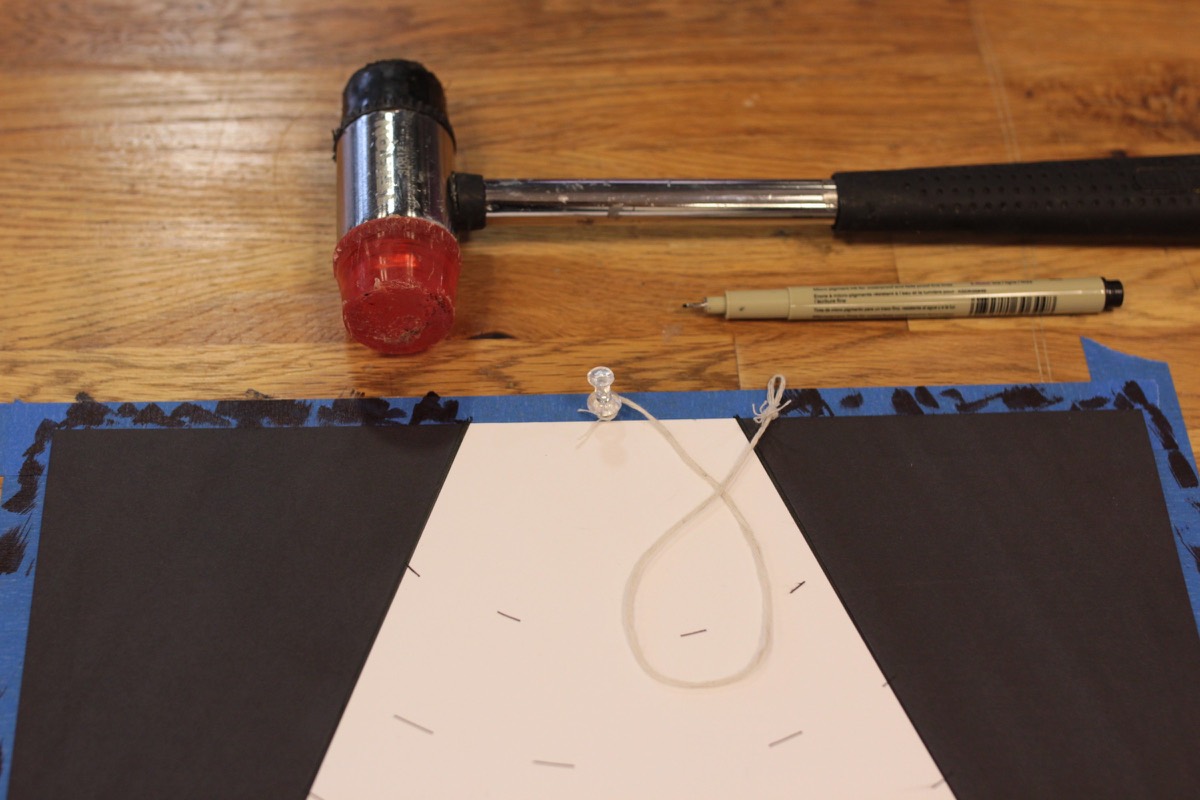
A rubber mallet and a pen on a wood table beside a taped-down sheet with a white wedge form
In progress
Four panels of a widening white wedge on dark ground with dashed arcs of marks
Four states
A white wedge opening from a small base into a field of curved dashes on black
"To You," Andy Shauf
V
Form Making & Methods

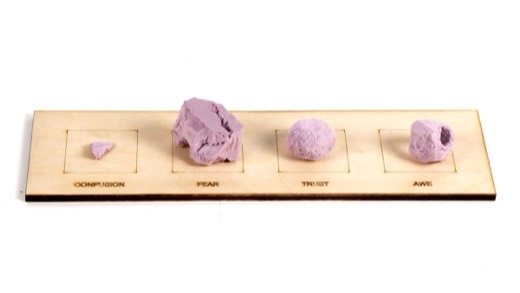
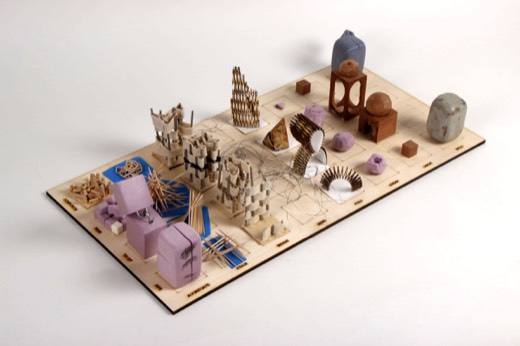
Make a series of objects that evoke confusion, awe, trust, and fear, in a material you choose to test and push.
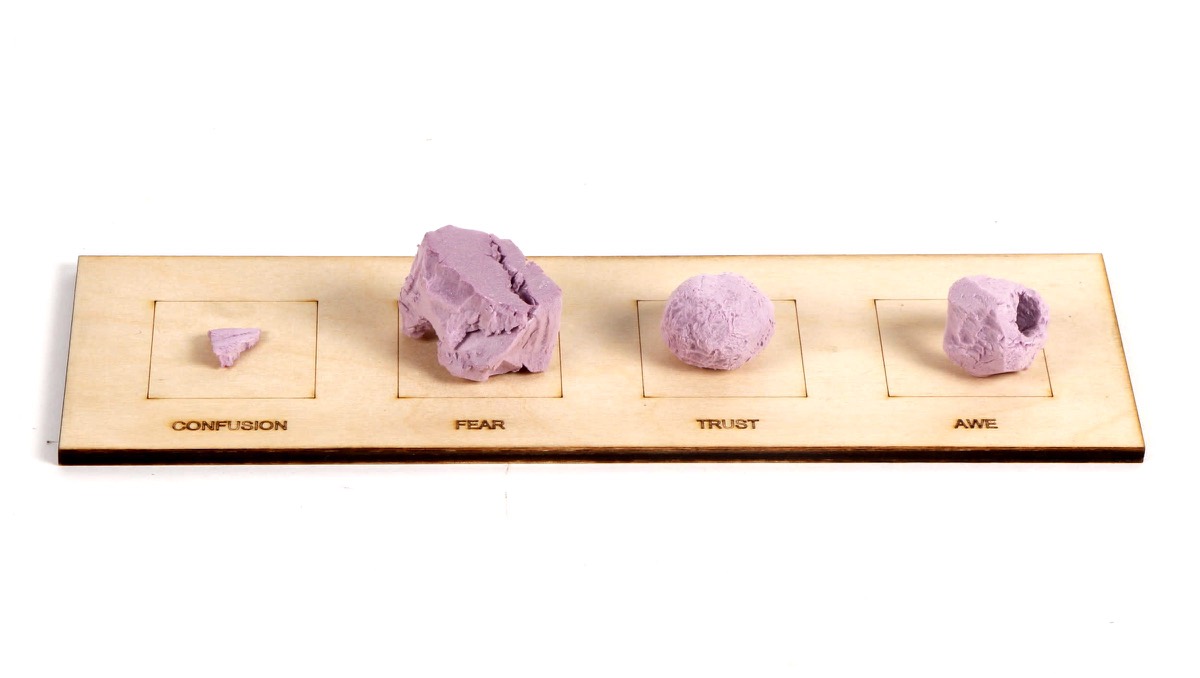
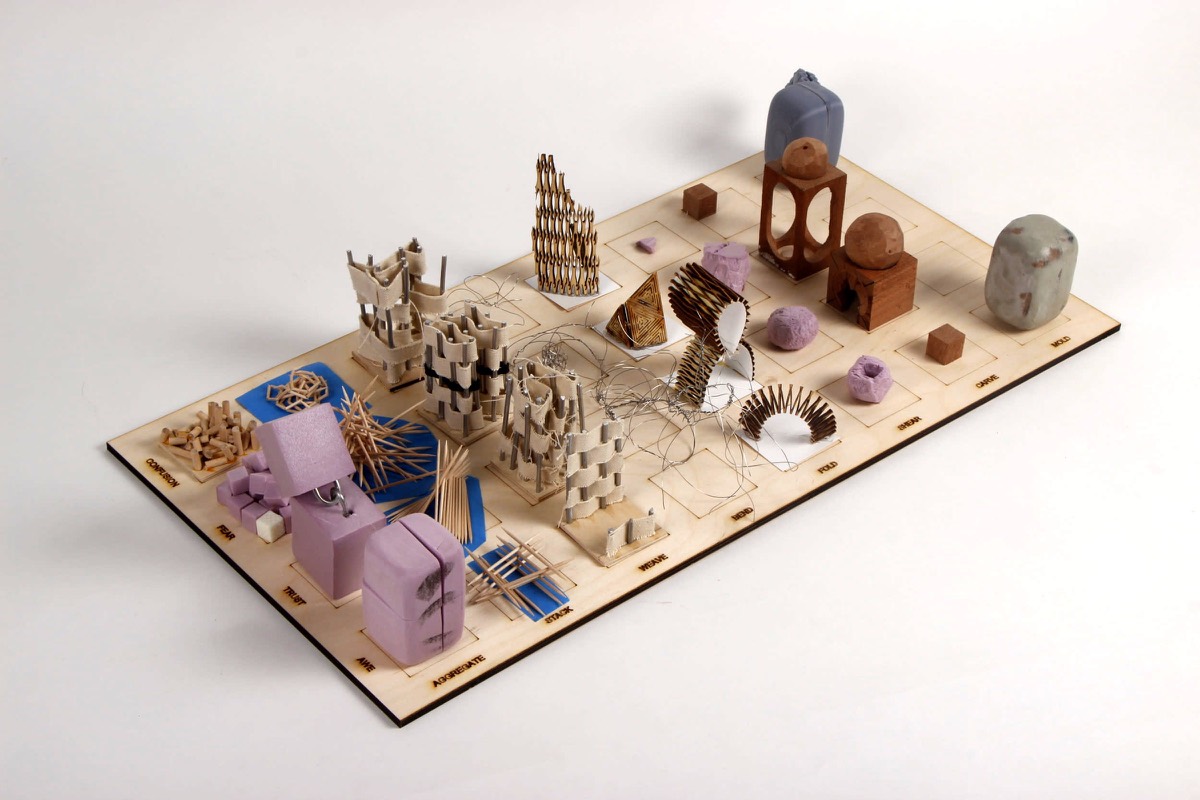
Four small lilac forms in a laser-engraved plywood tray labelled with the four words
Confusion, fear, trust, awe
A plywood board crowded with small objects in wood, wax, lilac foam, and brass, each in its cell
The cohort's objects
VI
Rule-Based Systems

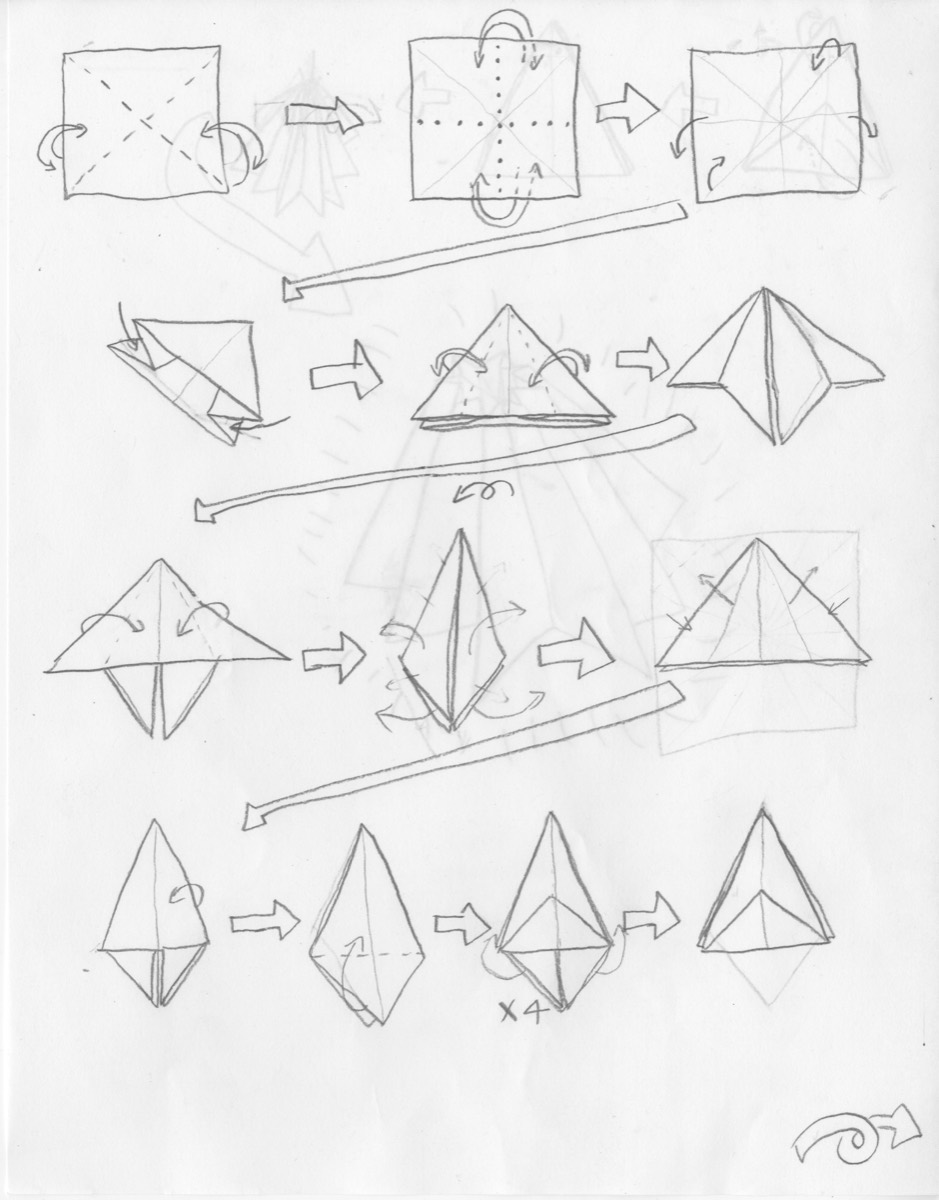
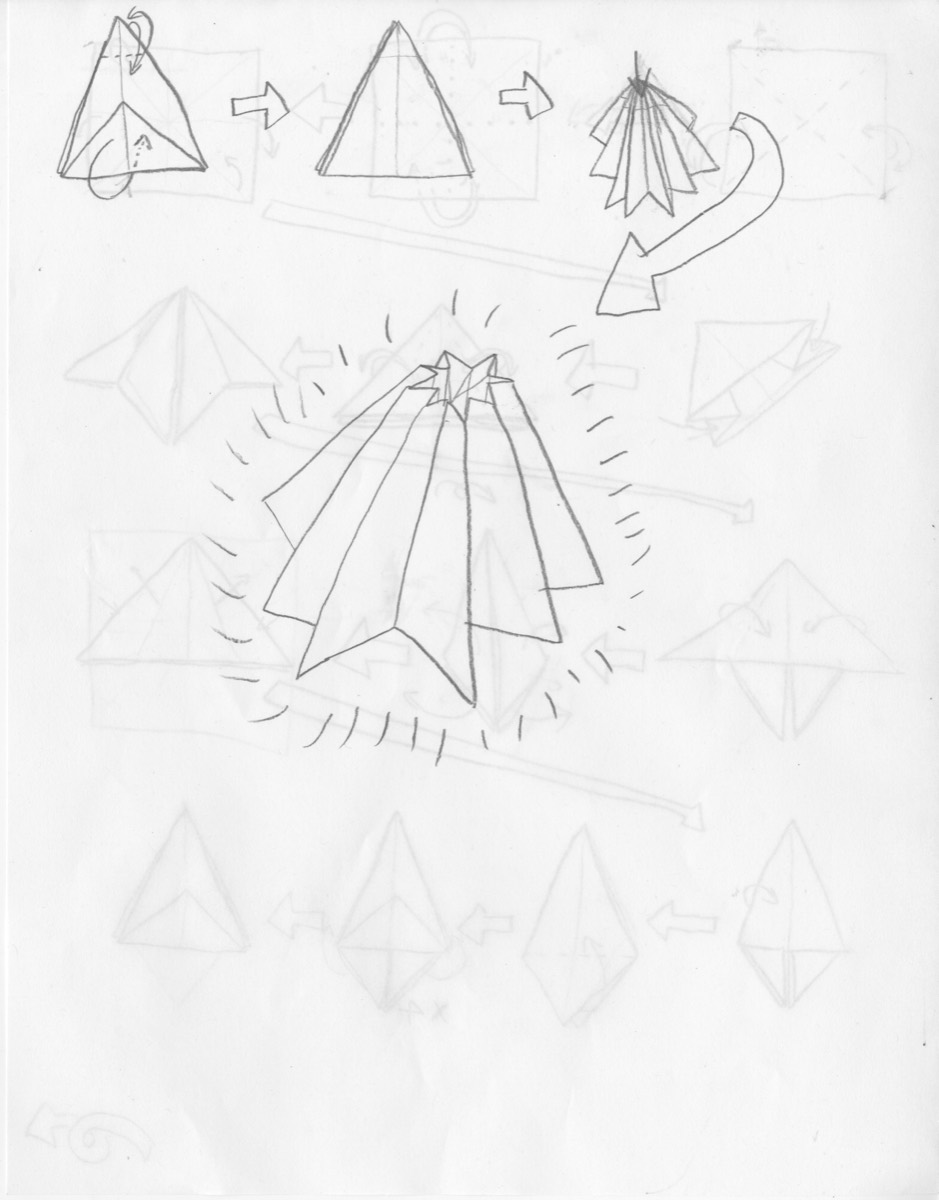
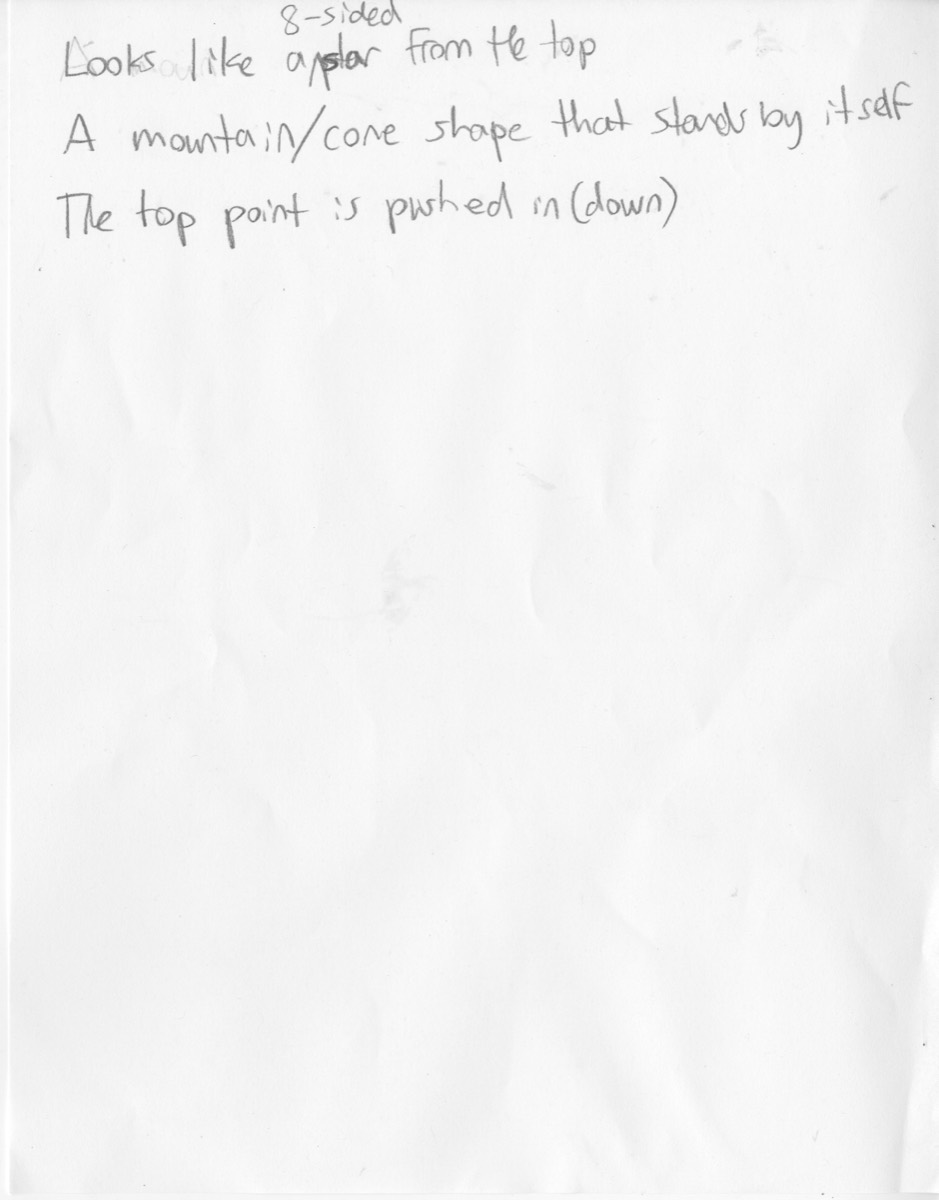
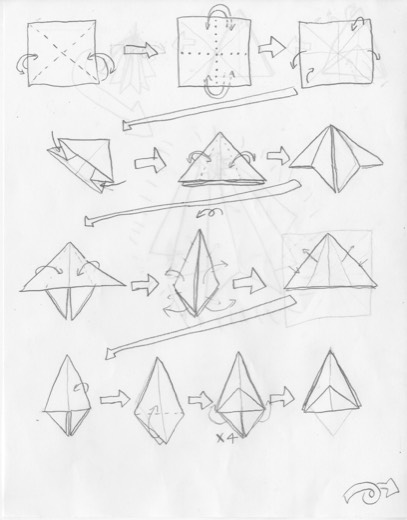
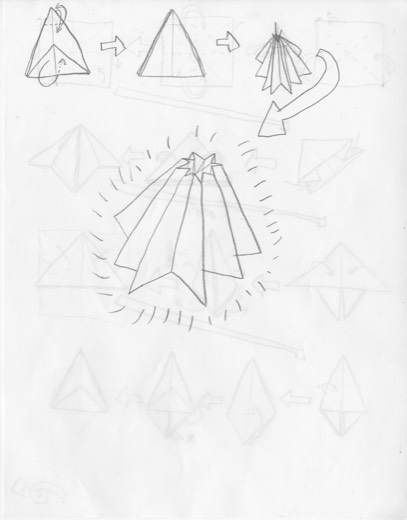
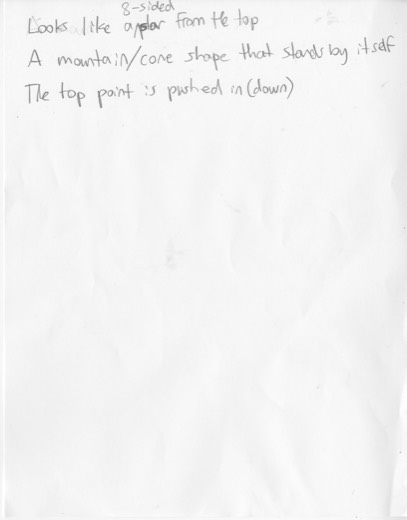
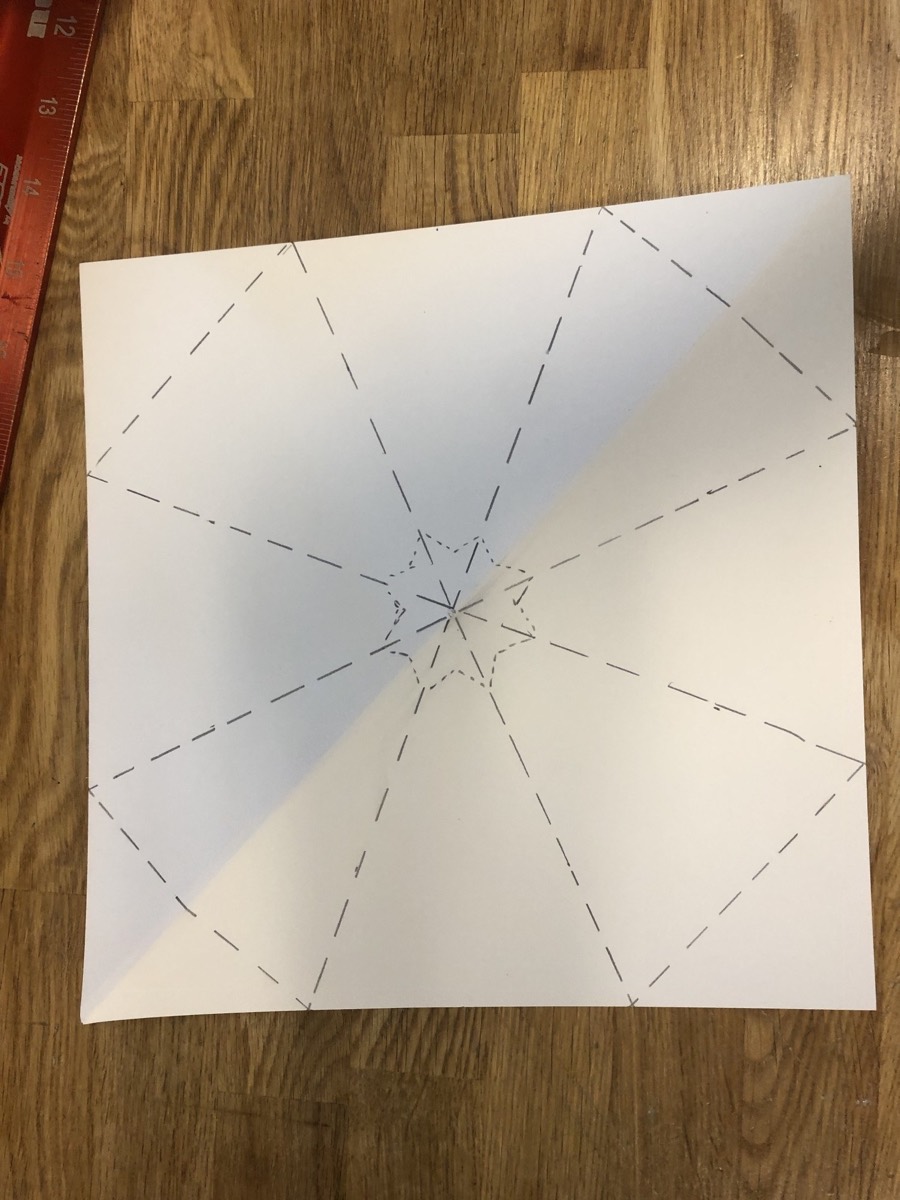
Make a paper object with 8–12 operations (fold, bend, cut), then three instruction sets for recreating it: drawn steps, a notated sheet, a written description.
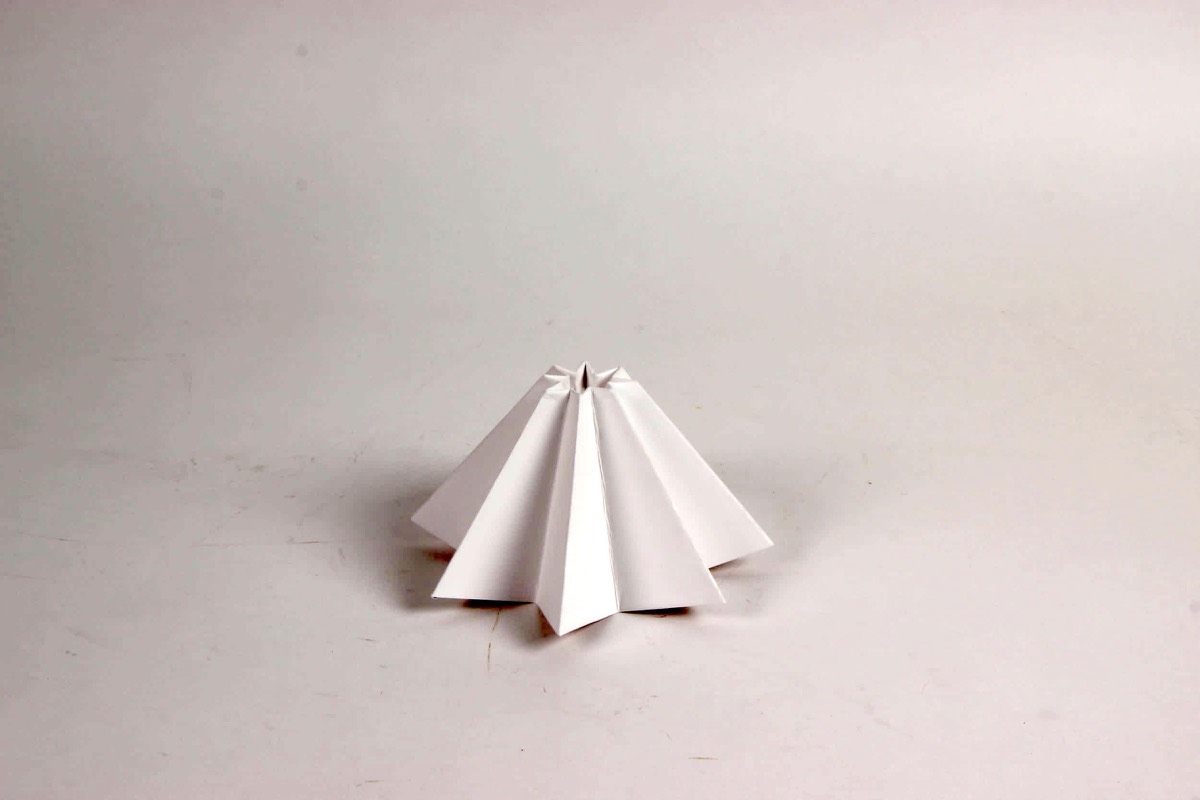
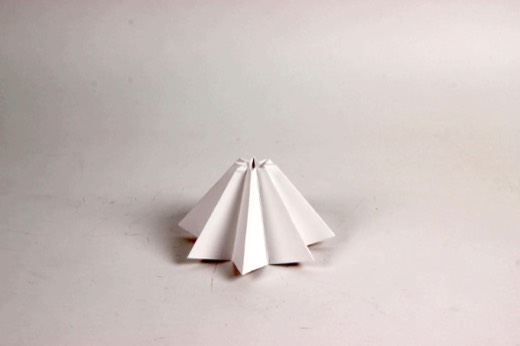
A white paper form folded into a star-like tent on a grey ground
The object
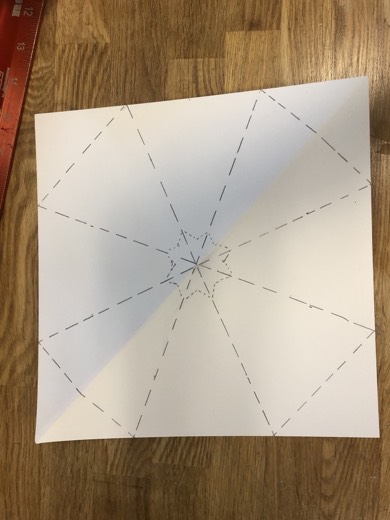
A square of paper scored with radiating dashed lines on a wood floor
Scored
Twelve pencil diagrams of a square folding step by step into a kite form
Instructions, drawn
A pencil drawing of the form opened, with fold lines annotated
Instructions, notated
Handwritten lines describing a mountain-cone shape that stands on its own
Instructions, written
VII
Redesigning the Politics of Chess

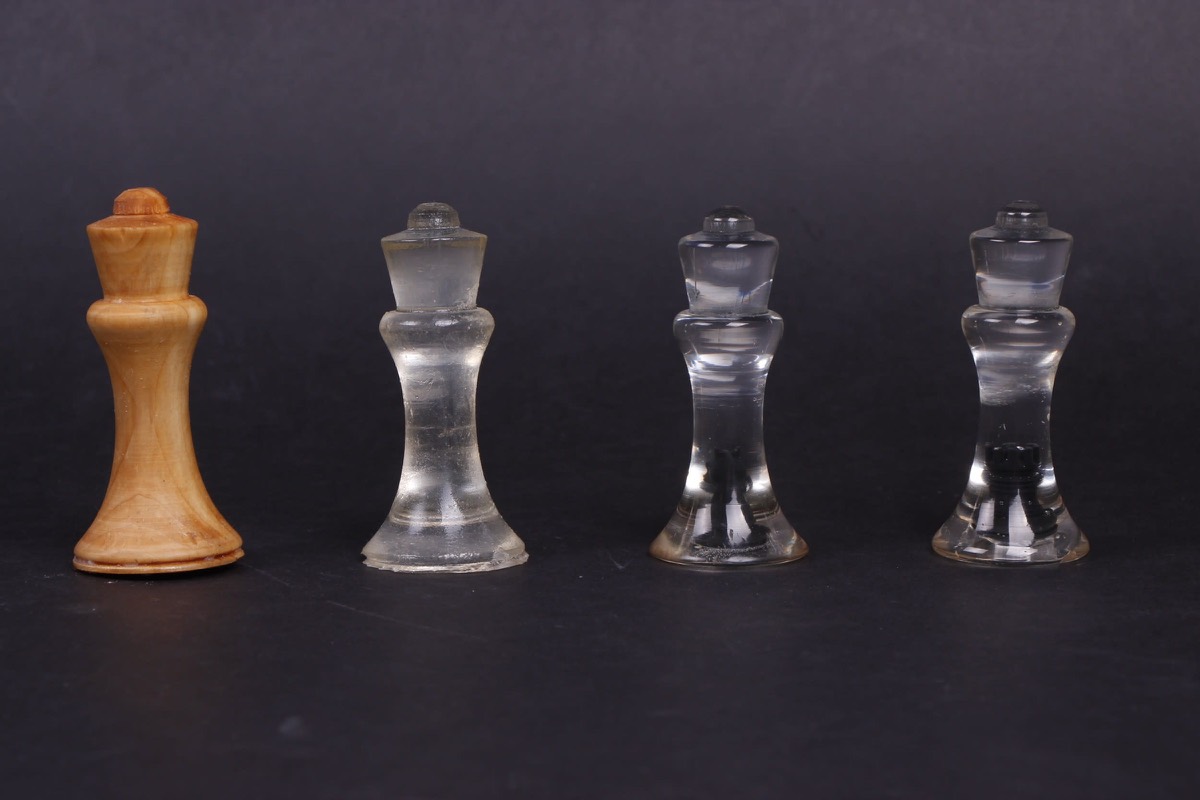
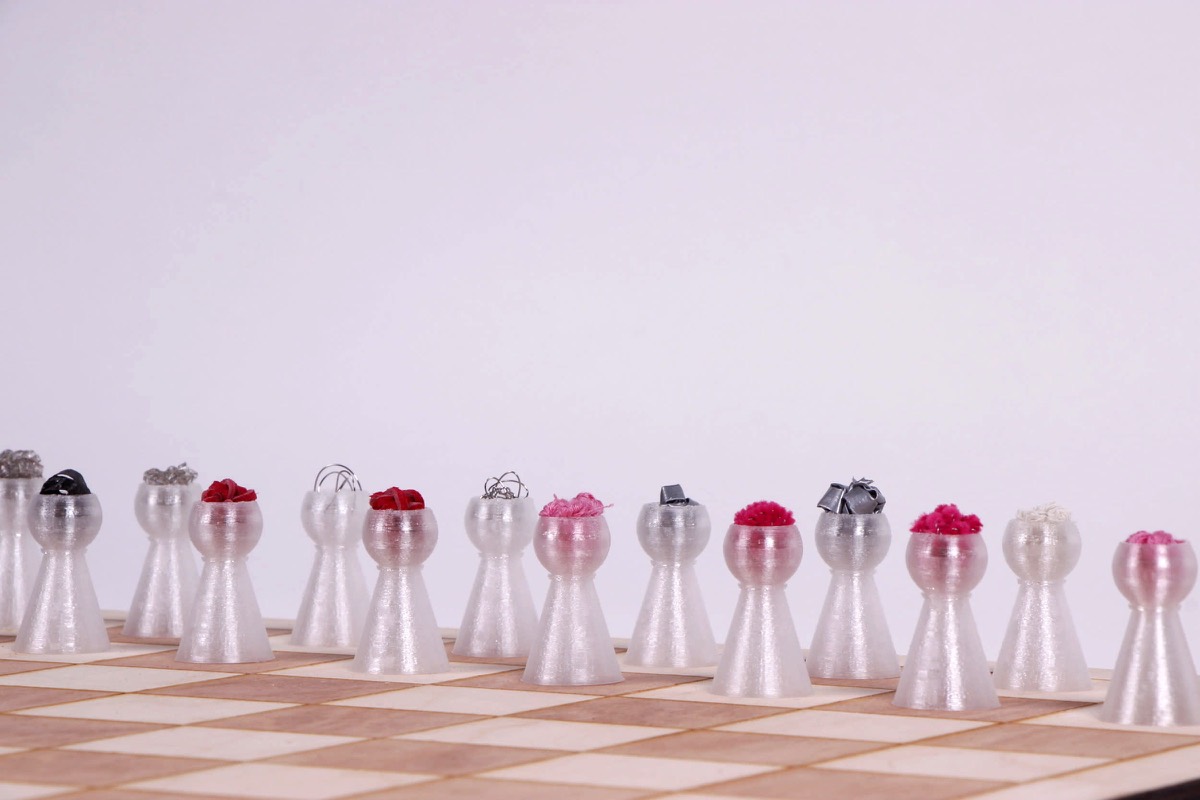
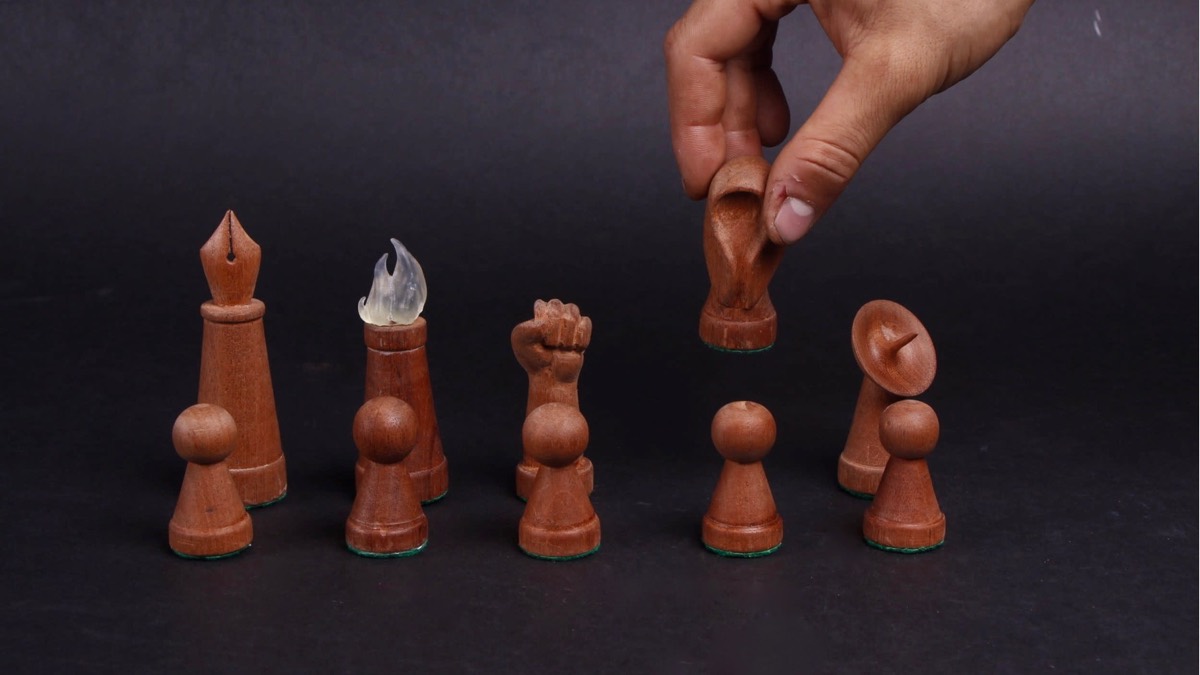
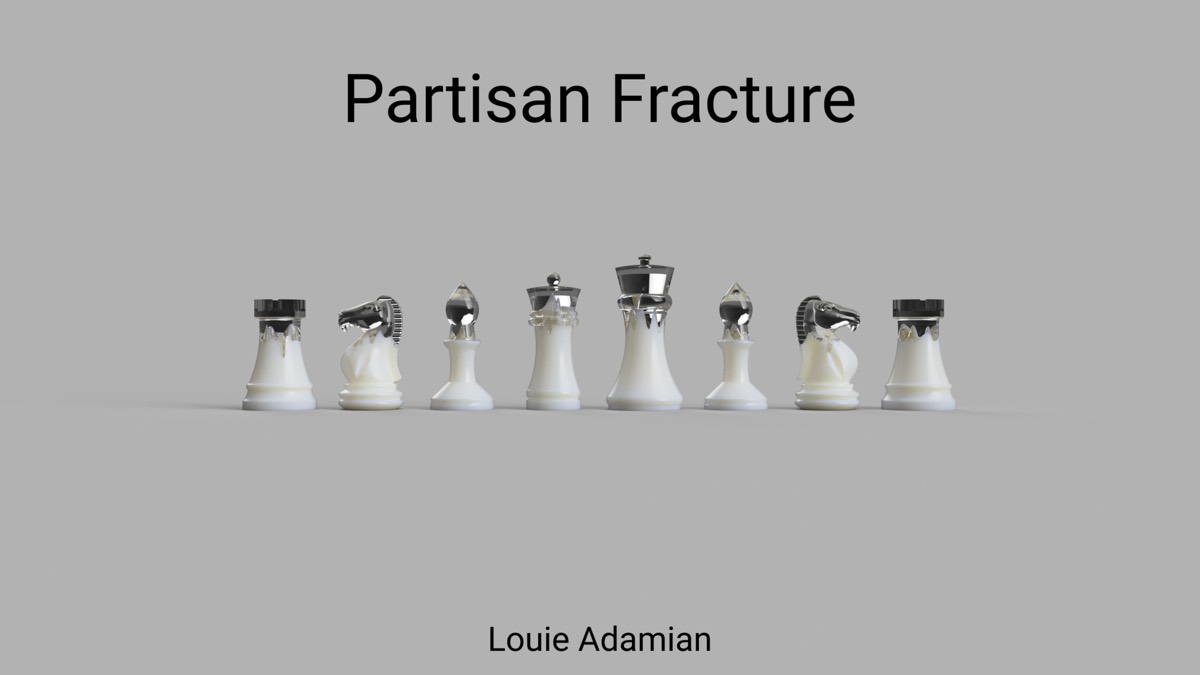
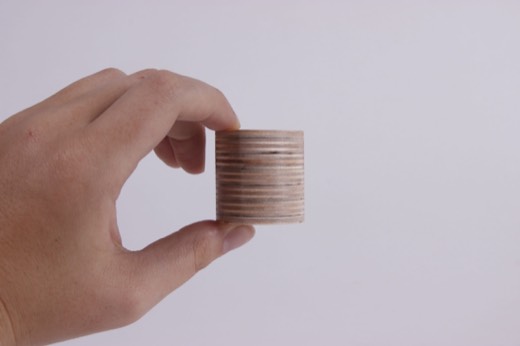
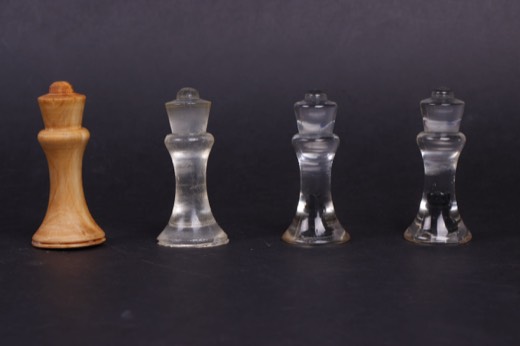
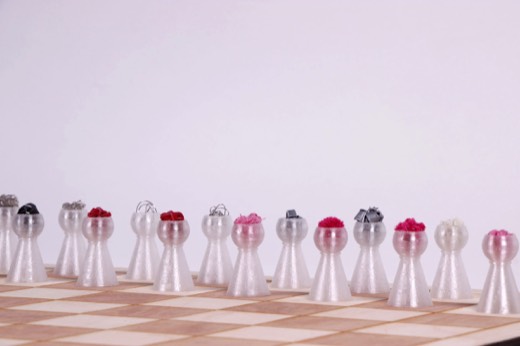
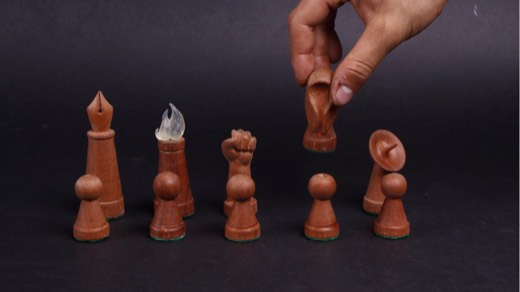
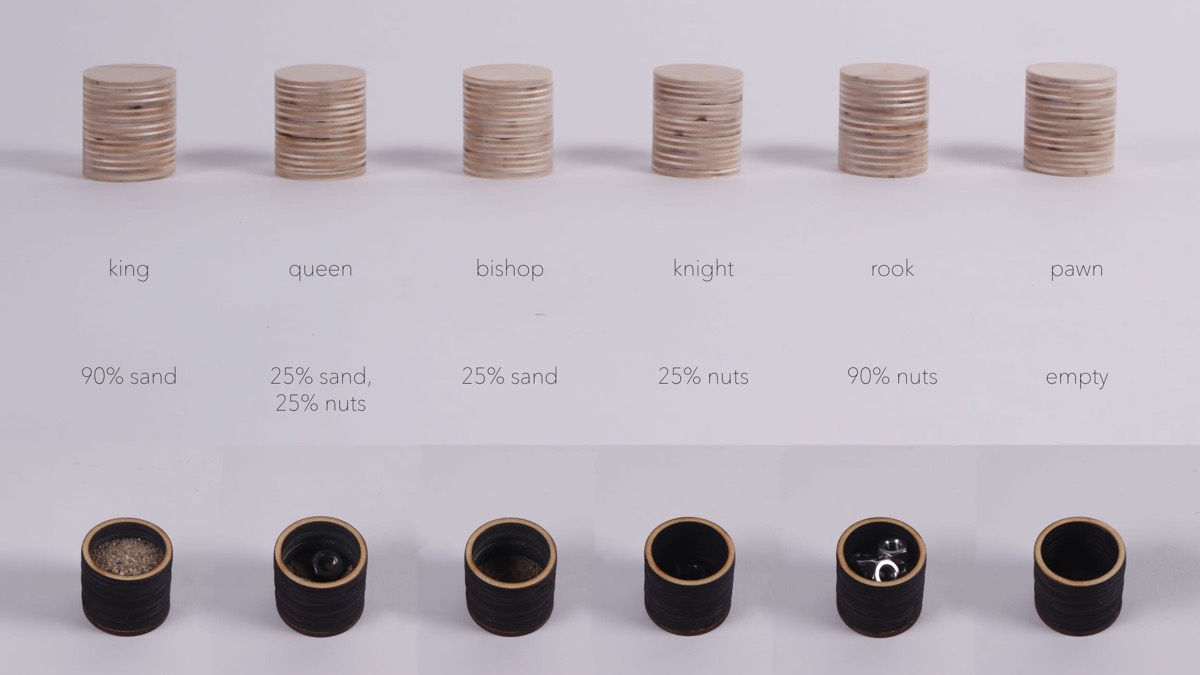
The physical design of chess encodes the power relations of a patriarchal society. Design a set that disrupts, inverts, or alters that meaning for contemporary ideas of culture and society.
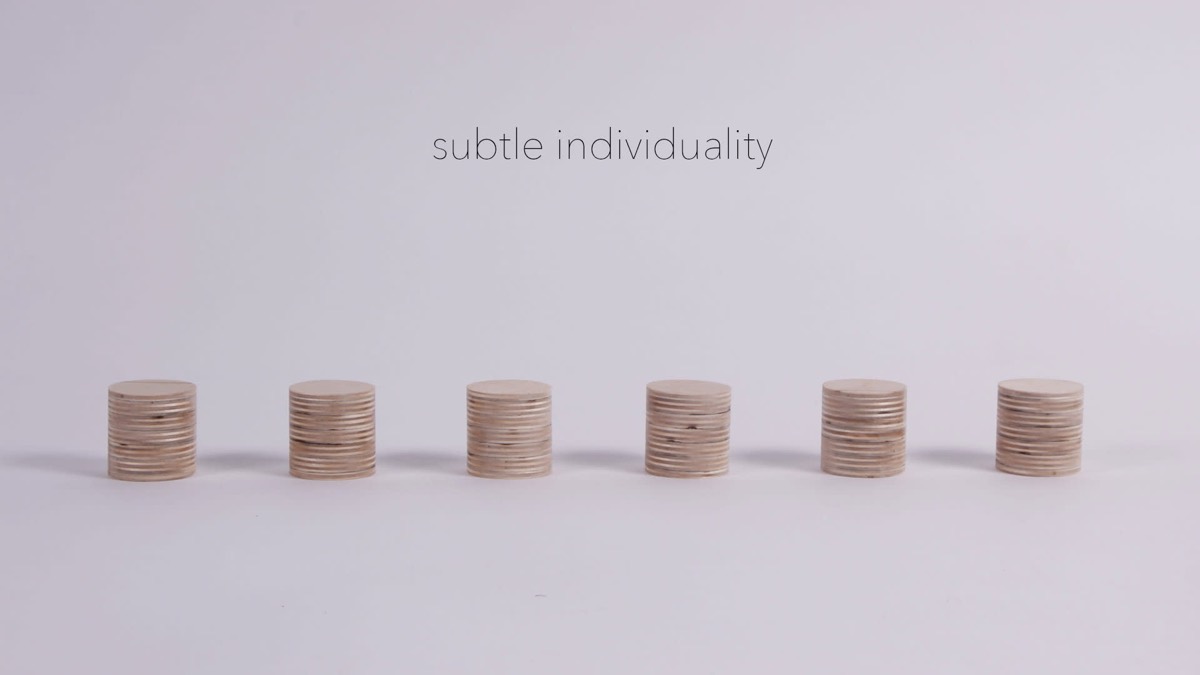
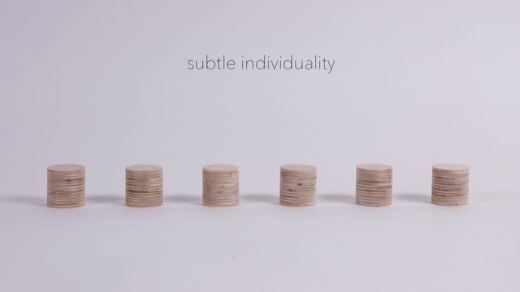
Six short plywood cylinders in a row on white, each subtly different, under the title
Subtle Individuality
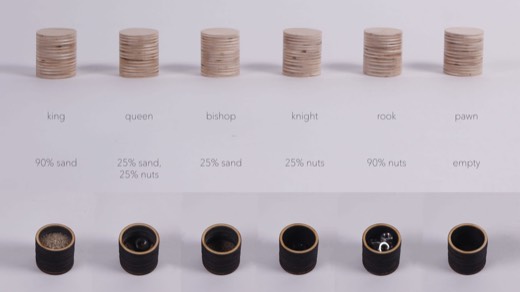
Six plywood cylinders labelled with what fills them, sand and nuts in differing amounts
What each piece holds
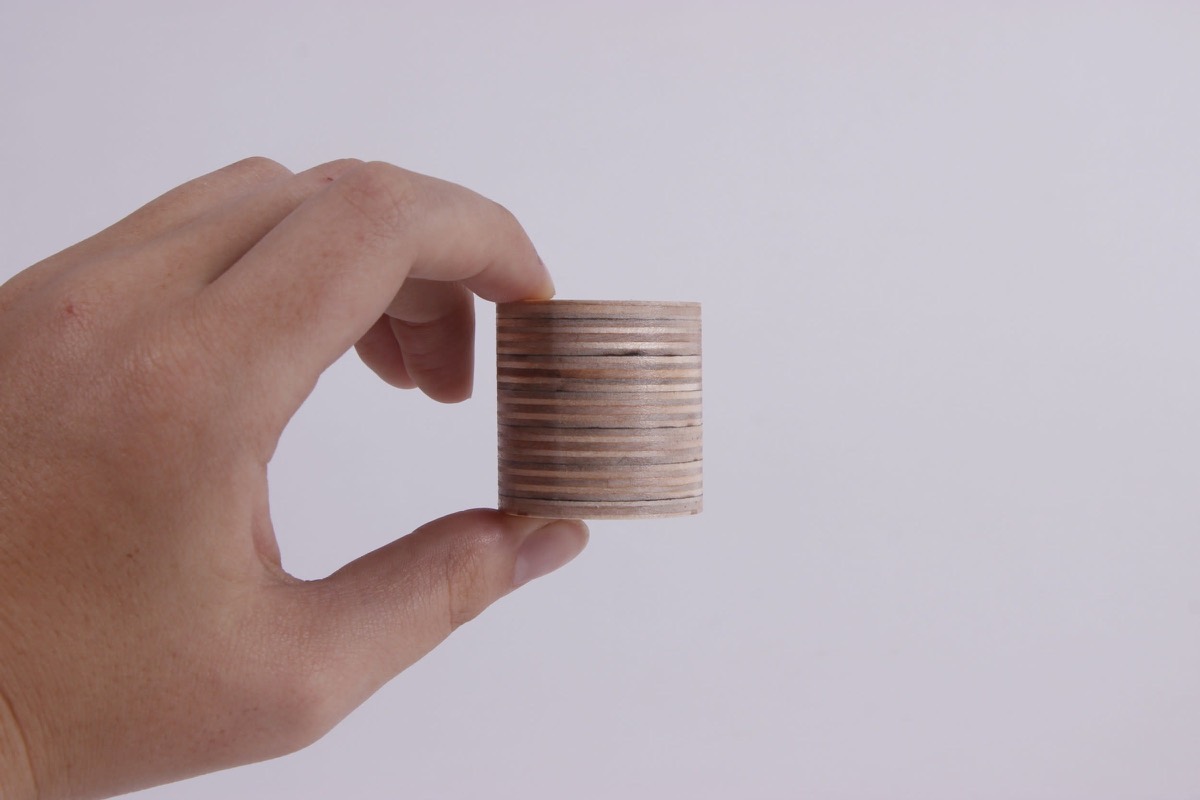
A hand holding one plywood cylinder between finger and thumb
In hand
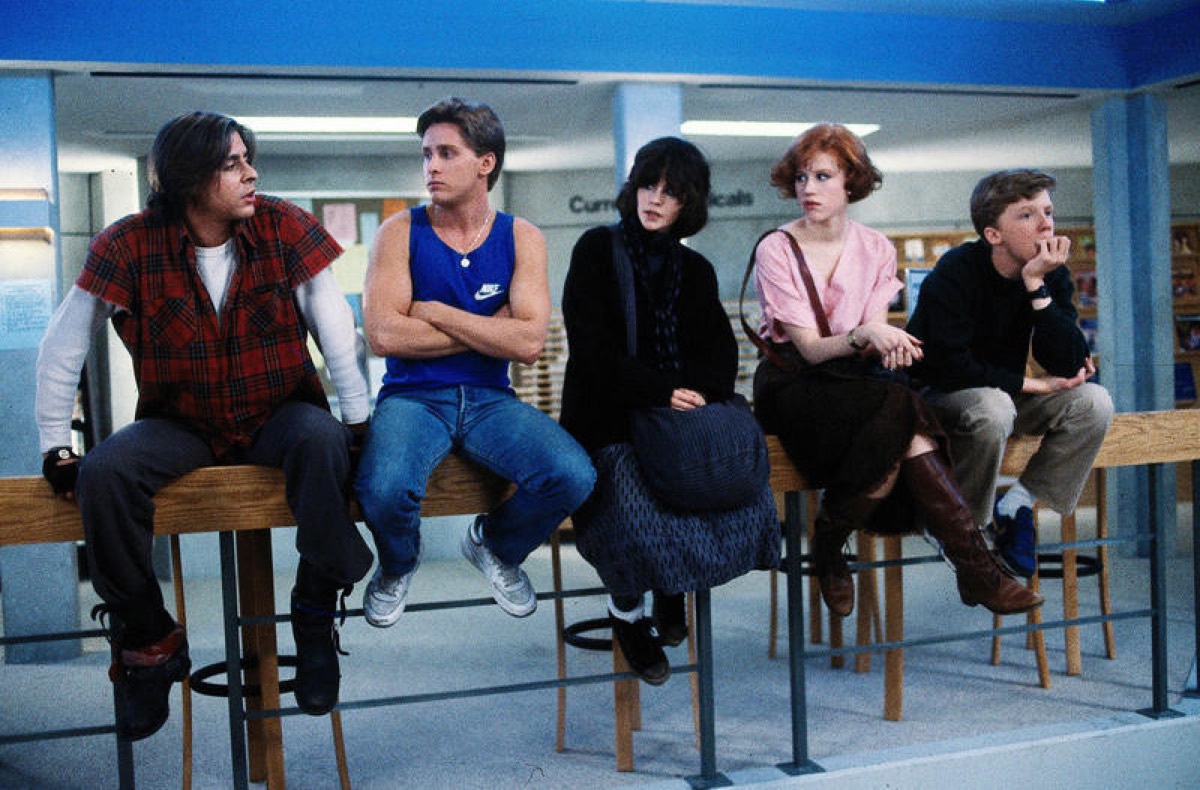
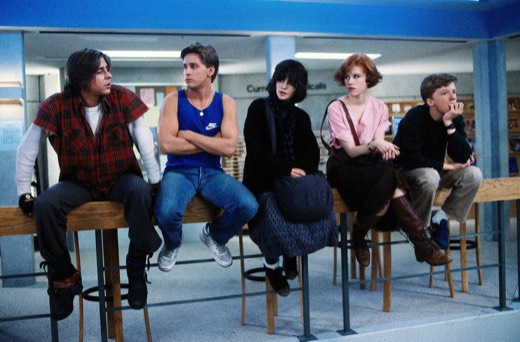
Five teenagers seated in a row in a school library
PrecedentFilm still, The Breakfast Club, 1985
Four pieces cast in clear resin, one in wood, on a black ground
Game of Kings
A row of turned aluminium pawns topped with small red and clear spheres
Pawns of the Government
A hand lifting a carved terracotta horse-head piece from a set of six
Contemporary Bias
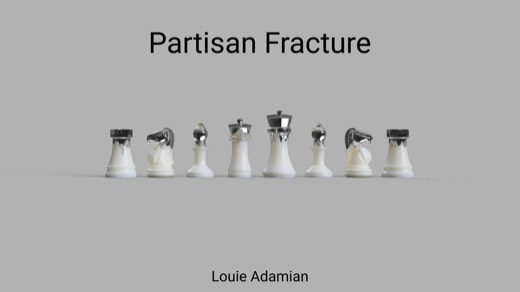
Nine small pieces in white, red, and blue resin with textured caps, on grey
Partisan Fracture
I5-Sense Theory
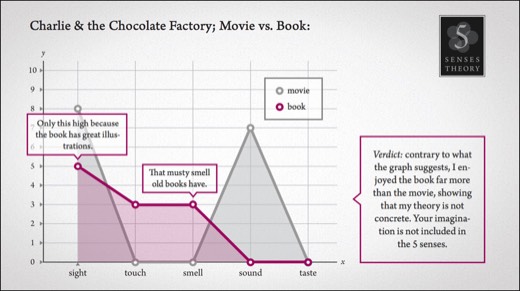
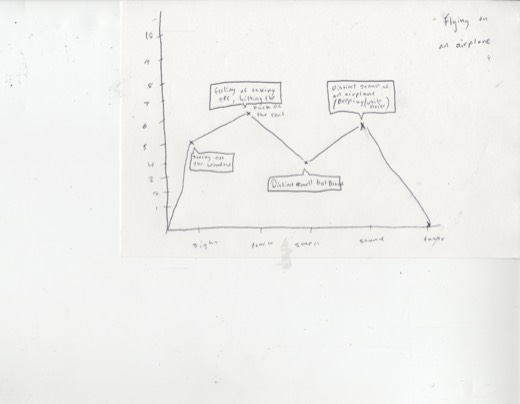
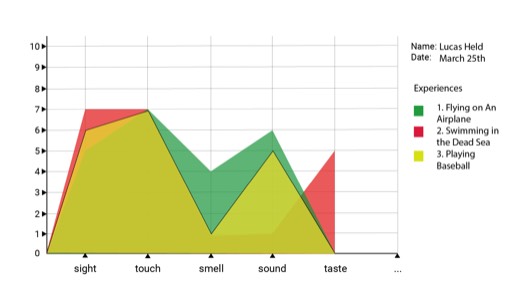
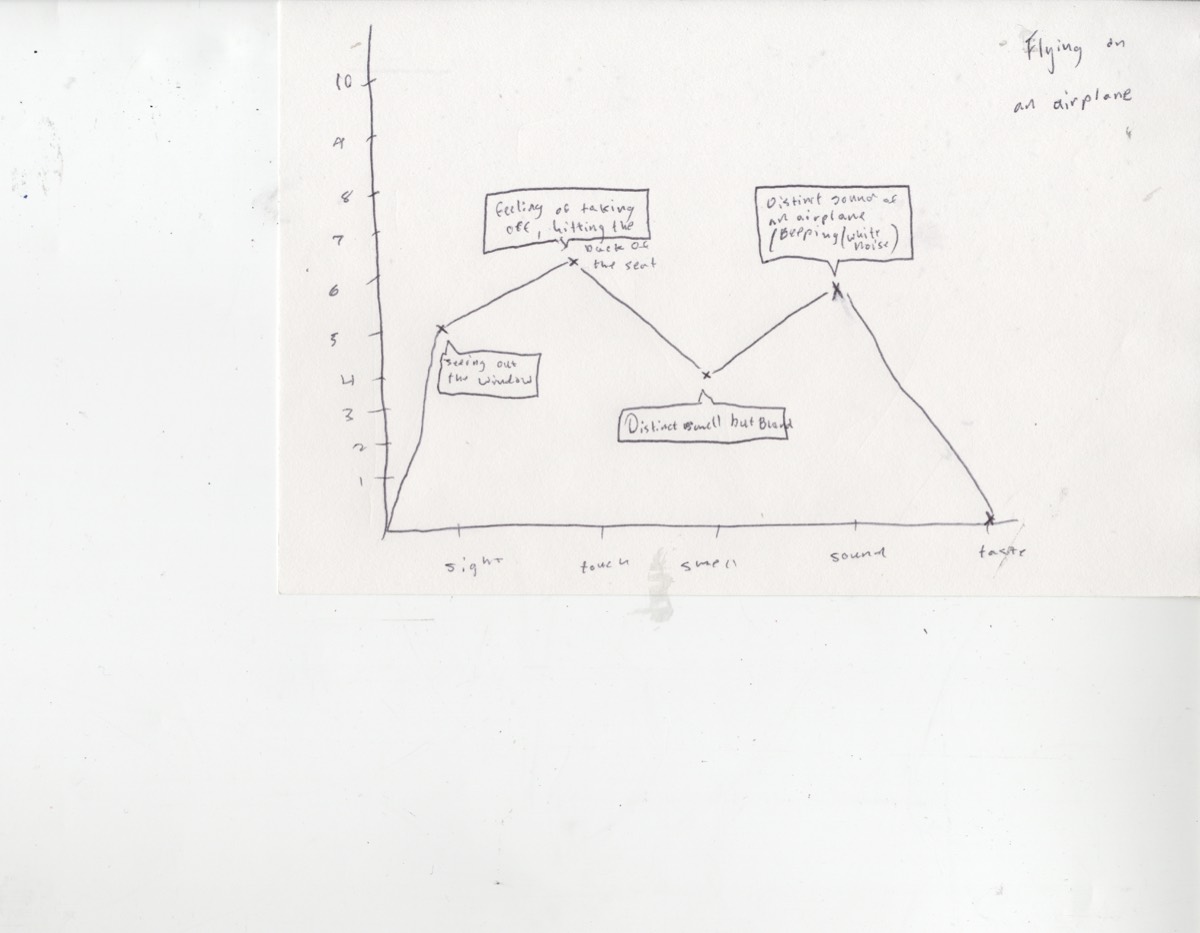
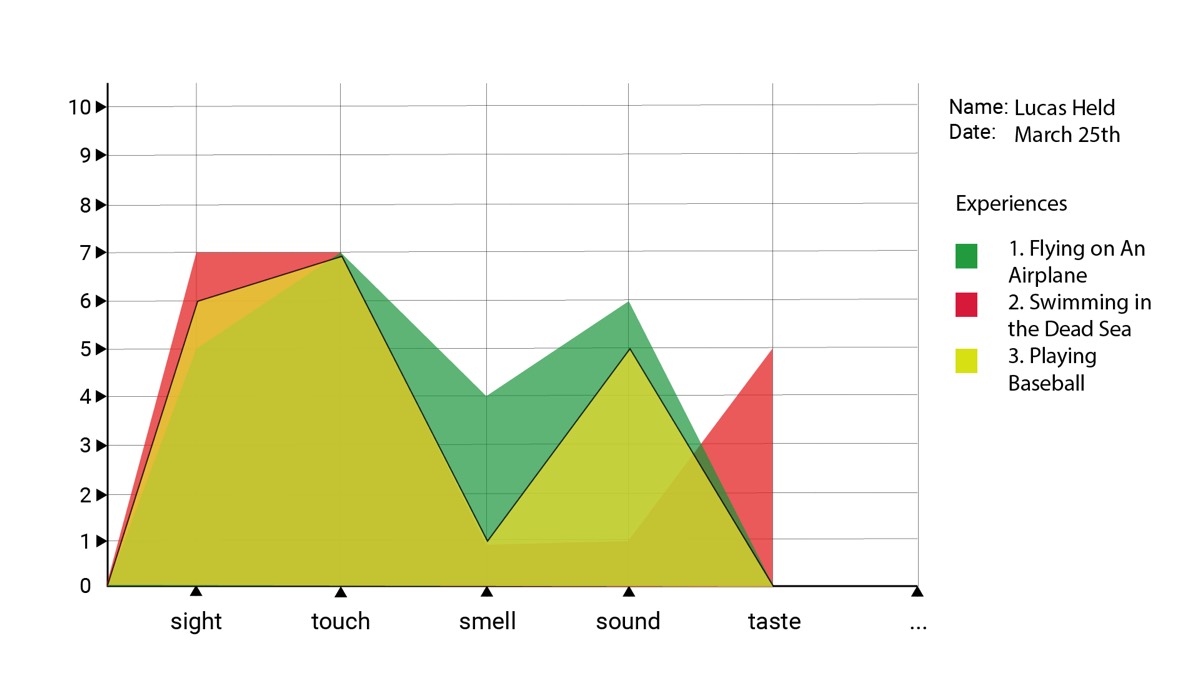
Movie vs. book, graphedFlying, graphedThree experiences, graphed
IISense Maps
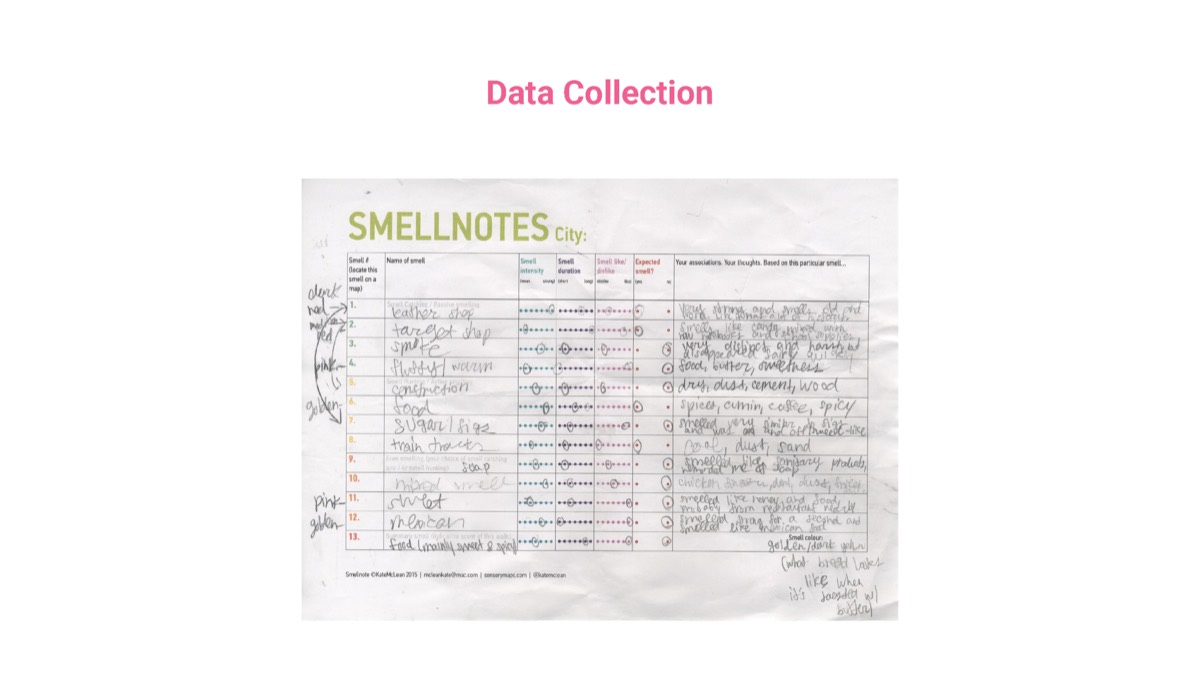
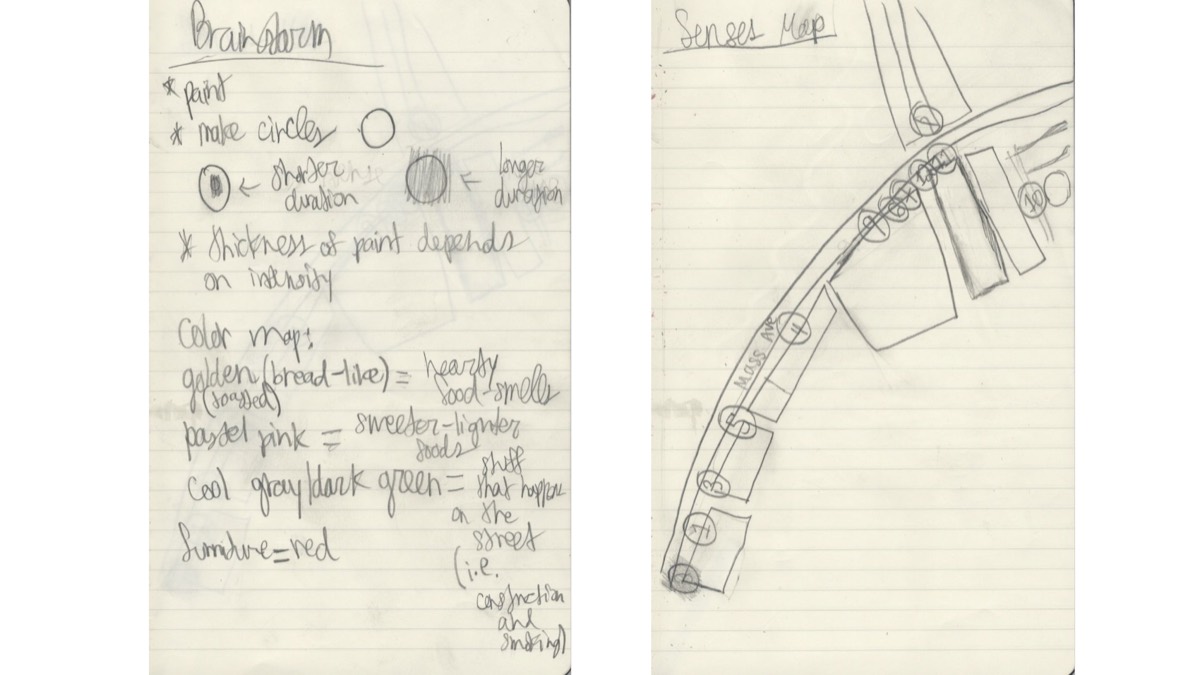
Field sheetNotebookThe walk, mappedCentral Square, by scent
IIIExperiencing Memory
Ragnar Kjartansson, The Visitors, 2012The artist's map of the pieceA student's plan of the piece
IVWriting from the Senses
Sound palette poems, after Gertrude SteinPaint chip poemsBryant Gold, HC-7The word bank
VMaking Color Tangible
Whispering WoodsThe poemThe object, wornLucky Charm GreenSix questionsThe poemThe object, in handColor poemTexture and shape
VIPowers of 3
Powers of 3"Walking in Rain"A device that collects rain
Finalsmell step
PrecedentPrecedentNuVu NotesStoryboardStoryboard, captionedThe deviceScent trail
Finalsunrise symphony
Musical coffee tableMechanismPhotoresistor and Arduino06:30, 06:45BuiltRhino model

NuVu Studio, Cambridge · Spring 2019 · model module-based studio · 10 days · co-coached with Nadine Zaza

A studio built to test a new curriculum model: discrete learning modules that could be recombined as NuVu grew. It became the template for the studios that followed. The subject was the senses. Students asked how the layering of sensory exposure defines experience and memory, and how sensory information triggers bodily response, and worked through a progressive, data-driven sequence to design devices and installations that let a user experience the world through a sensory connection they had never felt. Unlike most NuVu studios, the final product was a proof of concept rather than a working prototype; the sequence was the point.

I
5-Sense Theory

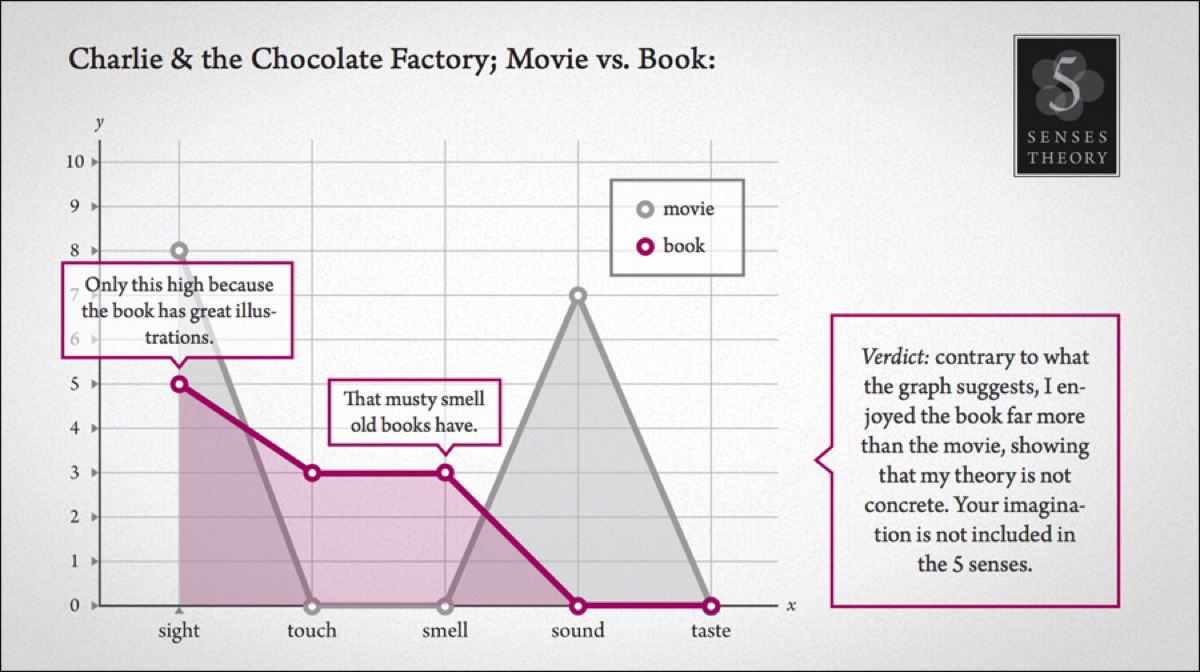
Using five-sense graphs, students recorded experiences, plotted them, and compared the data.

A typeset five-sense graph comparing Charlie and the Chocolate Factory as film and as book, with a verdict note
Movie vs. book, graphed
A pencil graph with two peaks and handwritten notes on sight, sound, and touch
Flying, graphed
A vector area graph in red, green, and yellow across sight, touch, smell, sound, and taste, with a legend of three experiences
Three experiences, graphed
II
Sense Maps

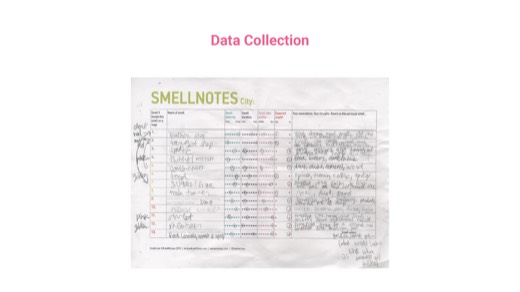
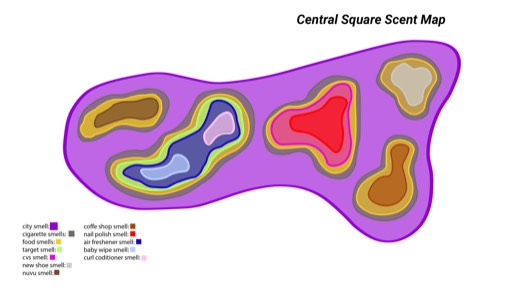
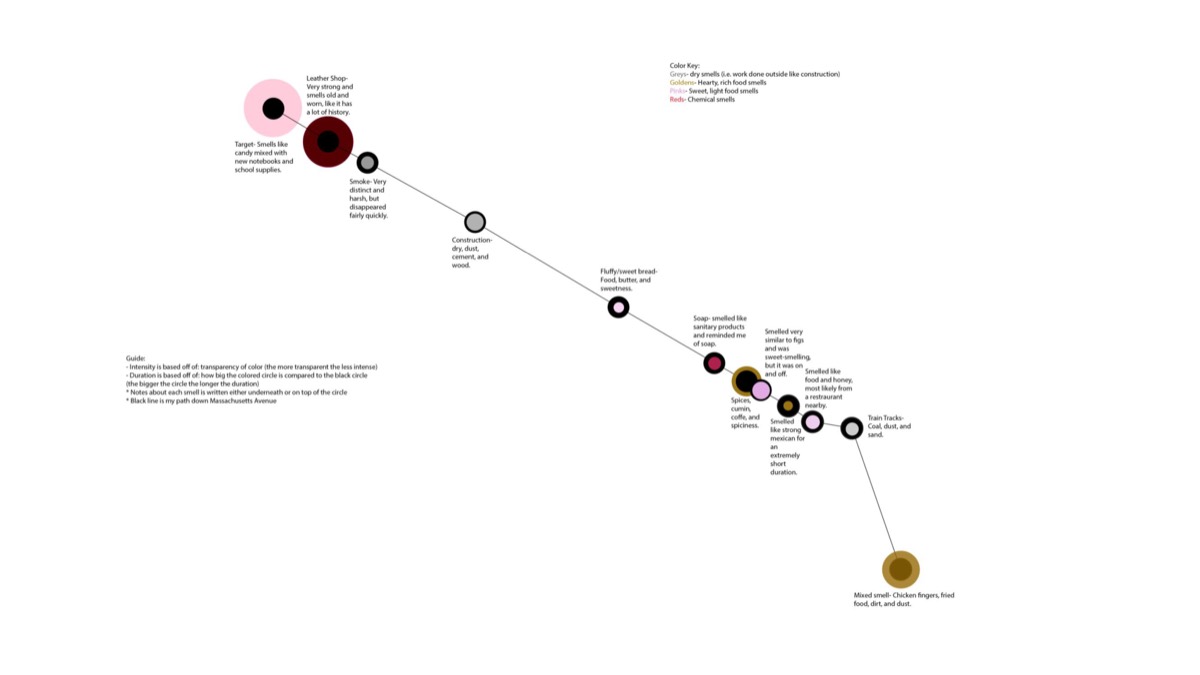
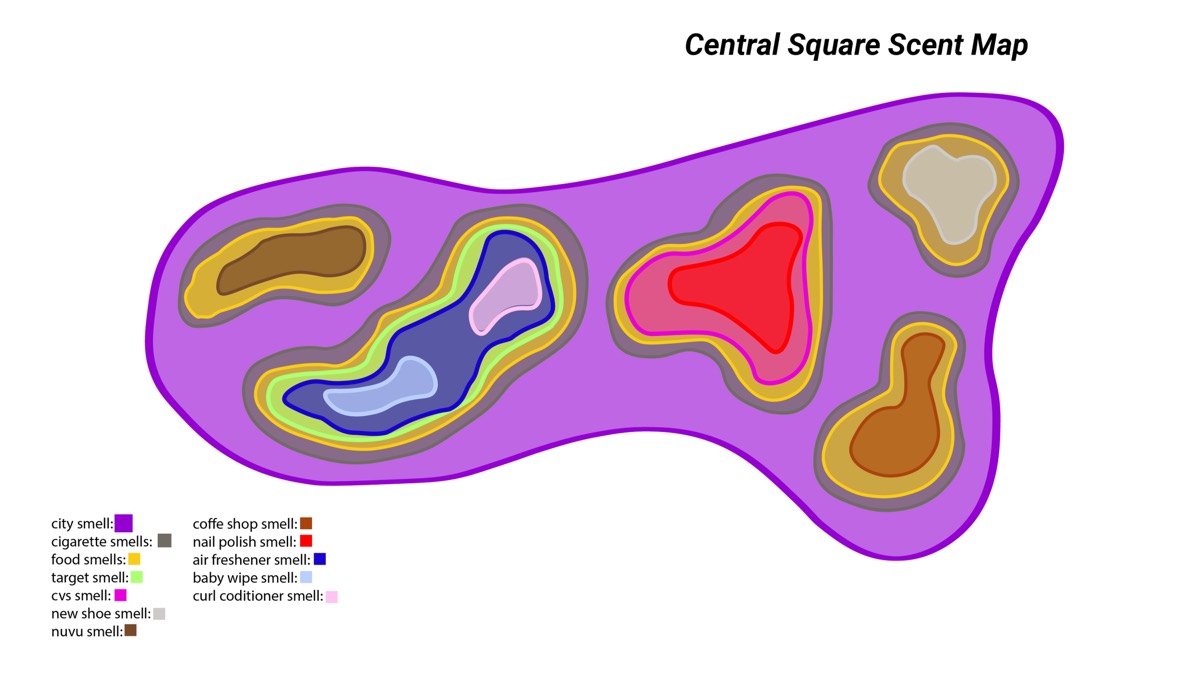
With a smell-walk mapping kit, students refocused their reading of Central Square on one sense and learned to map data with a privileged intention.

A filled-in SMELLNOTES City worksheet with columns for smell, intensity, and notes
Field sheetSensory Maps kit, Kate McLean
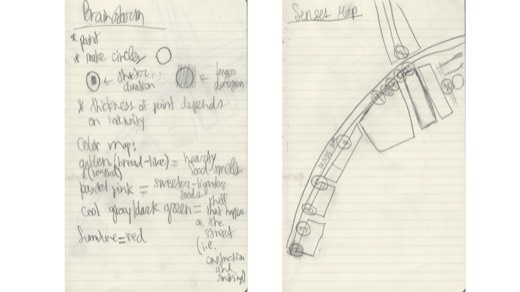
A sketchbook spread: a brainstorm list on the left, a pencil map of streets and smell points on the right
Notebook
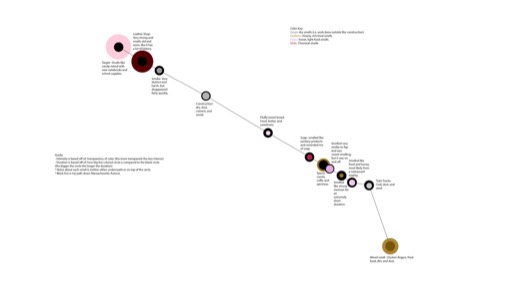
A diagonal line of smell points with typed annotations, from a coffee shop to a dumpster
The walk, mapped
Nested contour blobs in purple, blue, red, and ochre over a plan of Central Square
Central Square, by scent
III
Experiencing Memory

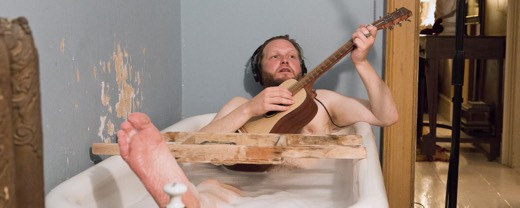
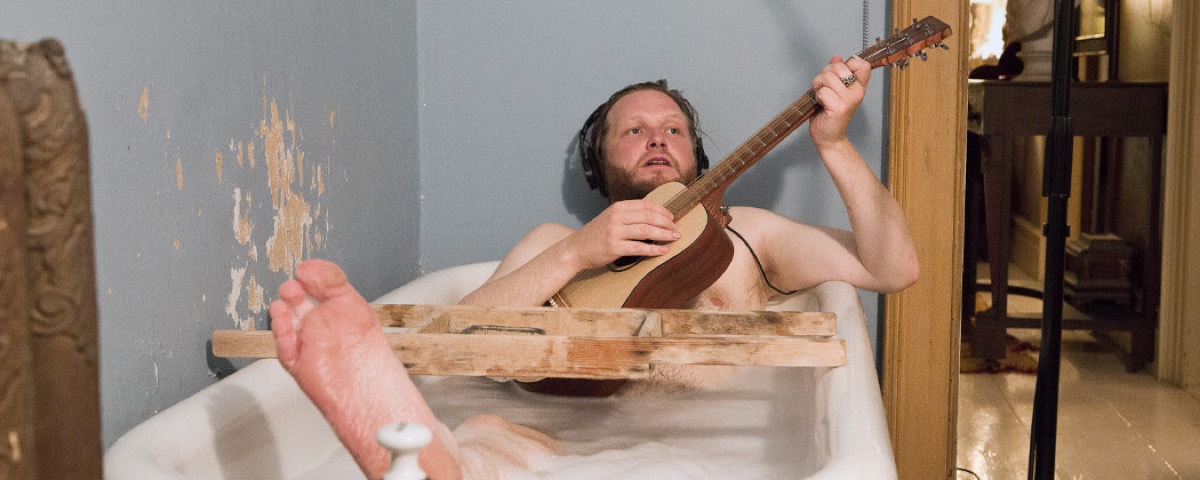
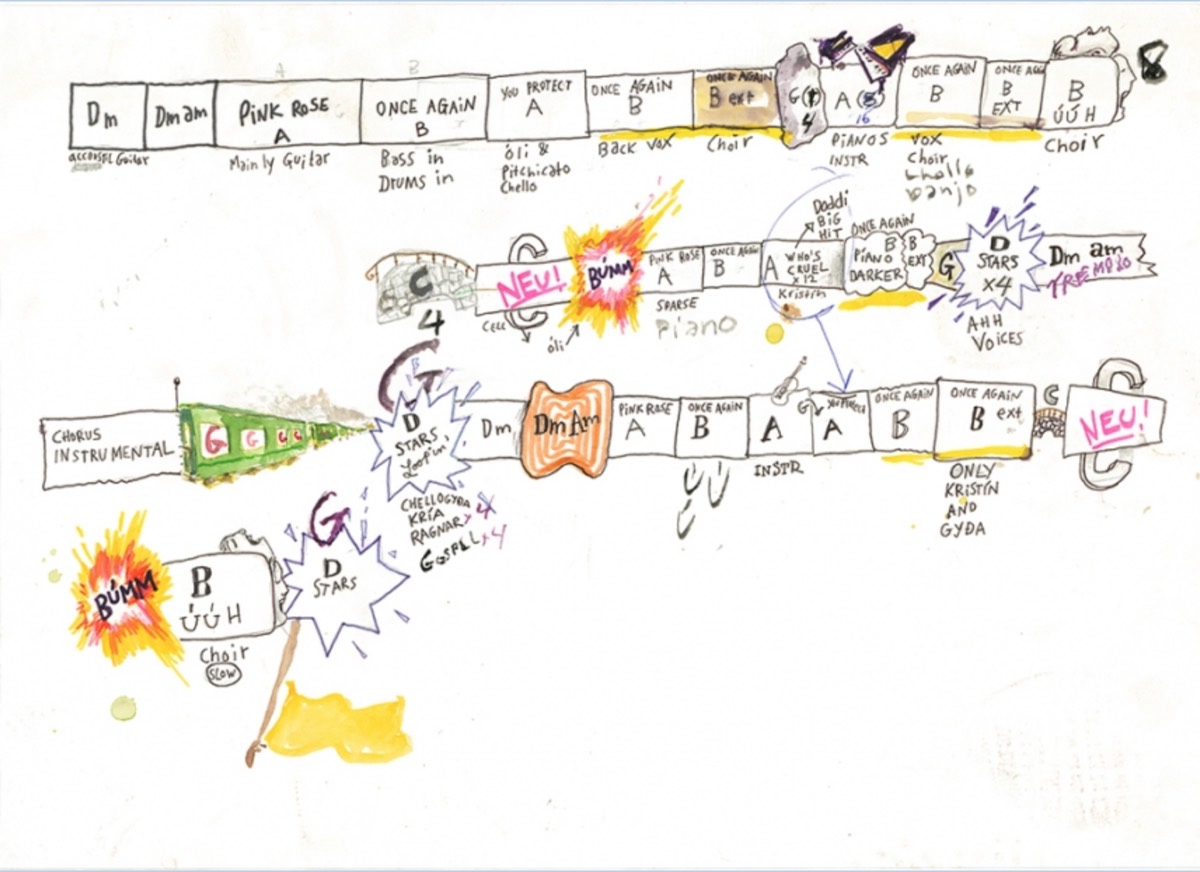
Students experienced Ragnar Kjartansson's The Visitors at the ICA Boston, to learn how spatial sense can be engaged through the other senses, and how a work can obliquely trigger individual and shared emotion.

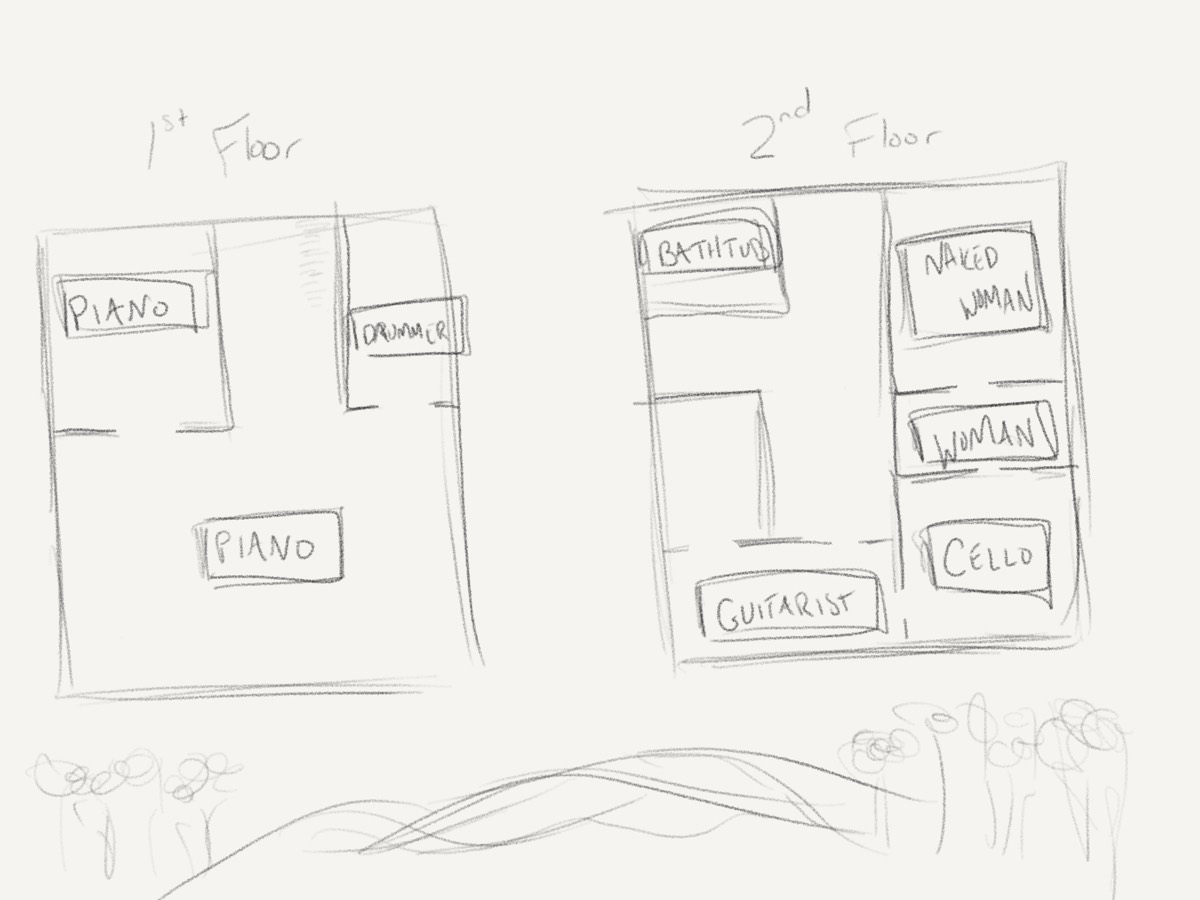
A man in a bathtub playing a guitar in a peeling room
Ragnar Kjartansson, The Visitors, 2012the work
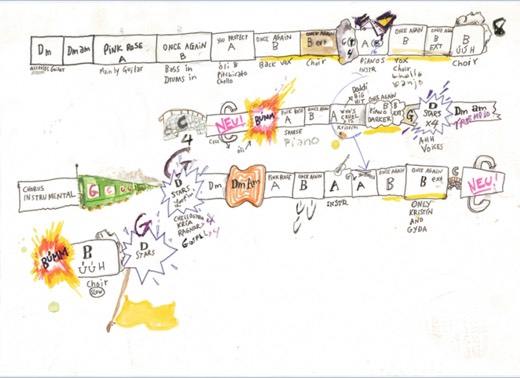
A hand-drawn score of the performance: nine boxes for the rooms, arrows, bursts of colour, handwritten cues
The artist's map of the pieceRagnar Kjartansson
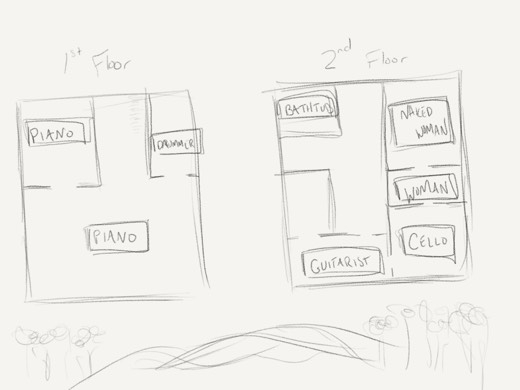
A pencil plan of two floors with rooms labelled piano, guitar, bathtub, cello
A student's plan of the piece
IV
Writing from the Senses

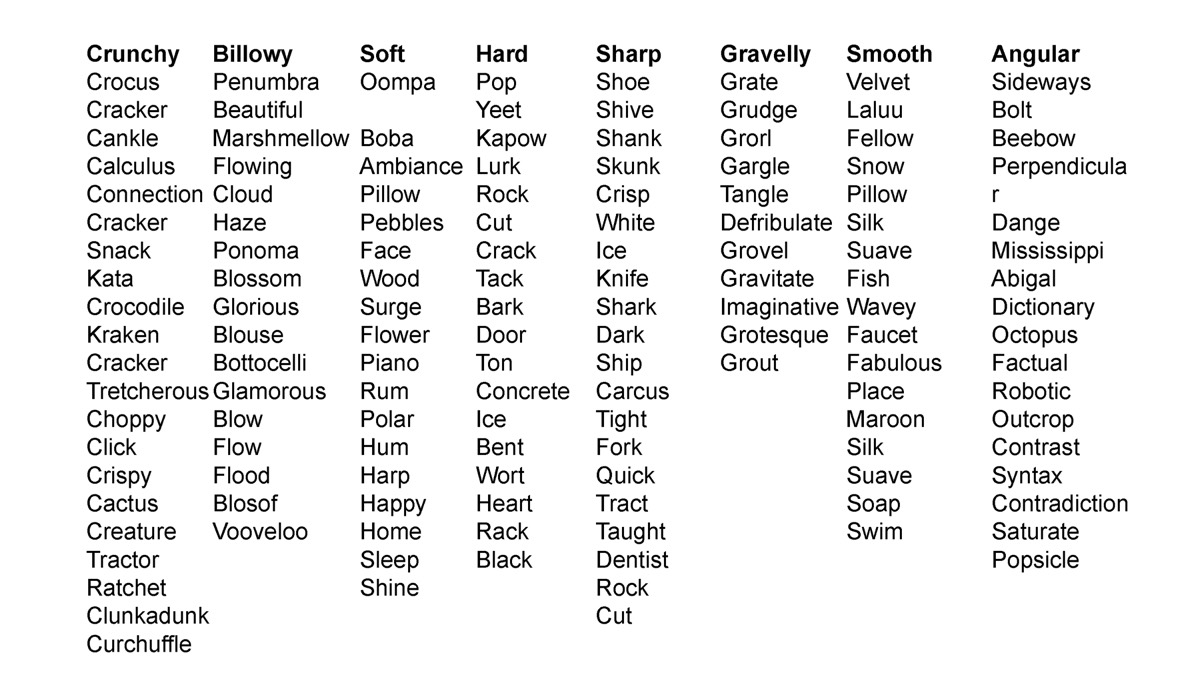
Through exercises on denotation and connotation, diction and syntax, sound, rhyme, meter, and alliteration, students built a palette of words chosen for sensation rather than meaning and wrote free-form sense poetry.

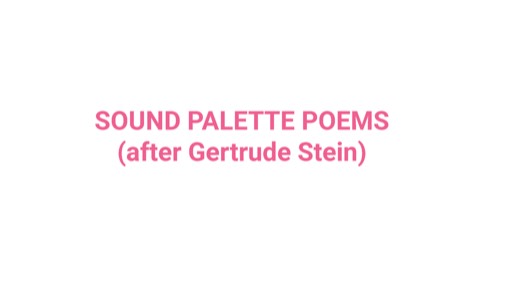
A slide with the heading and columns of the class's sound words
Sound palette poems, after Gertrude Stein
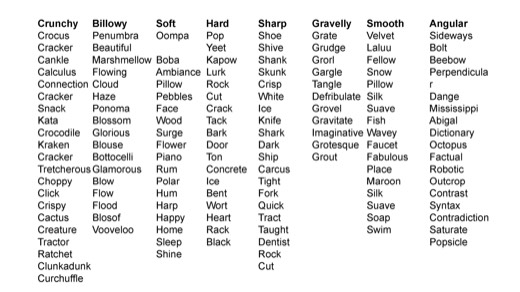
Eight columns headed Crunchy, Billowy, Soft, Hard, Sharp, Gravelly, Smooth, Angular
The word bank
Sound palette
Velvety smooth
But hard and taught
The creatures treacherous trail
With a crack and a click
And a grotesque dip
Dark and quick
With a crack and a click
Like a hum of the harp
And a grudge of the great
All gravitate
To the creatures treacherous trail
Maddie
Sound palette
Nightfall came, as we fell into the snow
like you would onto your bed's pillow.
low low low down we go,
into the final row.
Will we be first? or will we be last?
go low low low,
until we find our fellows in their final row.
Tinna
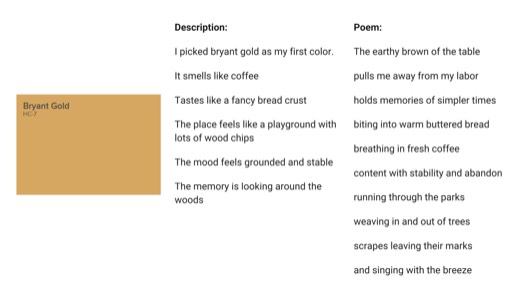
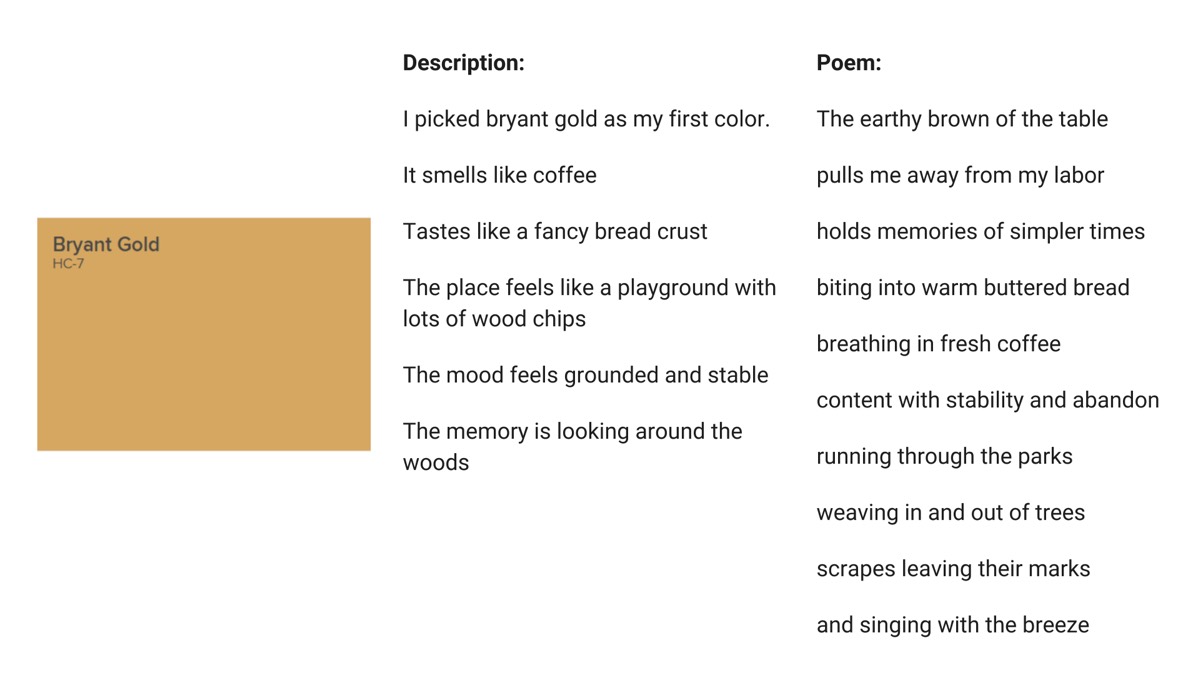
Paint chip · Stability · Bryant Gold, HC-7
The earthy brown of the table
pulls me away from my labor
holds memories of simpler times
biting into warm buttered bread
breathing in fresh coffee
content with stability and abandon
running through the parks
weaving in and out of trees
scrapes leaving their marks
and singing with the breeze
Cooper
Paint chip · Bliss
Rain rain go away, leave dewey drops behind with a light blue glow
Rain rain make me a pie, make it fresh make it sweet make it tart
Rain rain make it smooth make it easy make it thick
Rain rain make it bright but keep it grey
Rain rain go away, take my troubles with you
Rain rain leave me content relieved and blissful
Gwyn
A slide with the heading PAINT CHIP POEMS
Paint chip poems
A gold paint chip beside a six-line description and the poem Stability
Bryant Gold, HC-7
V
Making Color Tangible

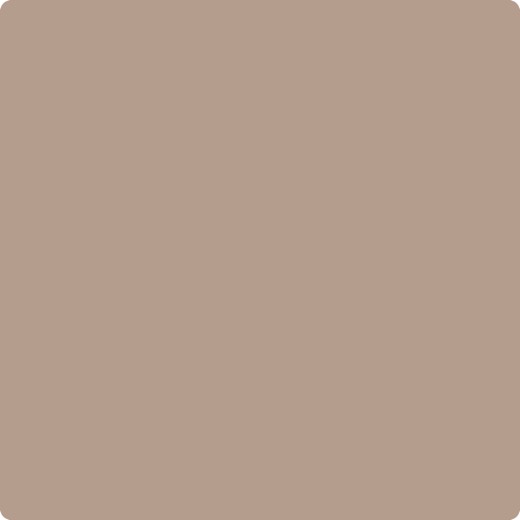
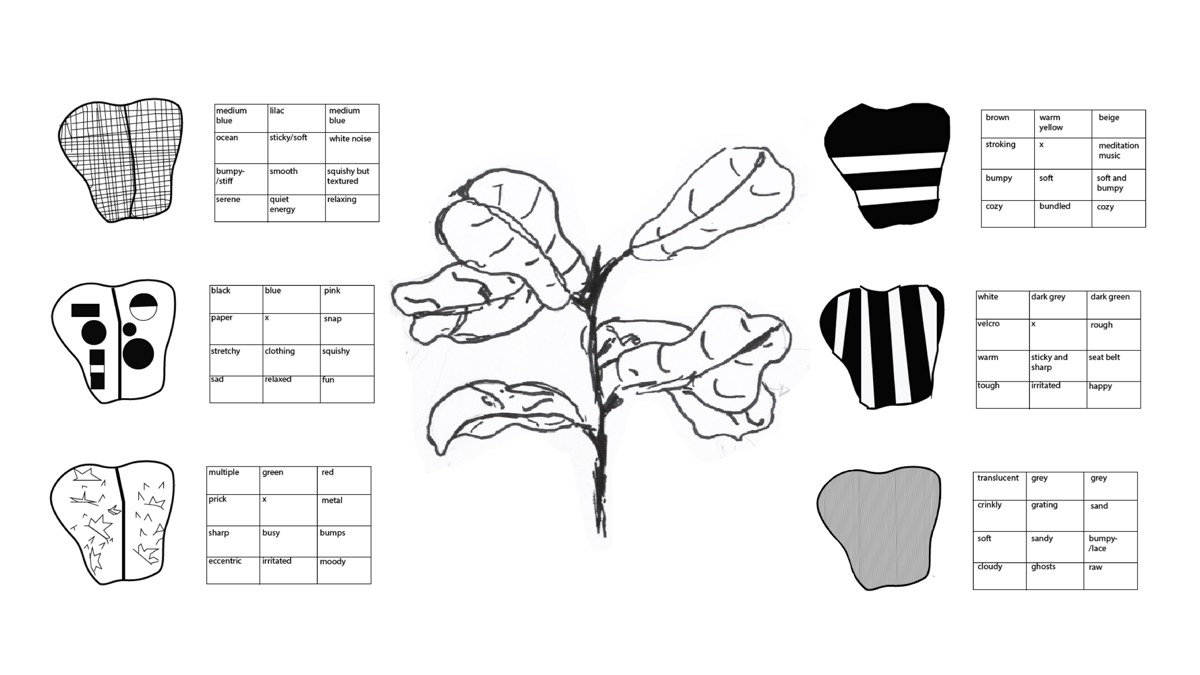
From a paint chip, students drew out the colour's emotional associations as data, wrote a poem in that emotion, then made an object whose physical experience produces it.

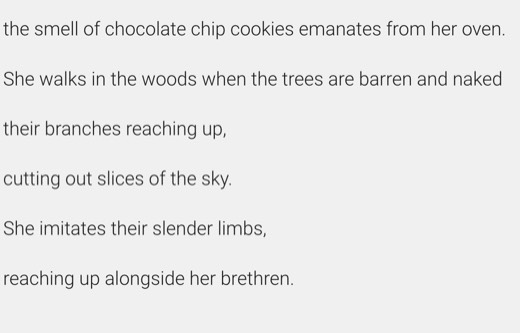
the smell of chocolate chip cookies emanates from her oven.
She walks in the woods when the trees are barren and naked
their branches reaching up,
cutting out slices of the sky.
She imitates their slender limbs,
reaching up alongside her brethren.
Whispering Woods
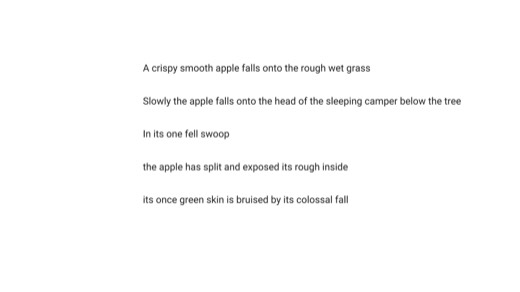
A crispy smooth apple falls onto the rough wet grass
Slowly the apple falls onto the head of the sleeping camper below the tree
In its one fell swoop
the apple has split and exposed its rough inside
its once green skin is bruised by its colossal fall
Lucky Charm Green
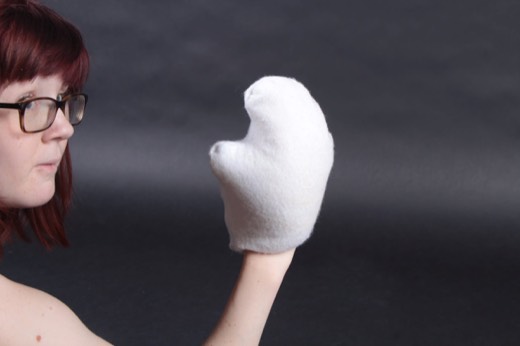
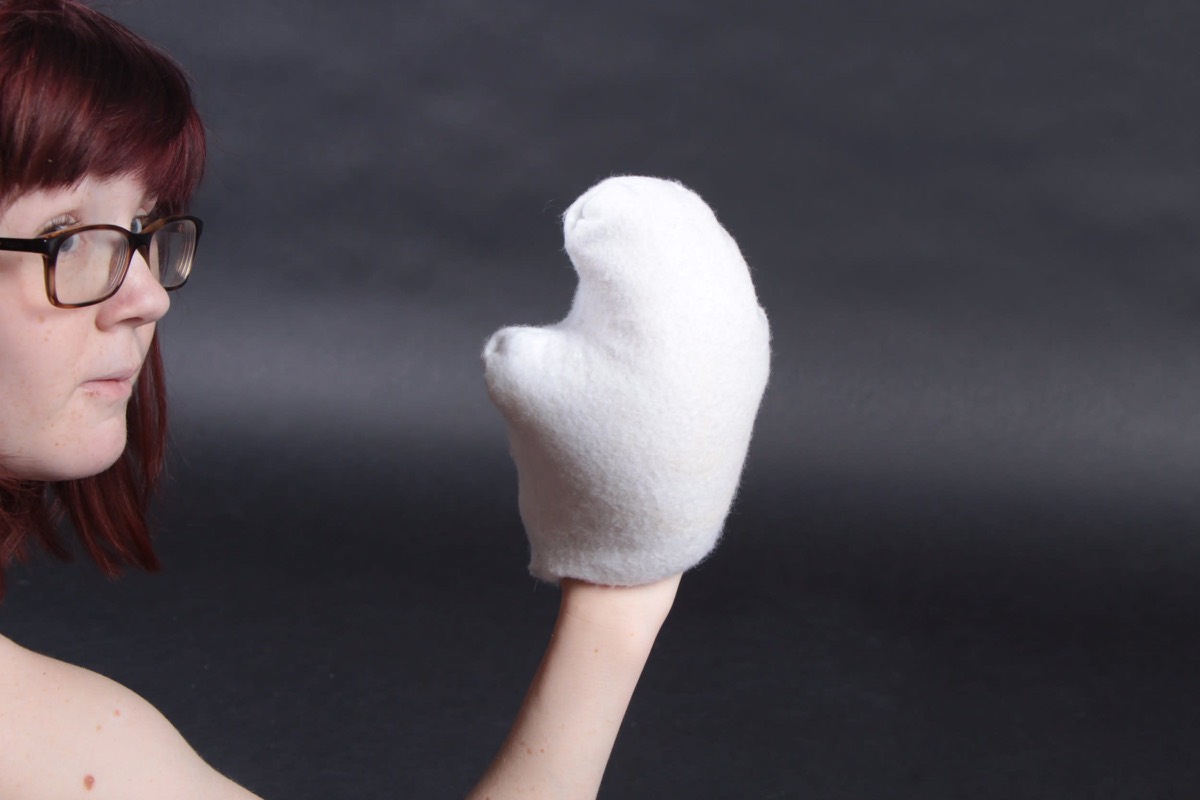
A student in profile with a white felted mitt on one hand
The object, worn
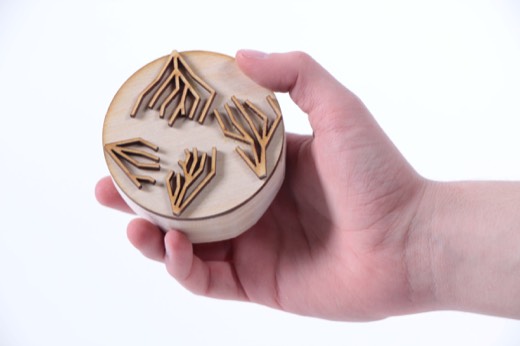
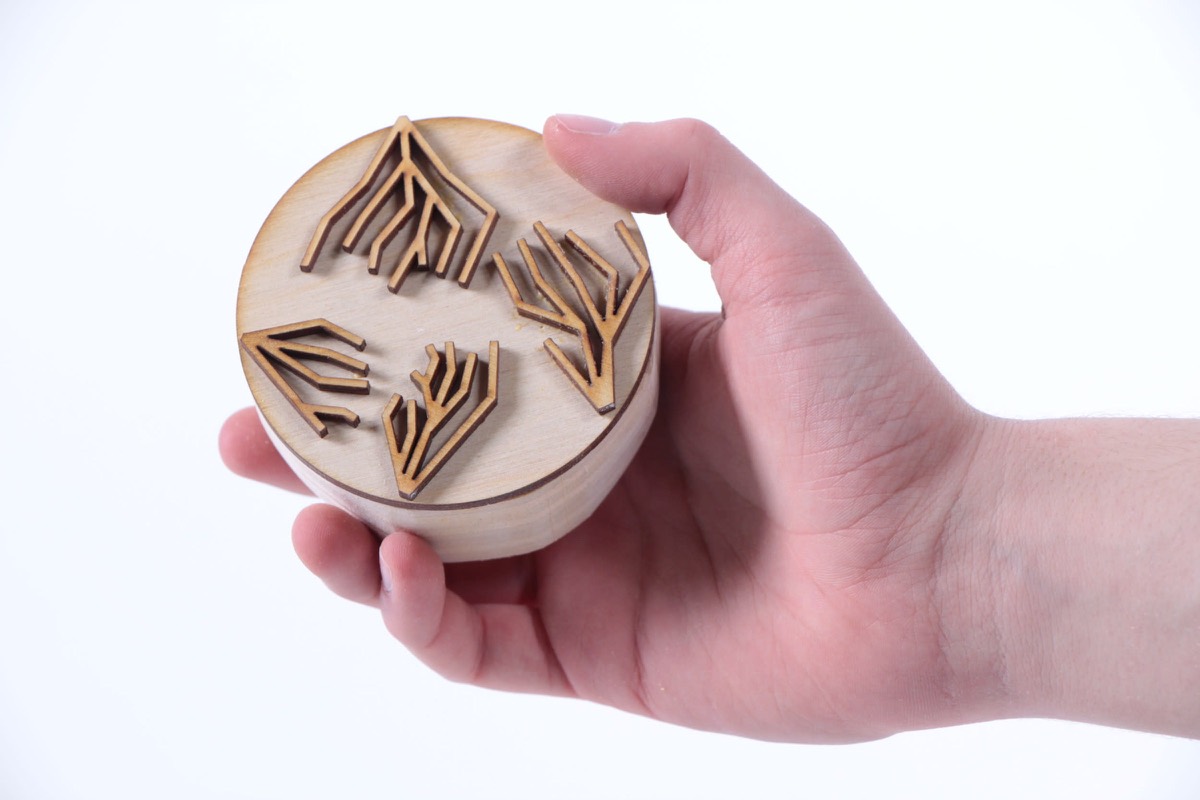
A hand holding a round wooden puck inlaid with a tangle of small sticks
The object, in hand
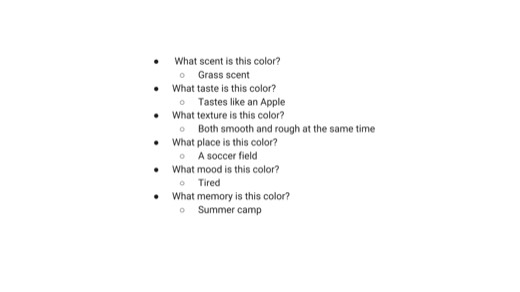
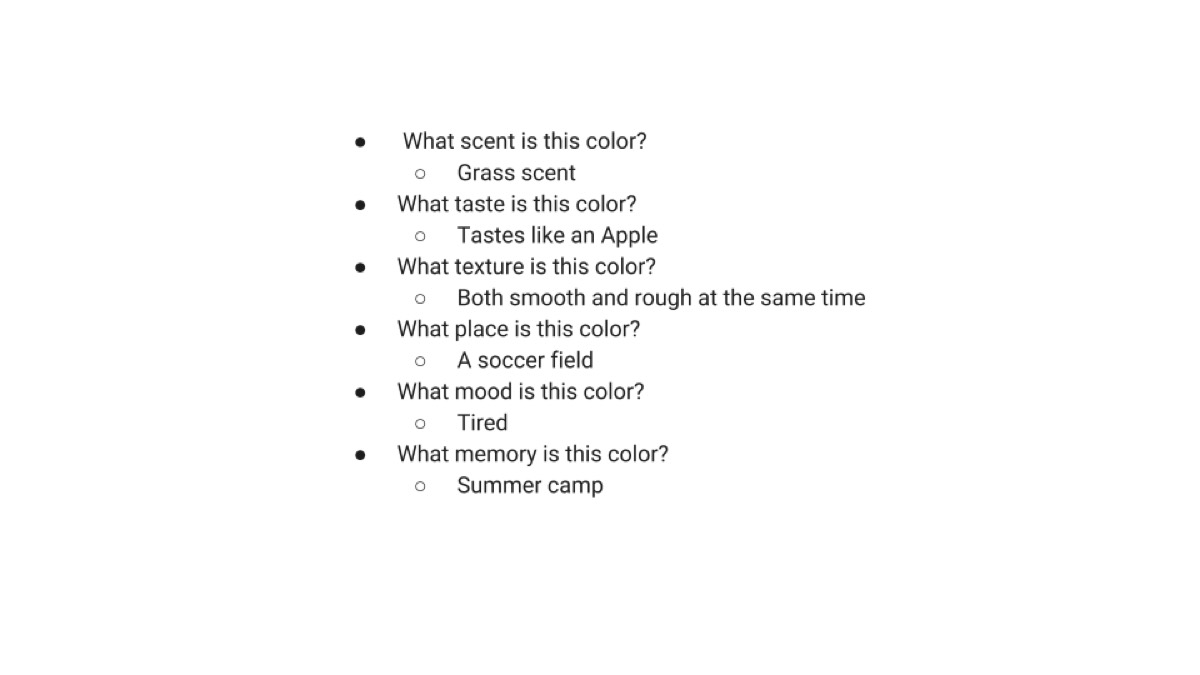
A slide listing what the colour smells, tastes, feels like, its place, mood, and memory
Six questions
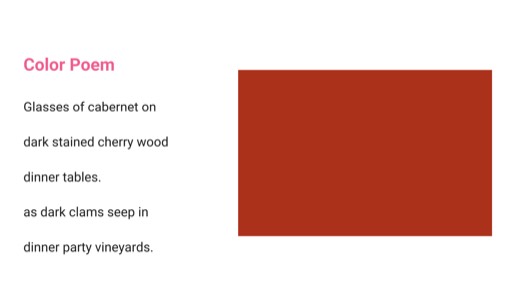
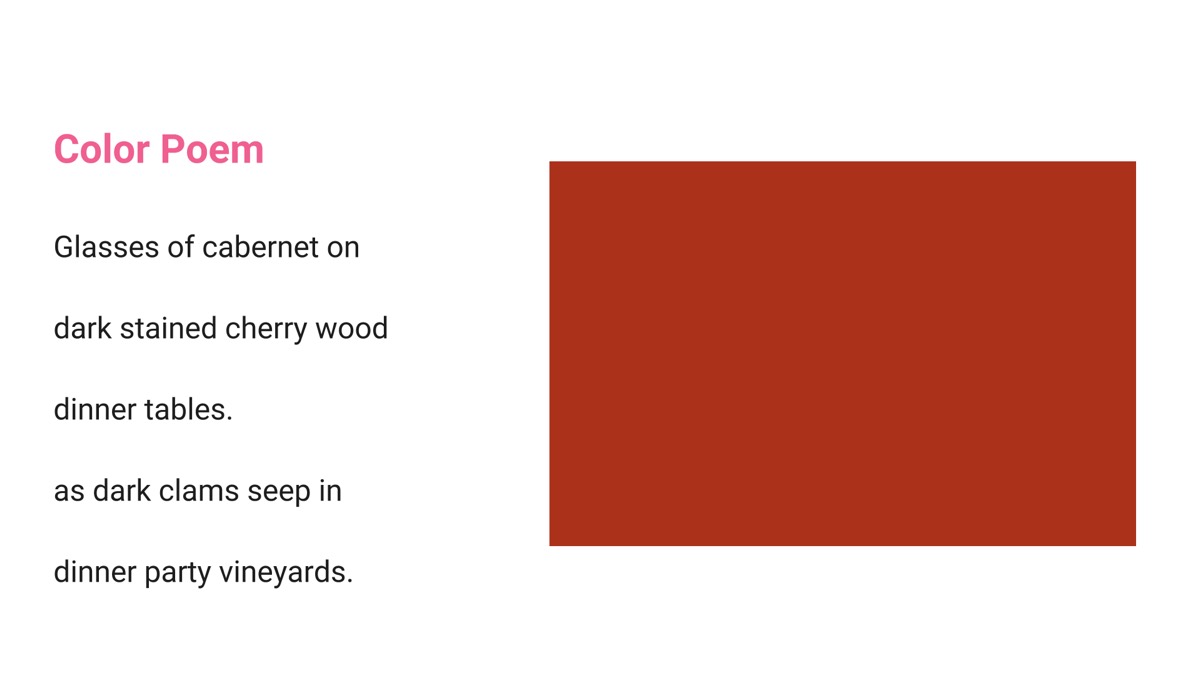
A short poem about cabernet on cherry wood beside a deep brick-red field
Color poem
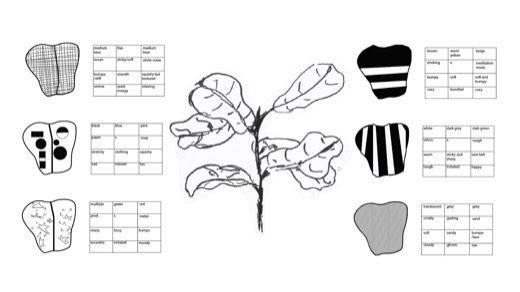
Six textured shapes with tables of colour, material, and feeling
Texture and shape
VI
Powers of 3

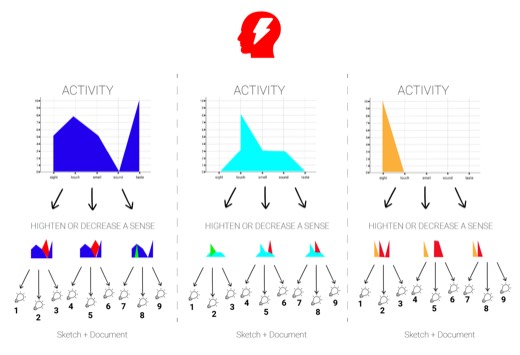
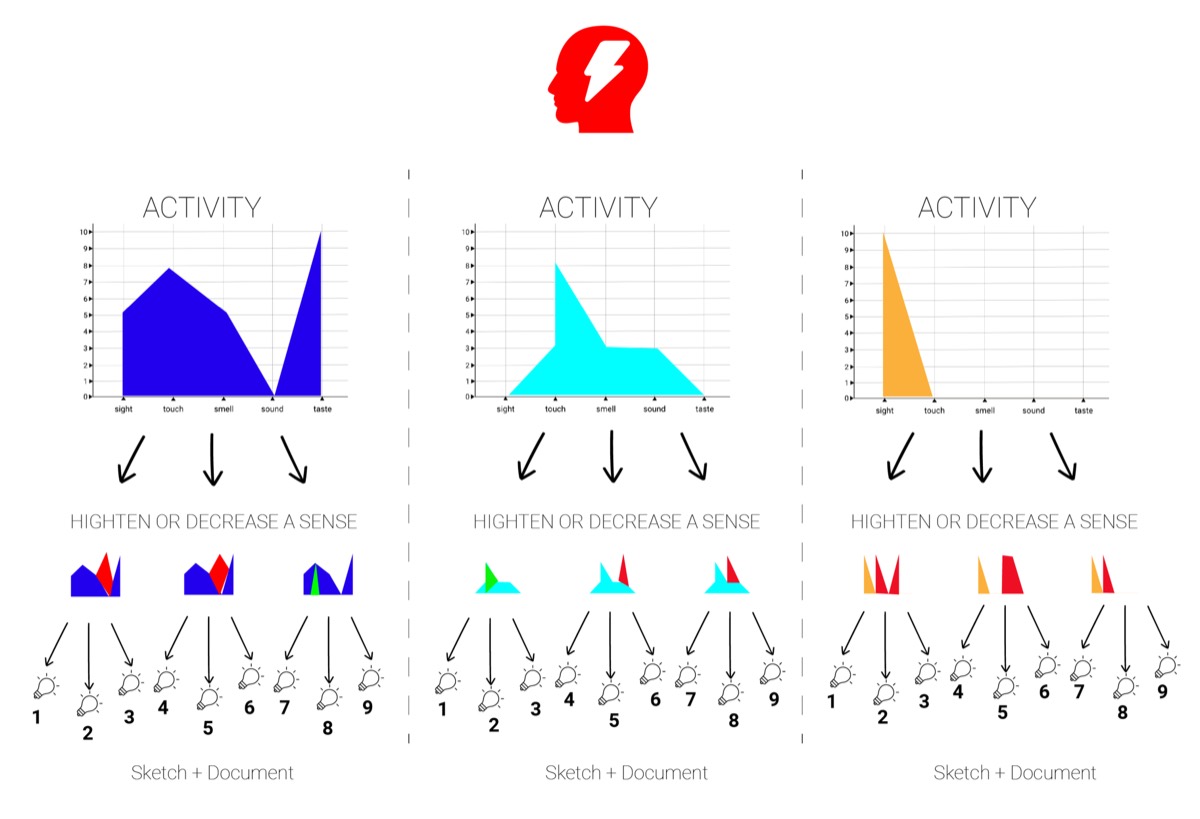
Students generated seed concepts from their own prior work through a powers-of-3 model built for the studio, then partnered by affinity.
Three columns of activity graphs branching into sketches and documents, in blue, cyan, and orange
Powers of 3instructor diagram
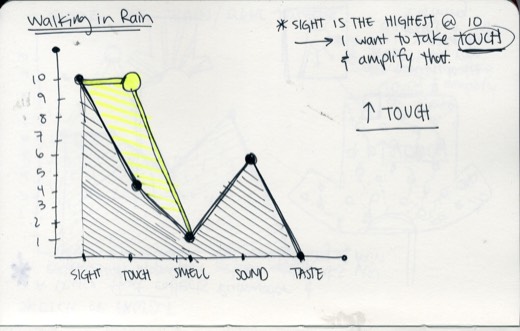
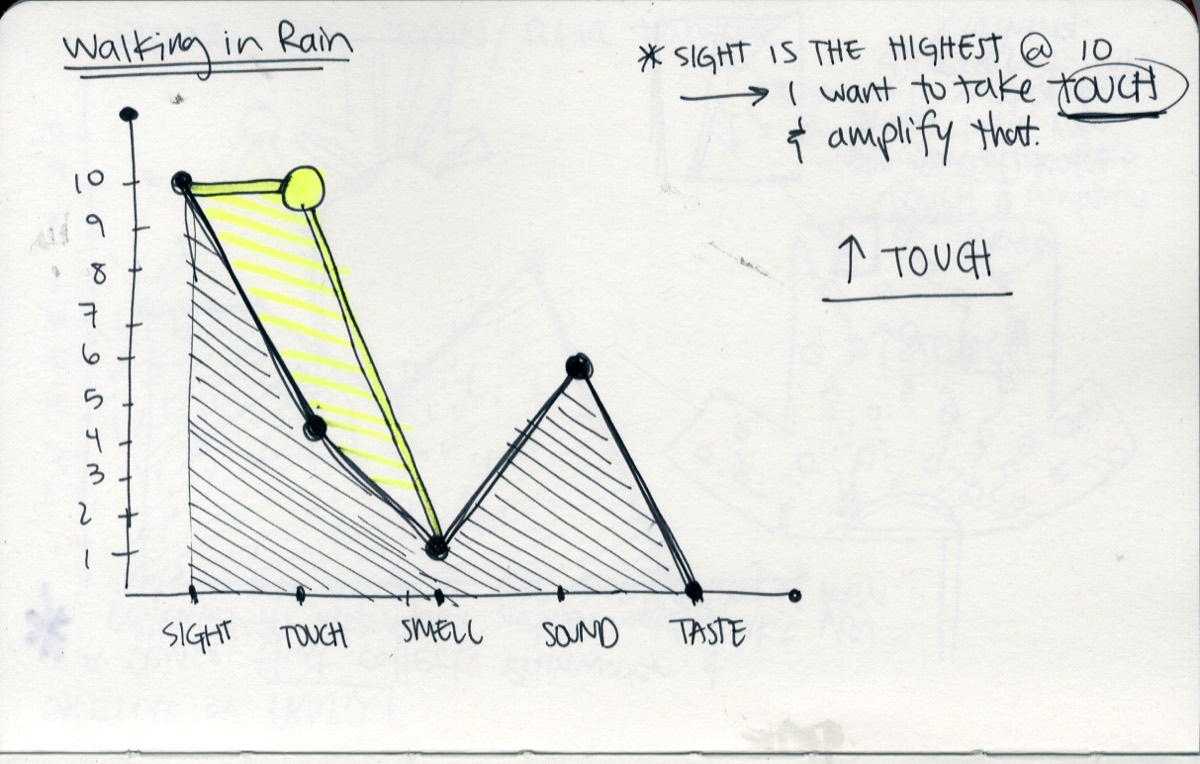
A pencil five-sense graph with sight highest and a note to amplify touch
"Walking in Rain"
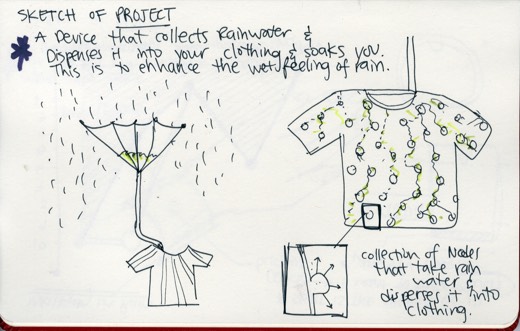
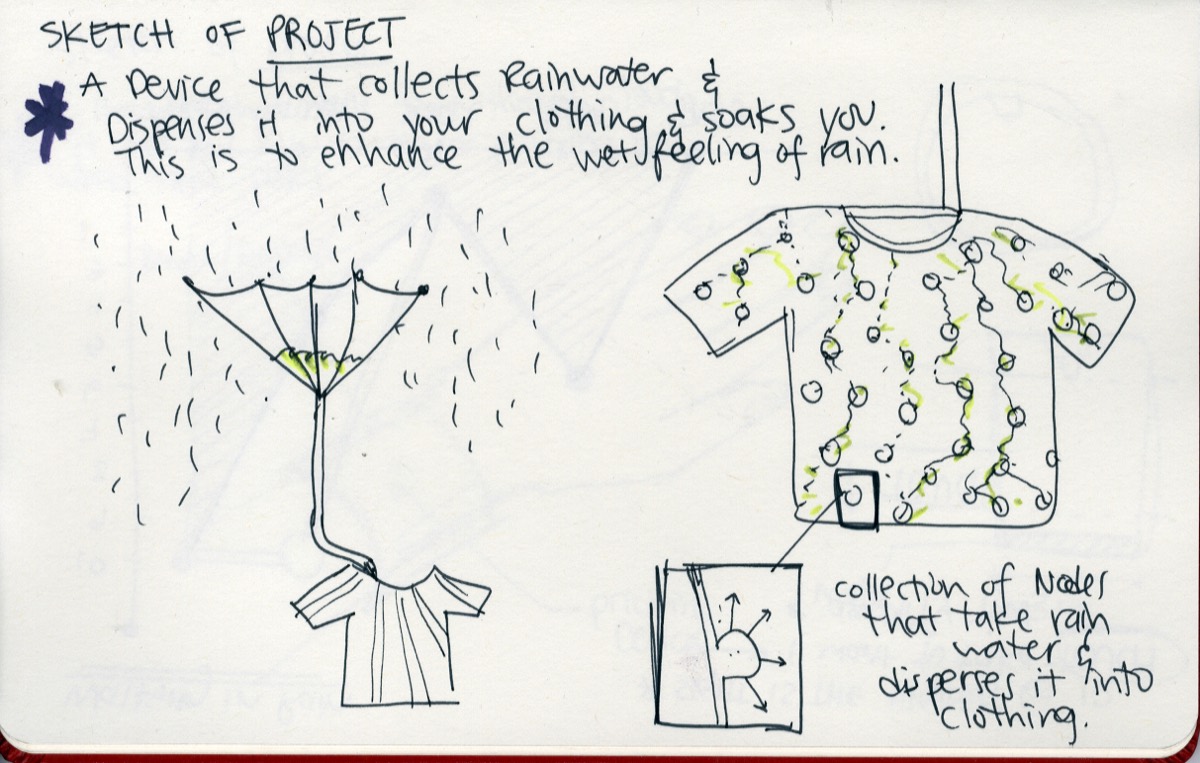
A sketch of a funnel over a T-shirt with a note on soaking the wearer
A device that collects rain
VII
Design Sense

Projects that give common actions new meaning and let users experience the world through unfelt sensory connections, taken through physical and digital prototypes to proof of concept. Two projects.

The Smell Step

two students

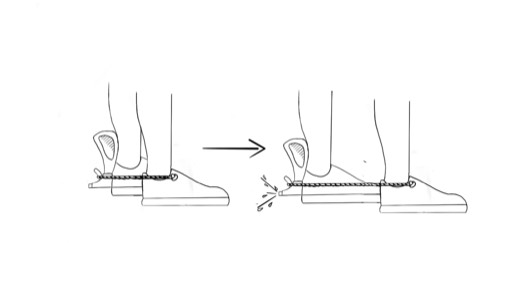
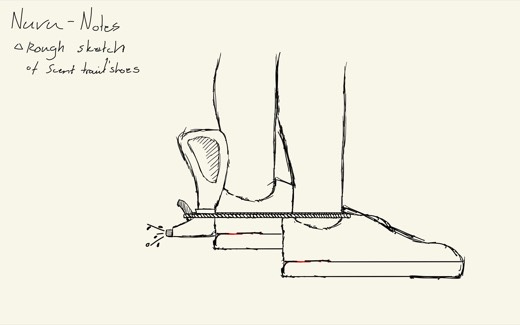
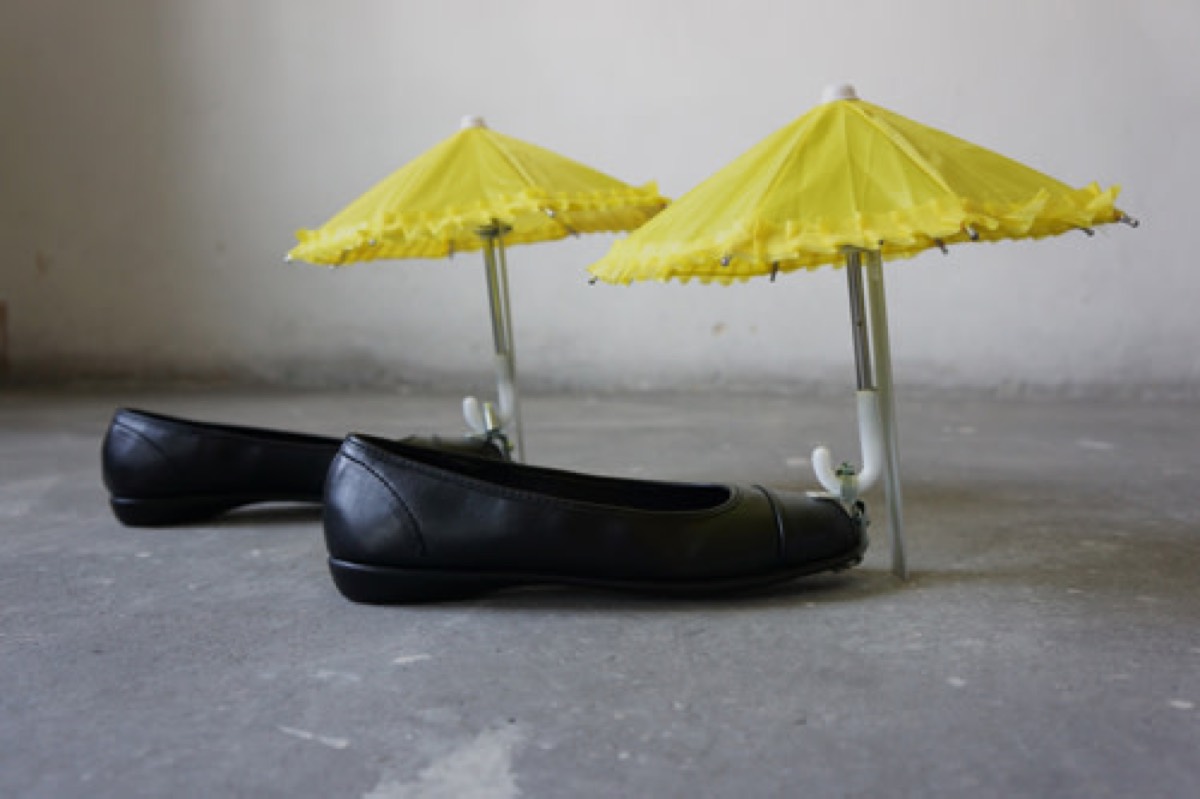
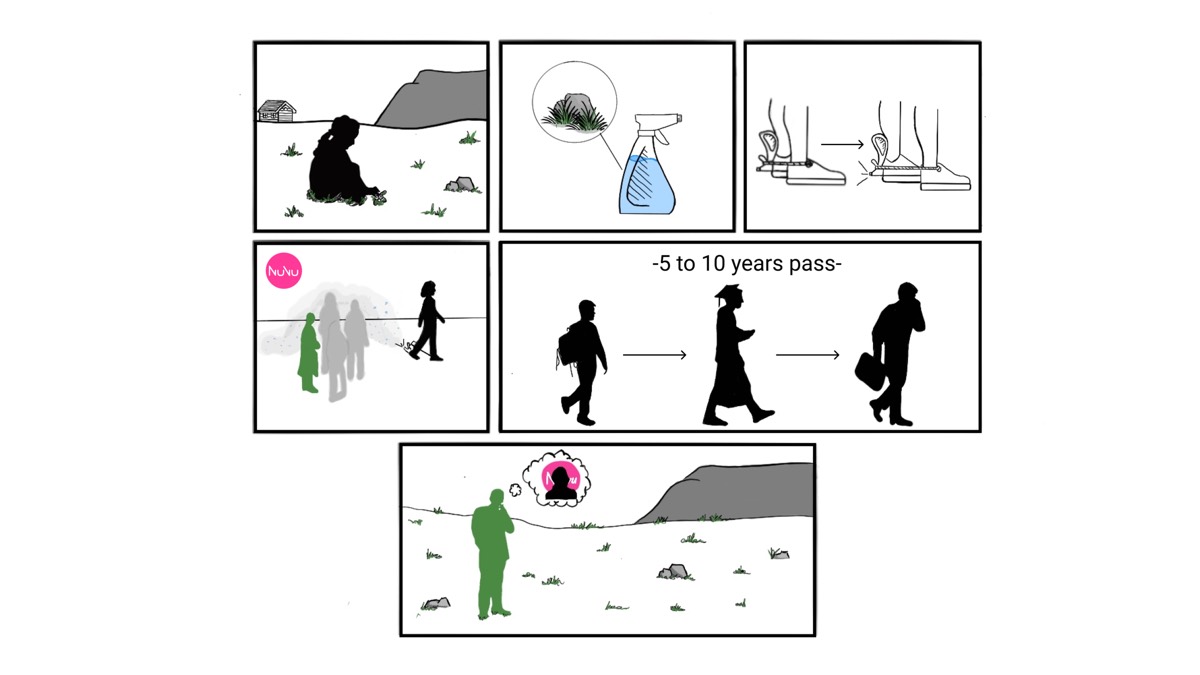
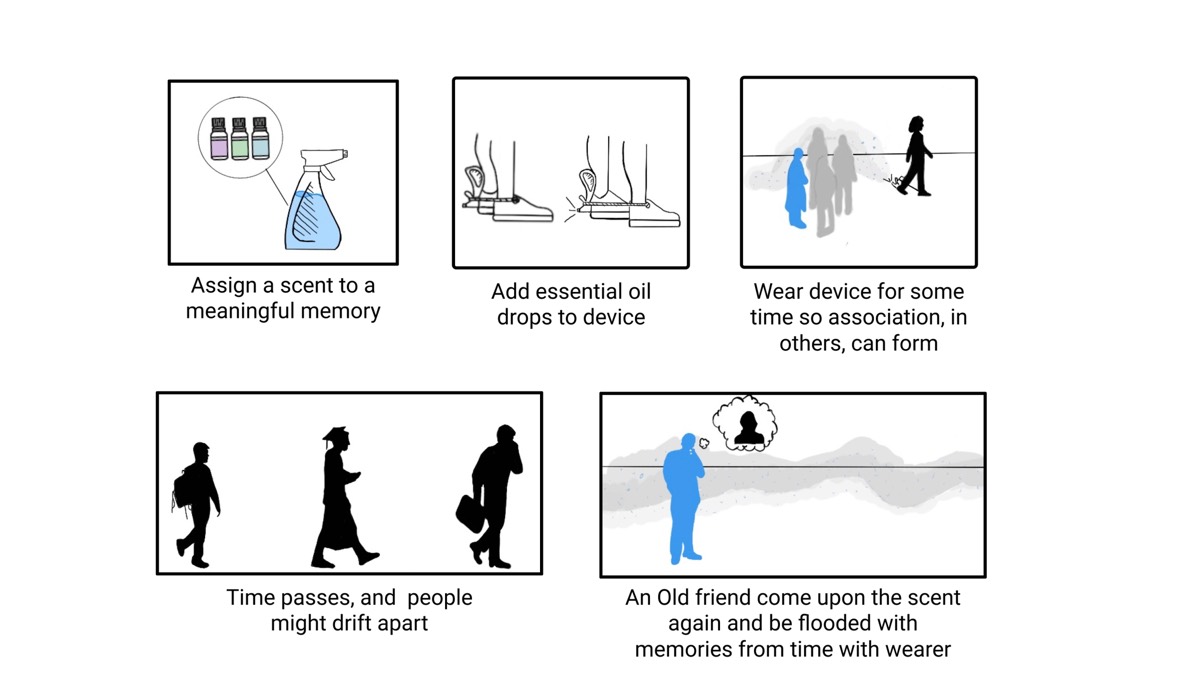
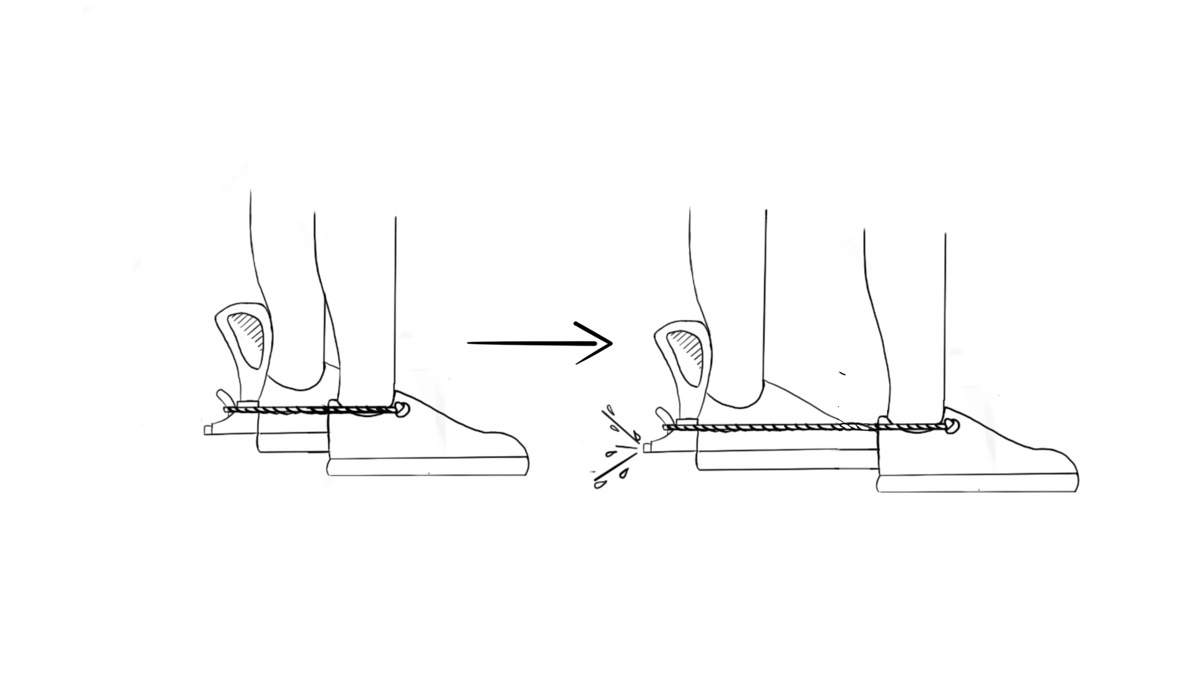
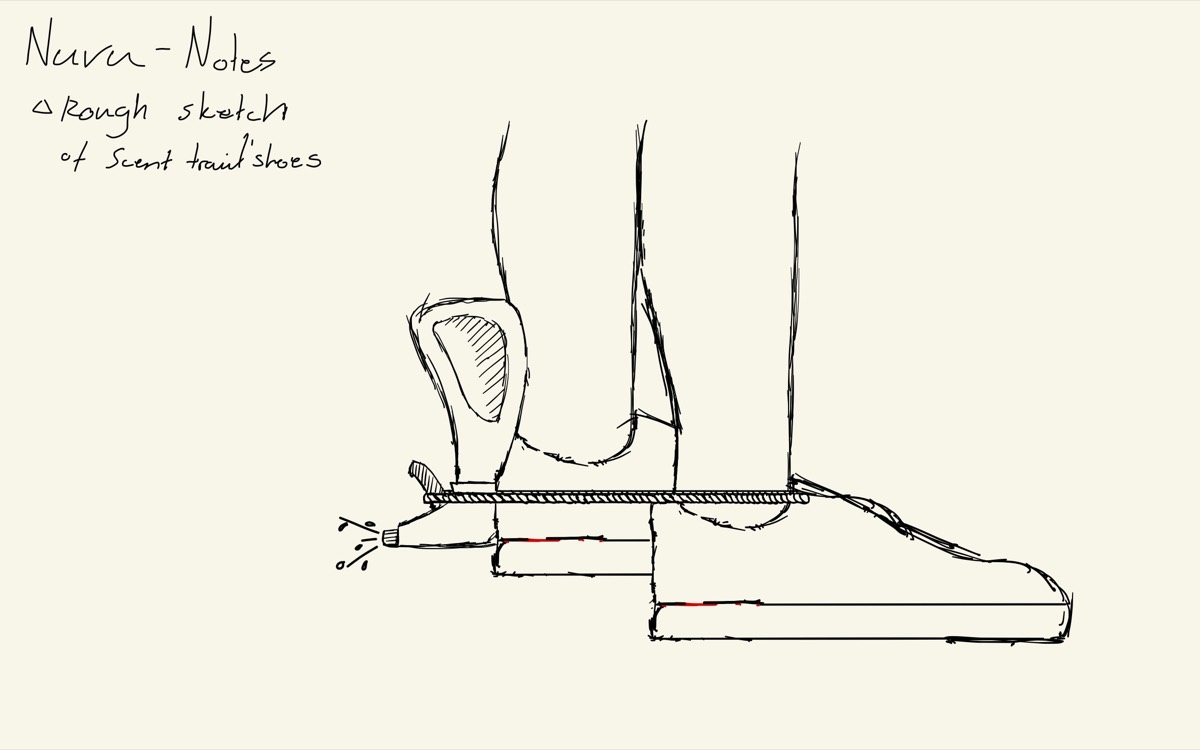
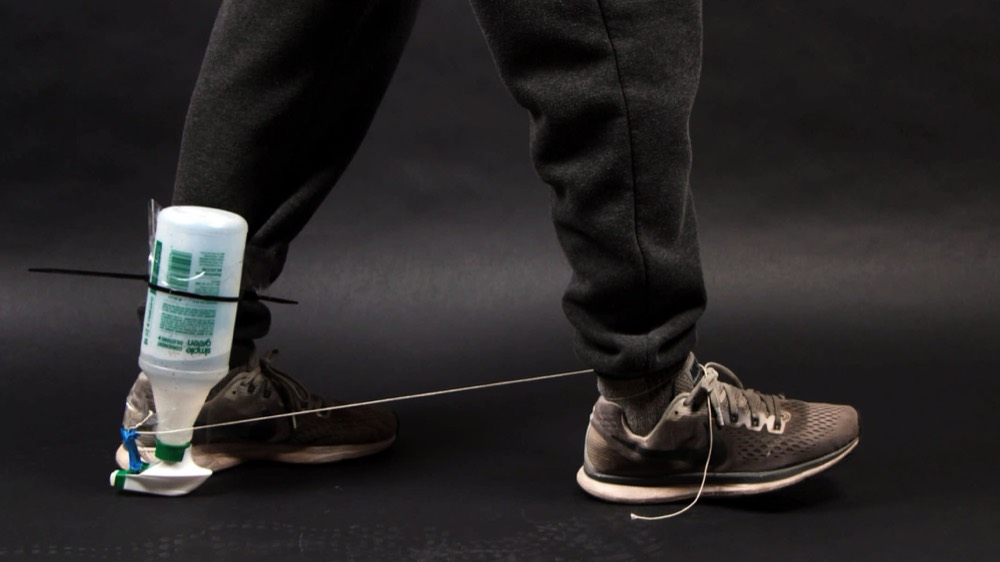
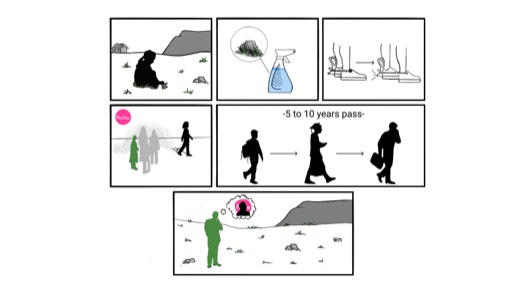
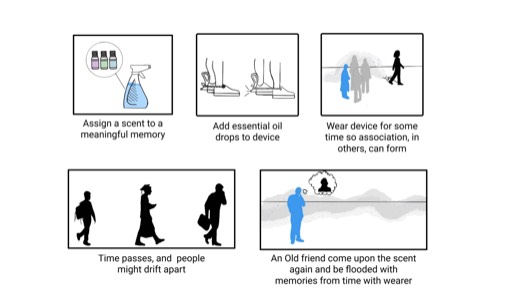
A shoe accessory that leaves the wearer's presence in a room as scent, so that over time the people they meet each day come to associate the scent with them, and to remember them more vividly. A spray bottle and a string: the string runs from the bottle's lever to the other leg, and each step forward pulls it, dispensing a mist of water and essential oil.
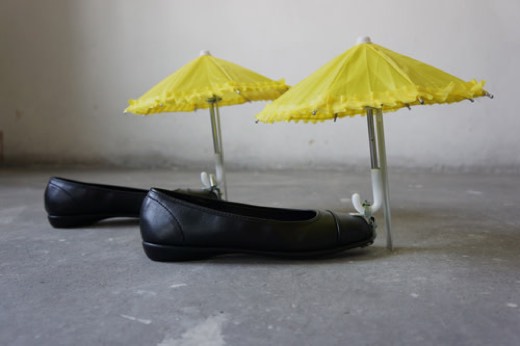
Black flats with two small yellow paper parasols mounted on them
Precedent
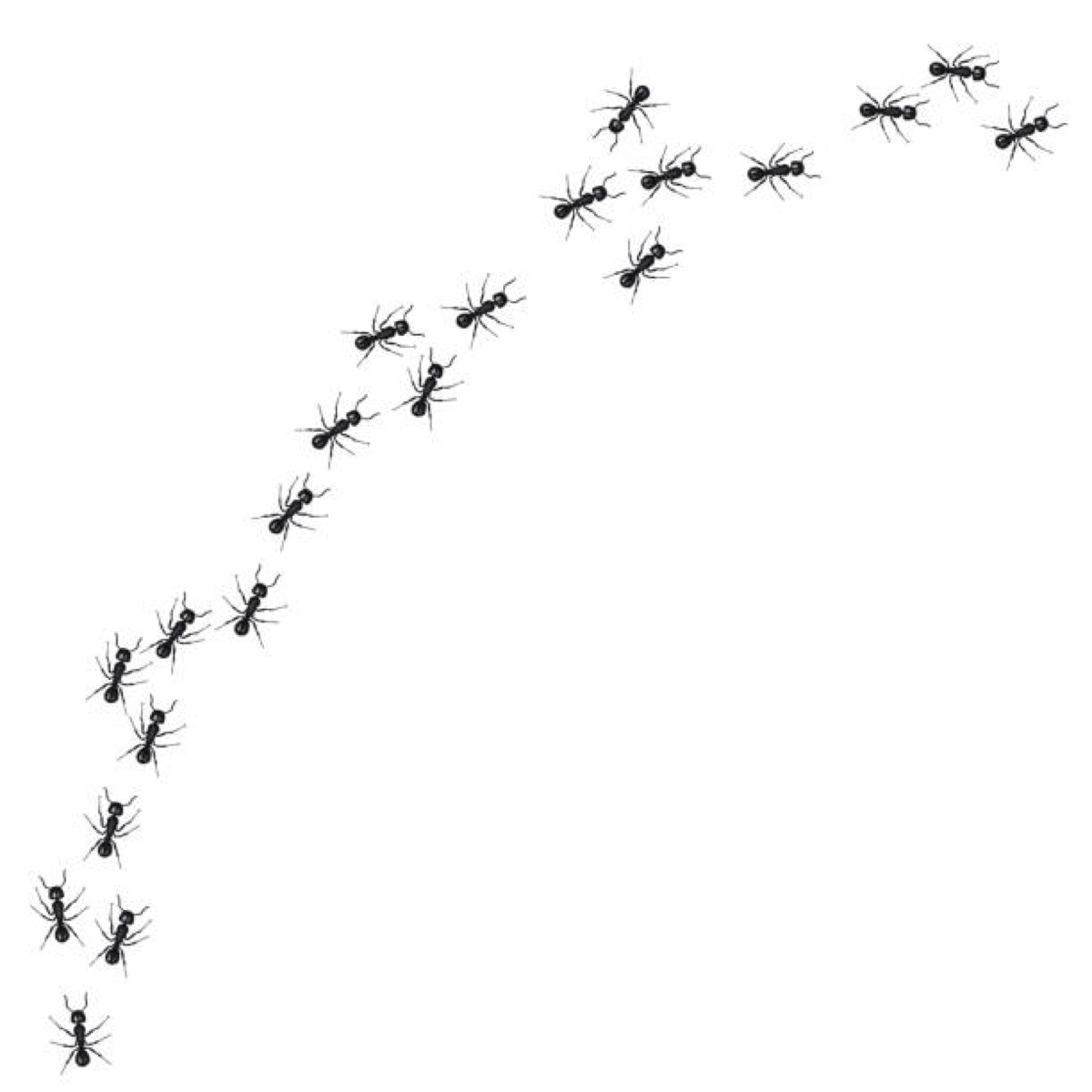
A line of ants on white
Precedent
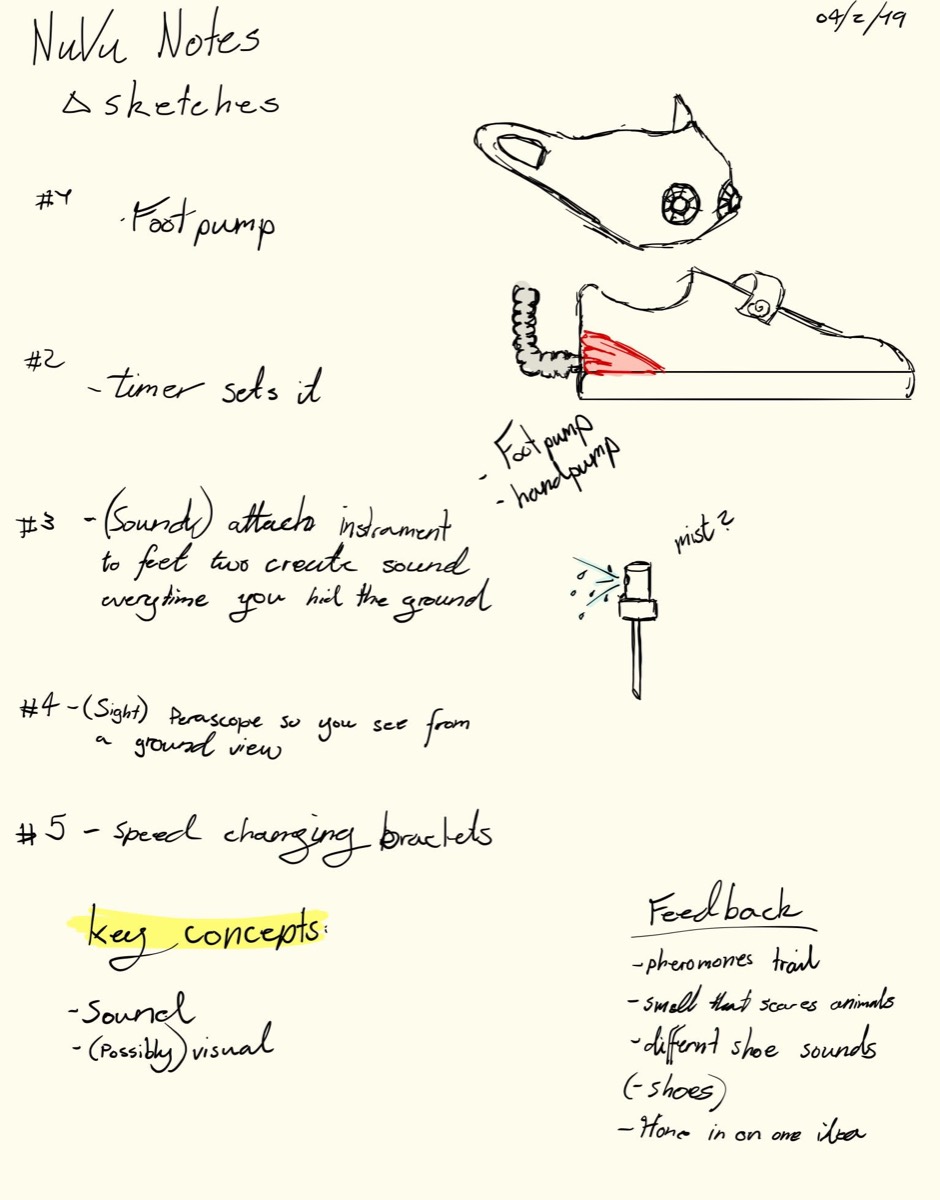
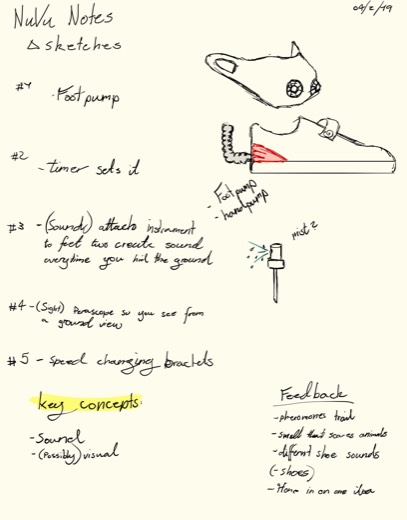
A ruled notes page with a shoe sketch, a foot with a spray bottle, and handwritten ideation
NuVu Notes
Six panels of silhouetted figures, a spray bottle, and a scent cloud
Storyboard
The same panels with captions from assigning a scent to a memory to an old friend recognising it years later
Storyboard, captioned
A line drawing of the shoe with the bottle and string, before and after a step
The device
A clean sketch of shoes leaving a dotted trail
Scent trail
Sunrise Symphony

two students

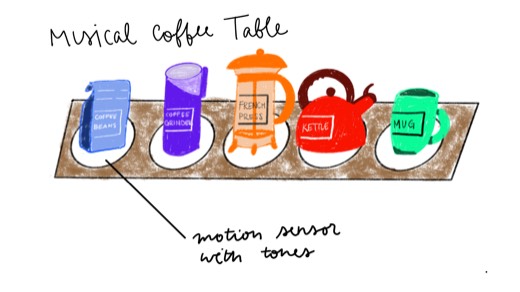
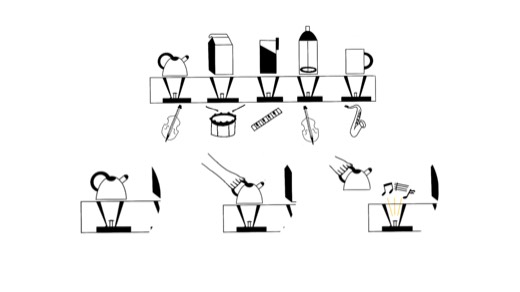
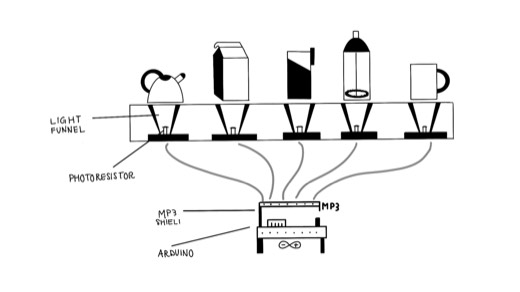
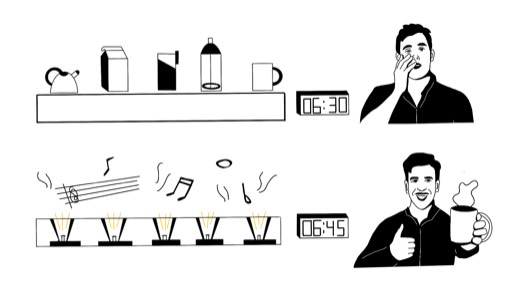
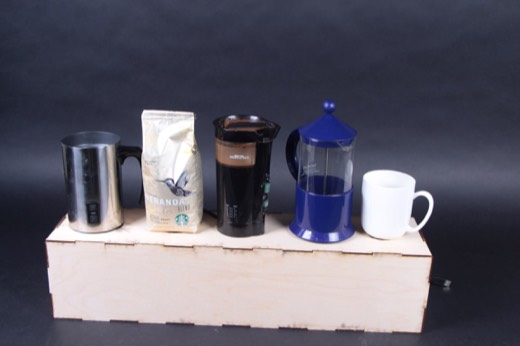
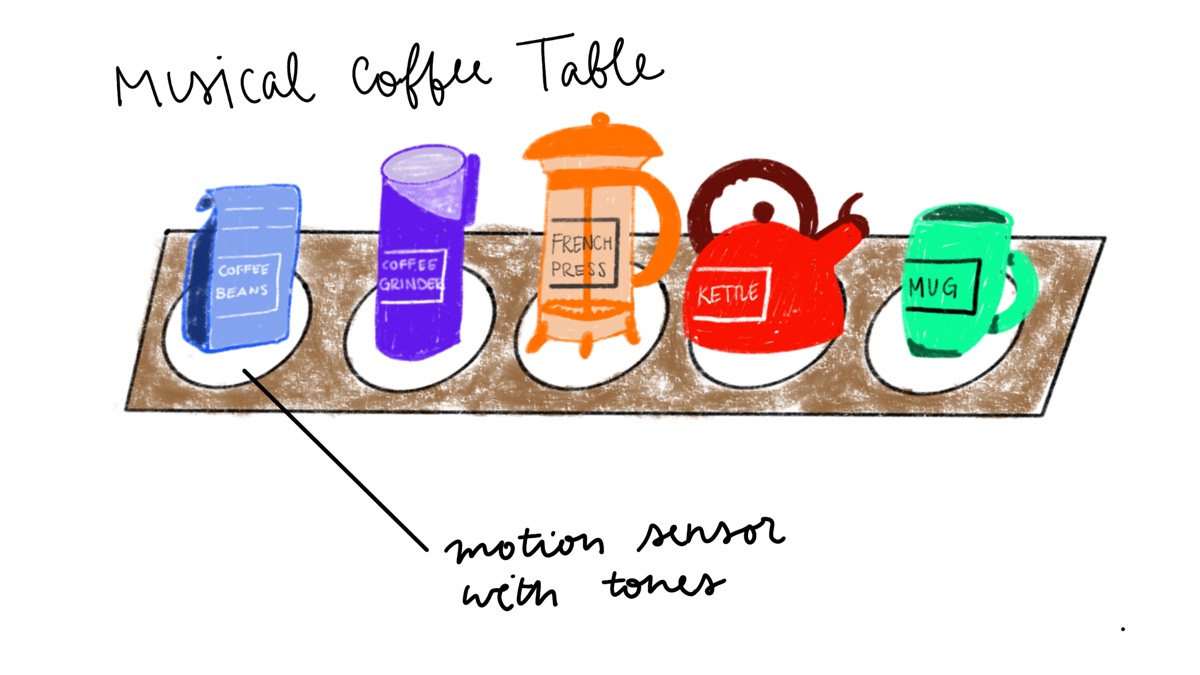
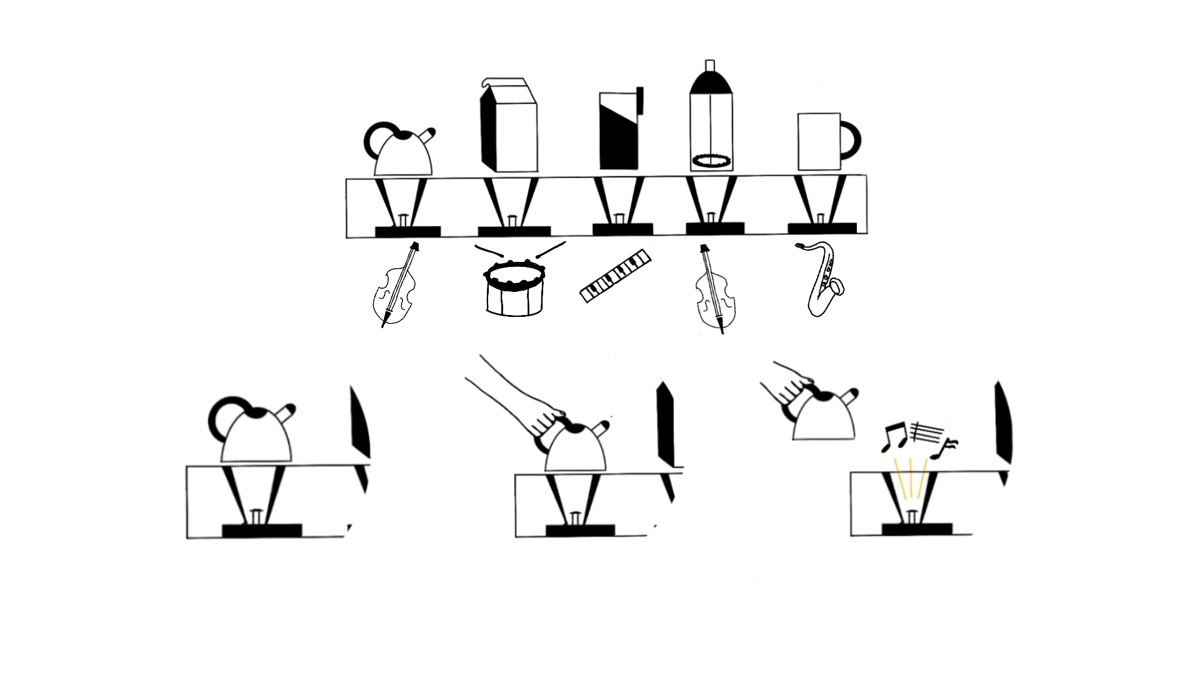
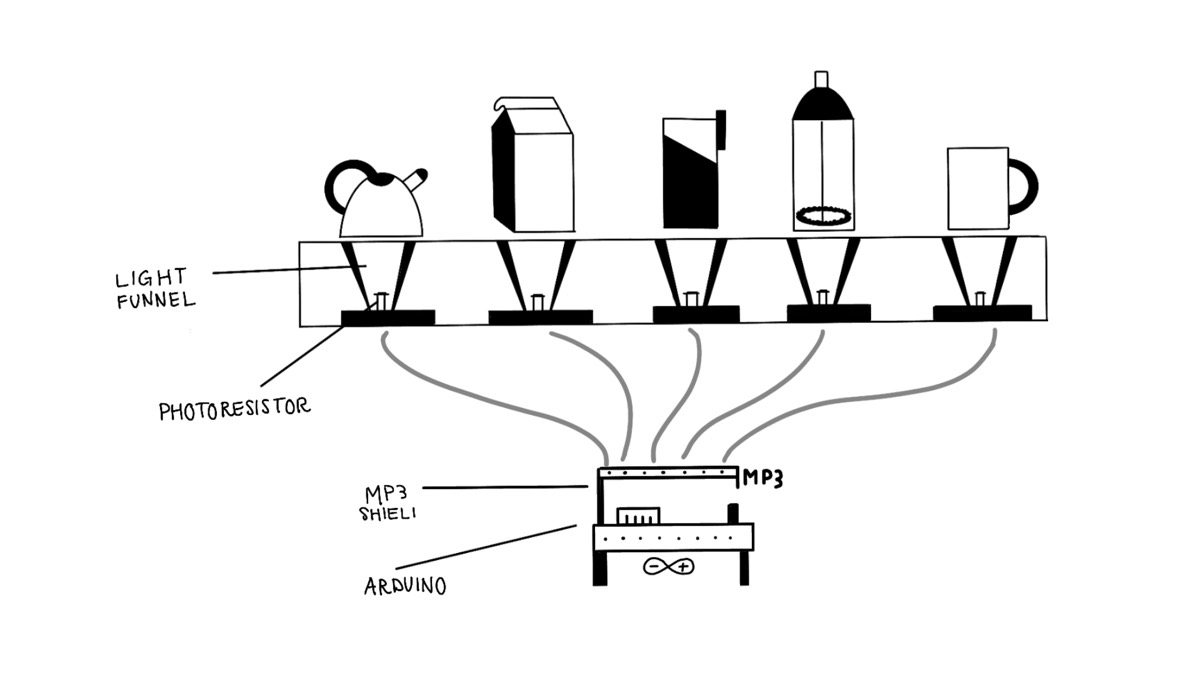
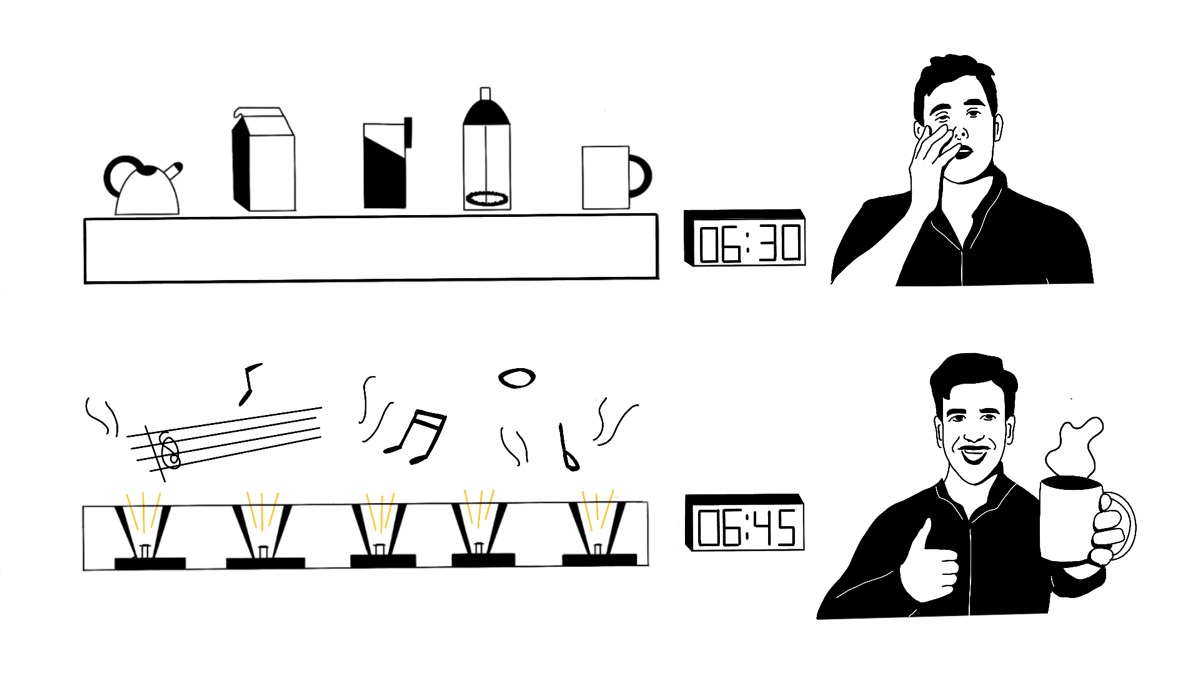
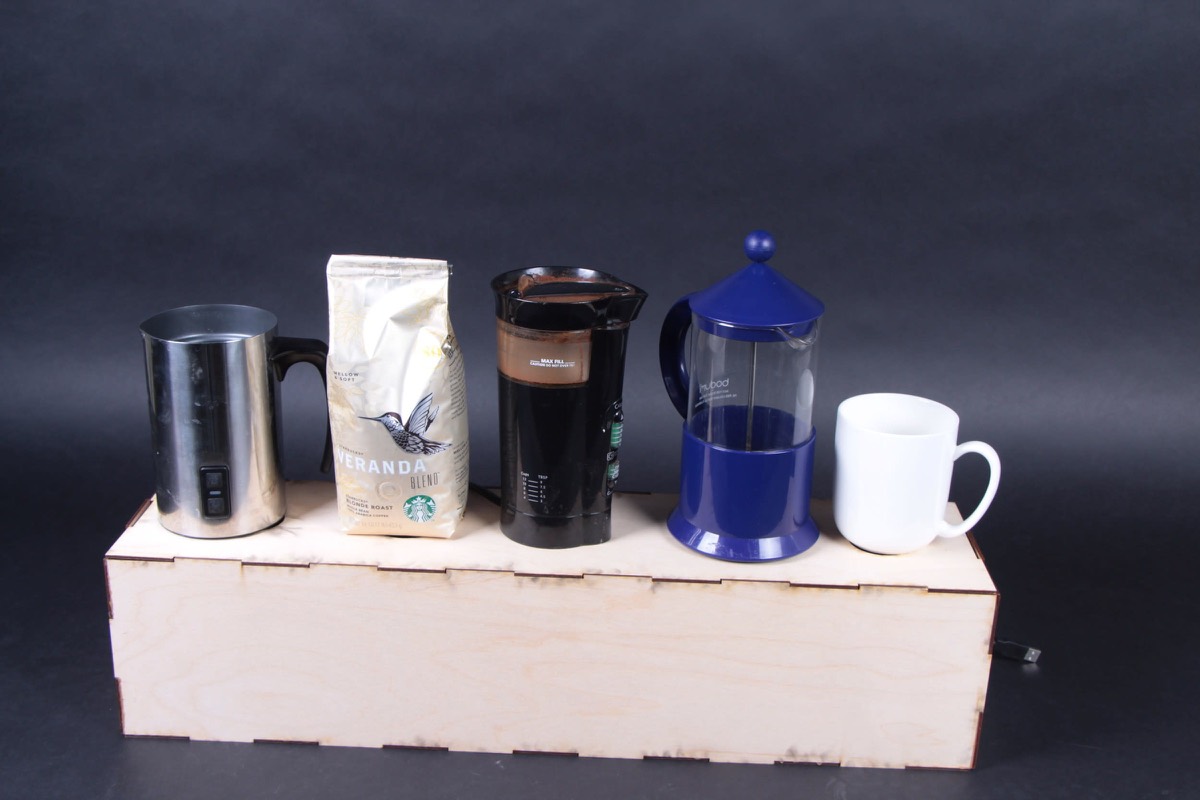
A coffee table that plays the morning: a motion sensor and a row of cups that sound as the table is used.

A colour sketch of cups, a kettle, and bottles on a board with a note about a motion sensor
Musical coffee table
A line diagram of the row of vessels with strikers and a cable
Mechanism
A technical drawing labelling the sensor, the board, and the row of cups
Photoresistor and Arduino
Two panels: a figure yawning by the table, then drinking as it plays
06:30, 06:45
A plywood table with a kettle, a bottle, a mug, and a striker mechanism on it
Built
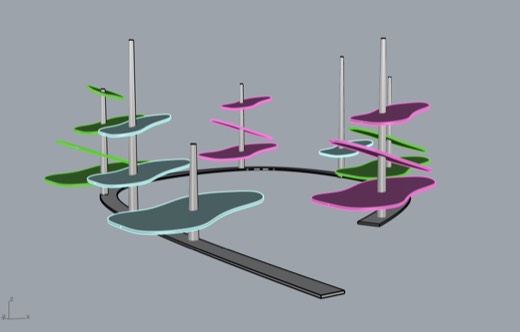
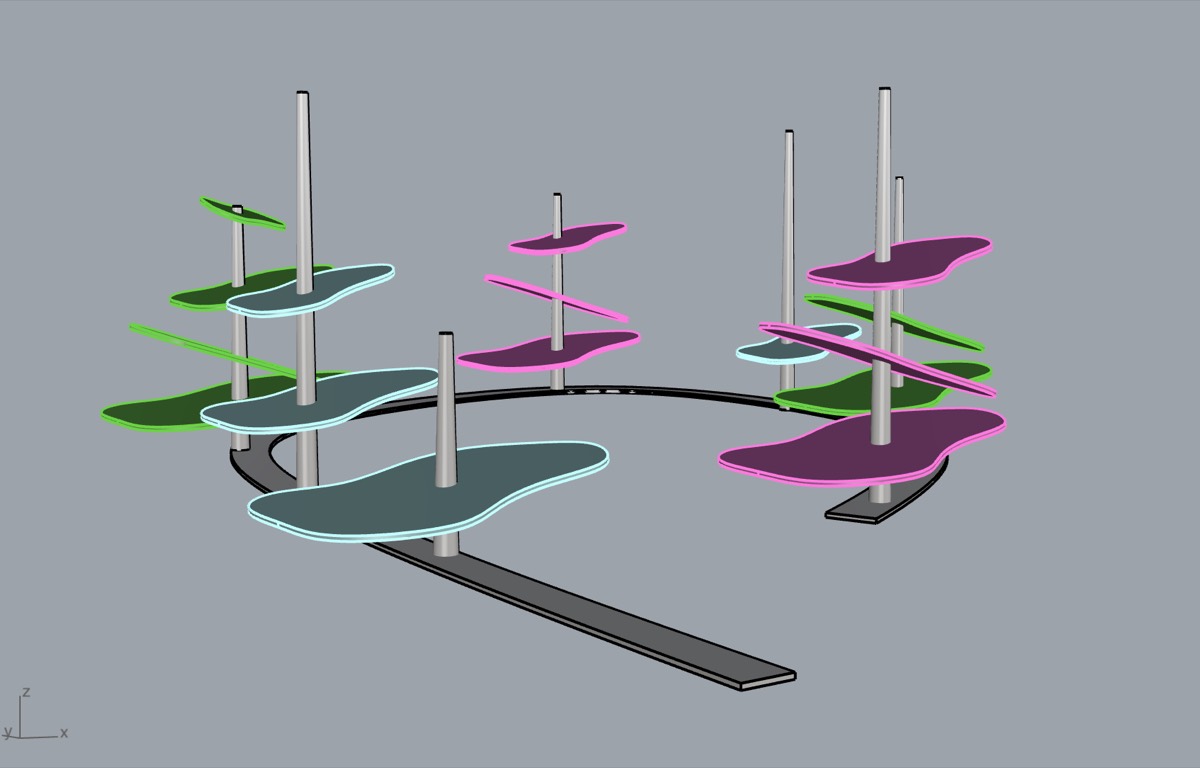
A Rhino viewport of stacked platters on a ramp
Rhino model
abstraction
Sanctuary, calmness, escapeStudy model
concepts
The Kraken, the Lichen, the Curl, the Bones, the Quiet One, the TrenchStudent renderRib steppingThird iteration, key pointsRib offsets
fabrication
Full-scale mock-upInside the mock-upPlacing a ribRibs staged on site
finished
Pipe DreamsStrataOn the crownIn the plantingIn useThe eroded end

NuVu Studio, Cambridge · Fall 2019 – December 2021 · five studios · co-coached with Ammar Ahmed · client the City of Cambridge, funded by a Cambridge Arts grant · construction documents and fabrication Ethan Lacy with Formateria · playground design Weston & Sampson

A multi-year studio series I conceived to produce a full-scale installation for the Louis A. DePasquale Universal Design Playground at Danehy Park, commissioned by the City of Cambridge. Over five studios, middle and high school students moved through the whole arc of an architectural project: conceptual abstraction exercises, sketch models, diagrams, presentation drawings, fabrication documents, budgets. They learned parametric modeling and the coordination a public commission demands, with city officials, landscape architects, engineers, fabricators, and disability advisors, and across the series they became one design team. They took part in construction administration and helped carry the project through installation.

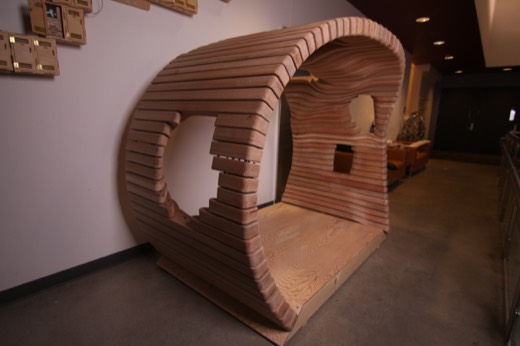
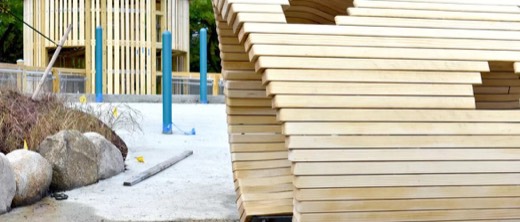
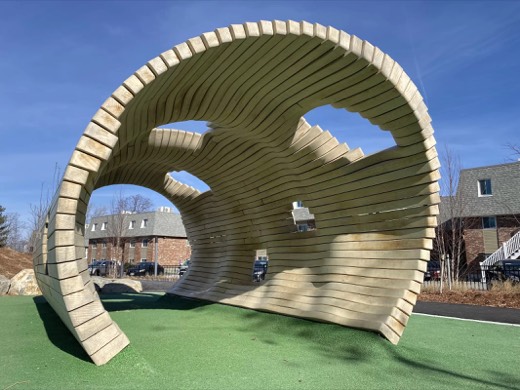
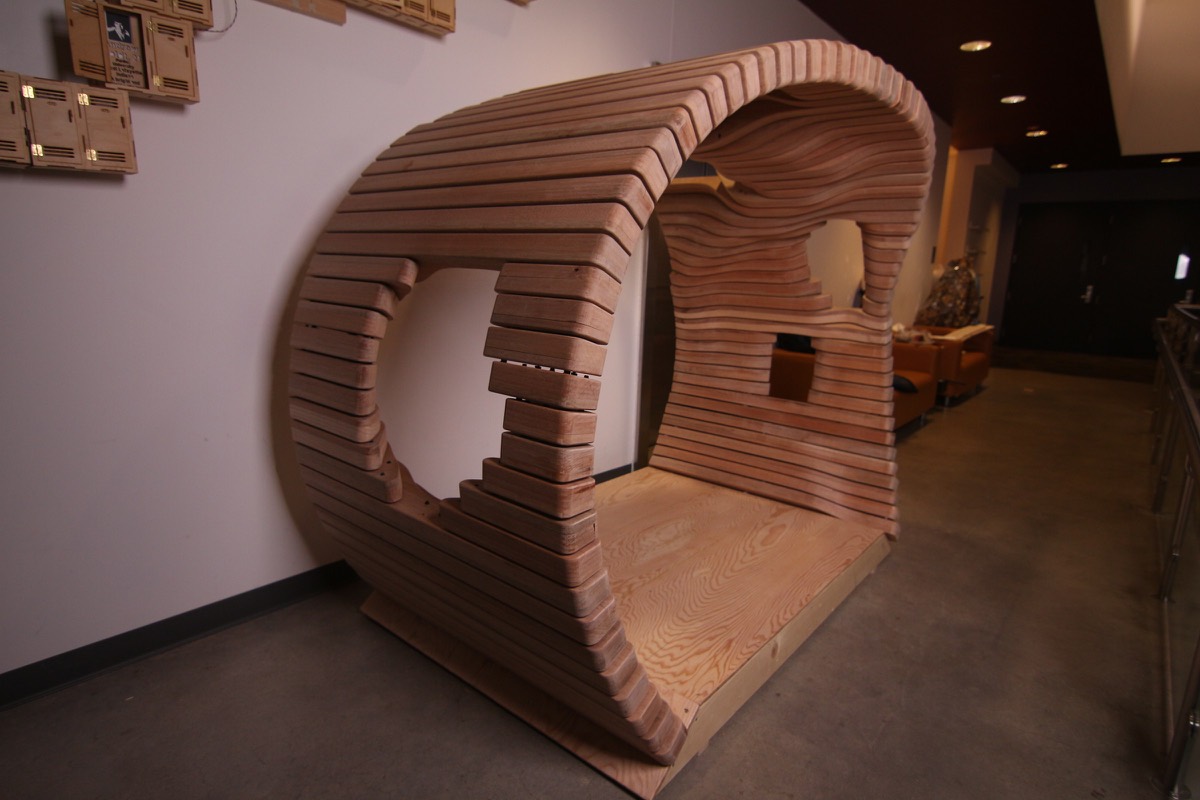
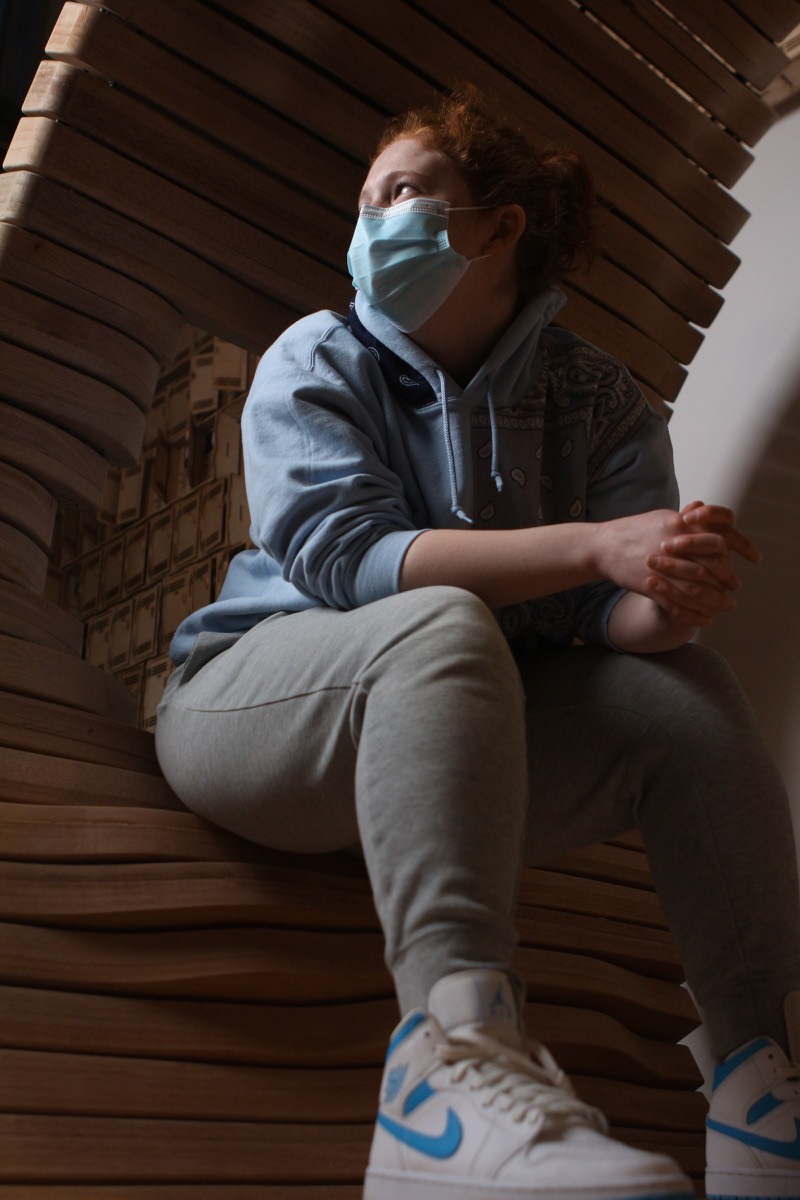
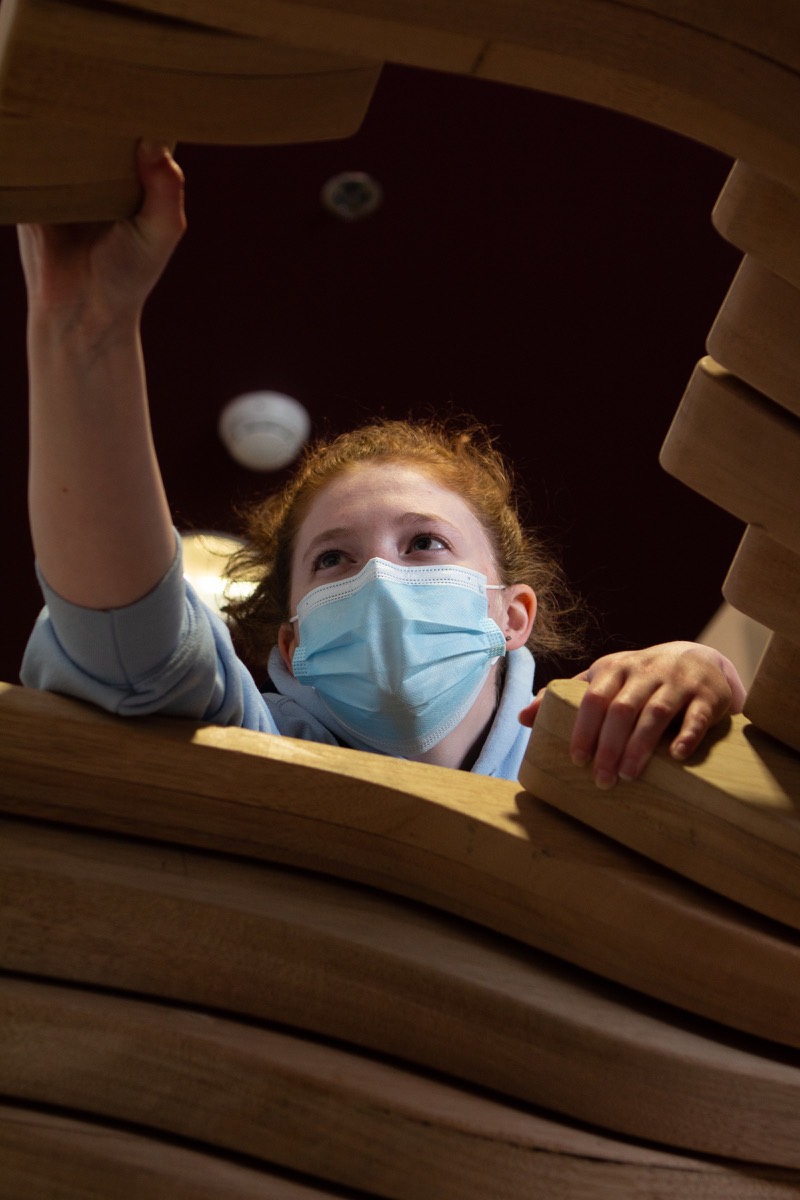
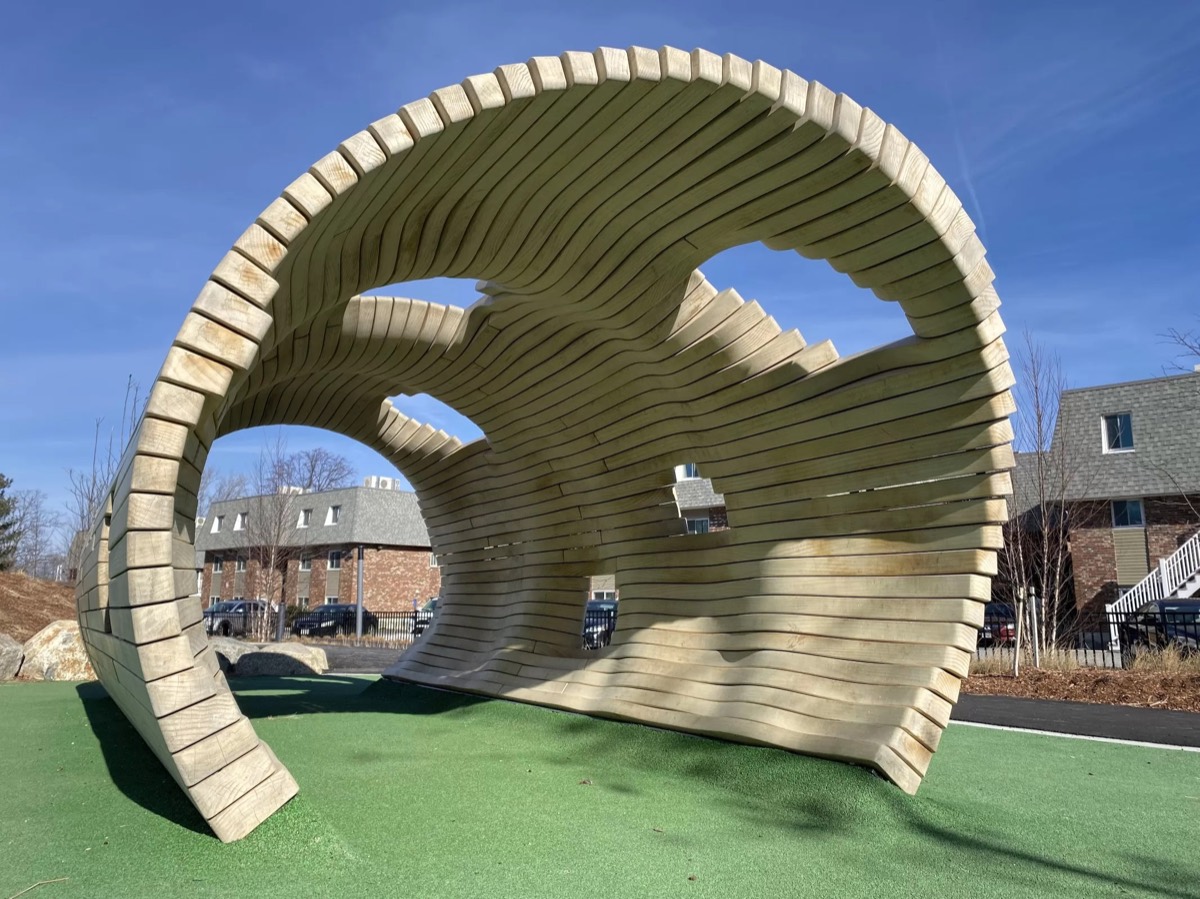
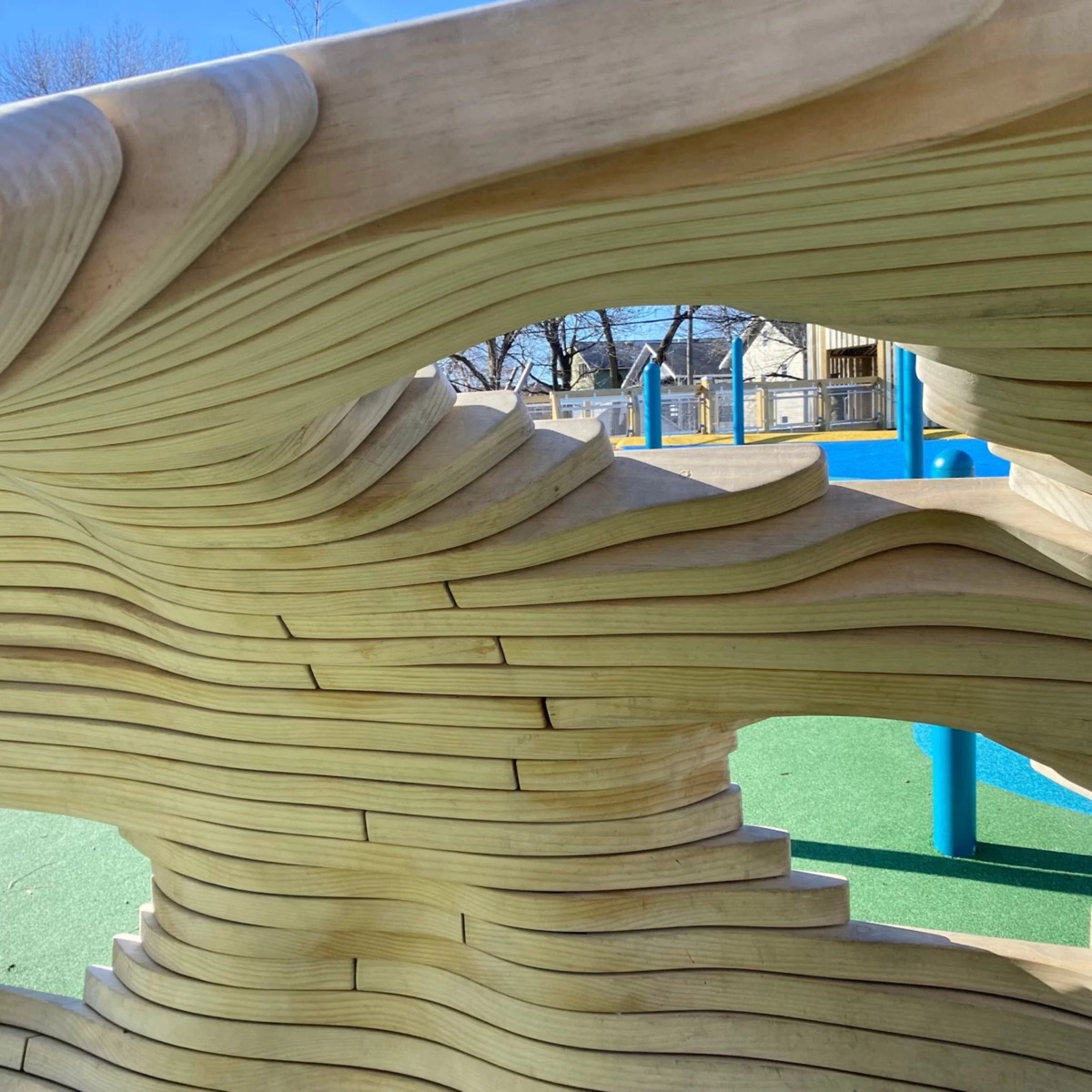
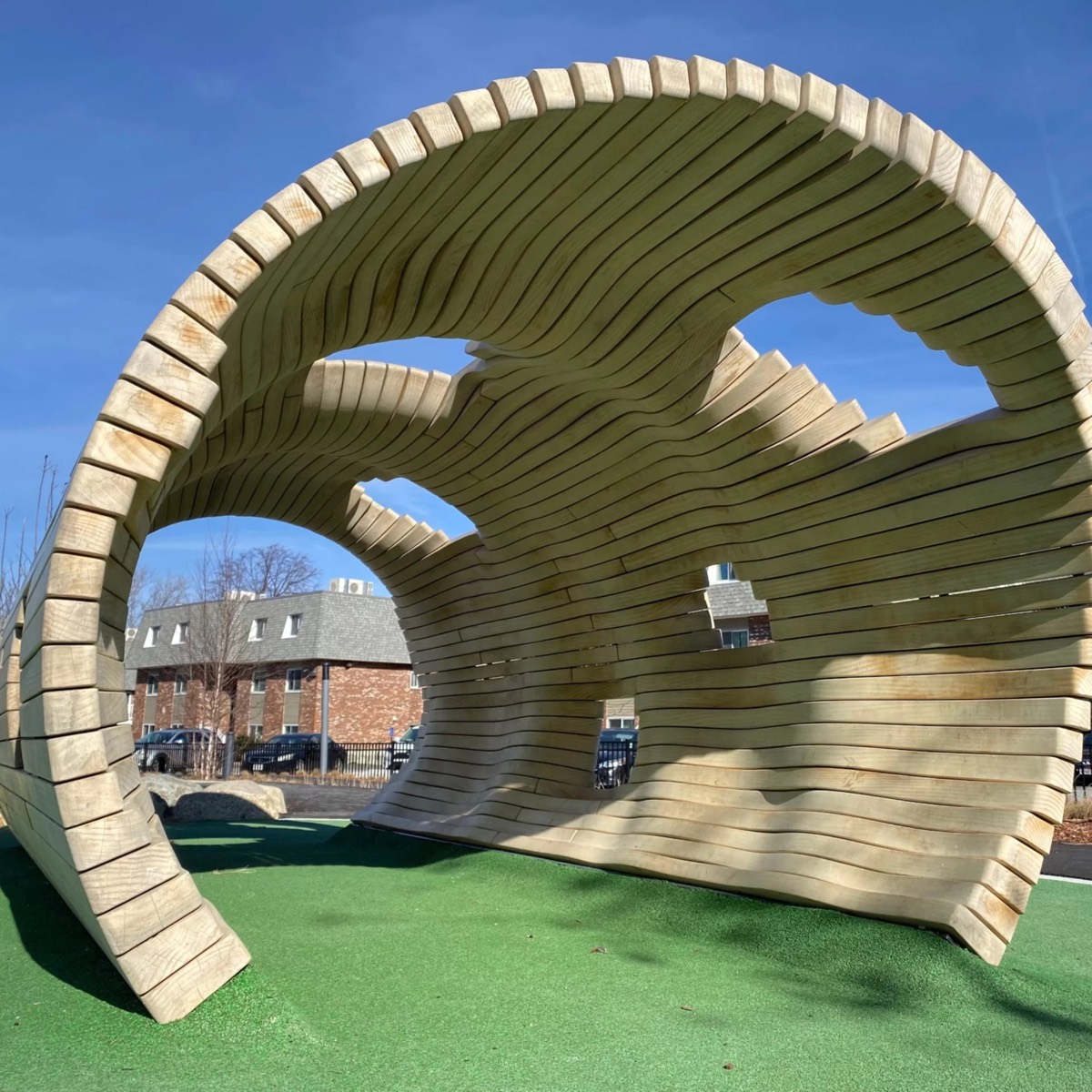
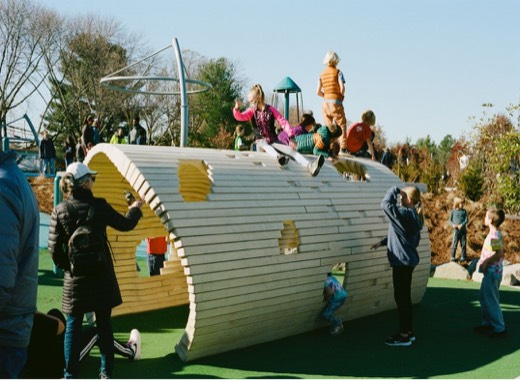
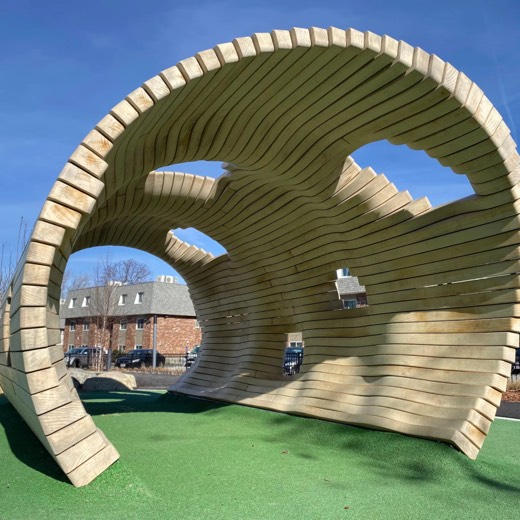
The result is Pipe Dreams, an art-play sculpture that takes the park's history as a landfill and gives it back as an eroded storm pipe: a tunnel of curved wooden planks with window openings and integrated handholds, on the playground that Boston Magazine named Best Outdoor Play Space in 2024.

 
Abstraction

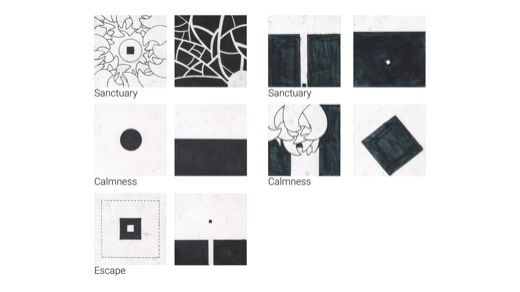
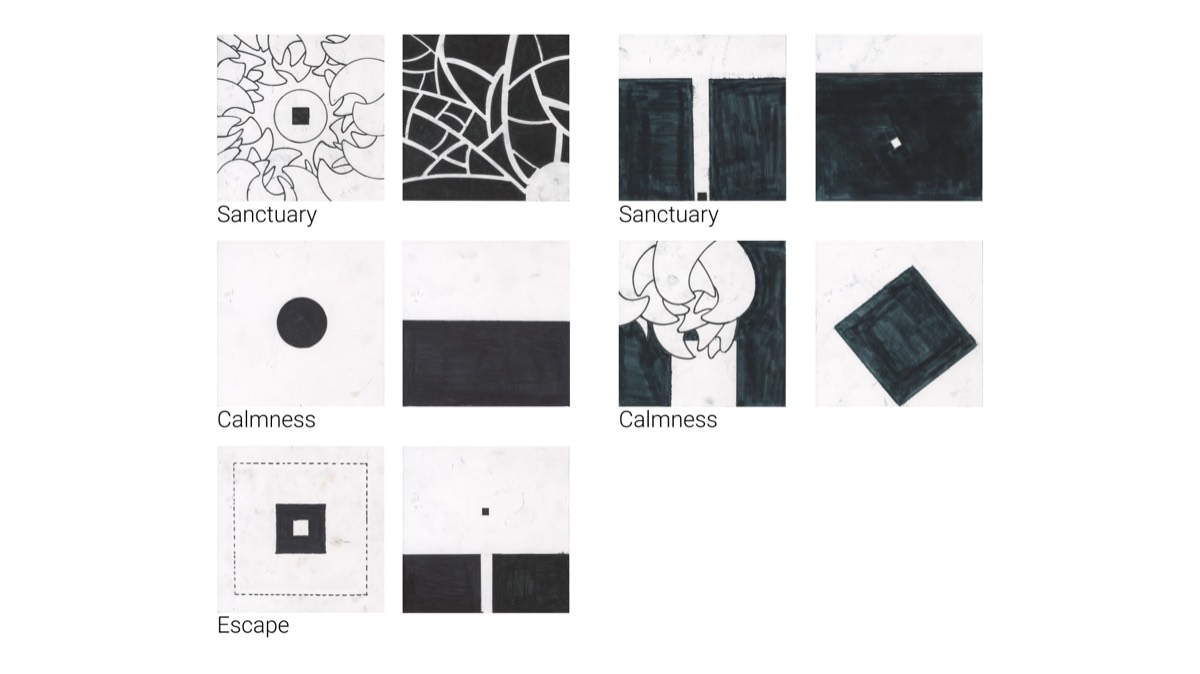
The series opened as a first-year architecture studio does: figure-ground exercises on three words, then a paper model.

A grid of black-and-white figure-ground squares labelled Sanctuary, Calmness, Escape
Sanctuary, calmness, escape
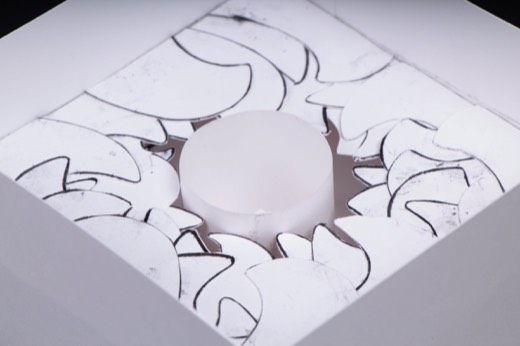
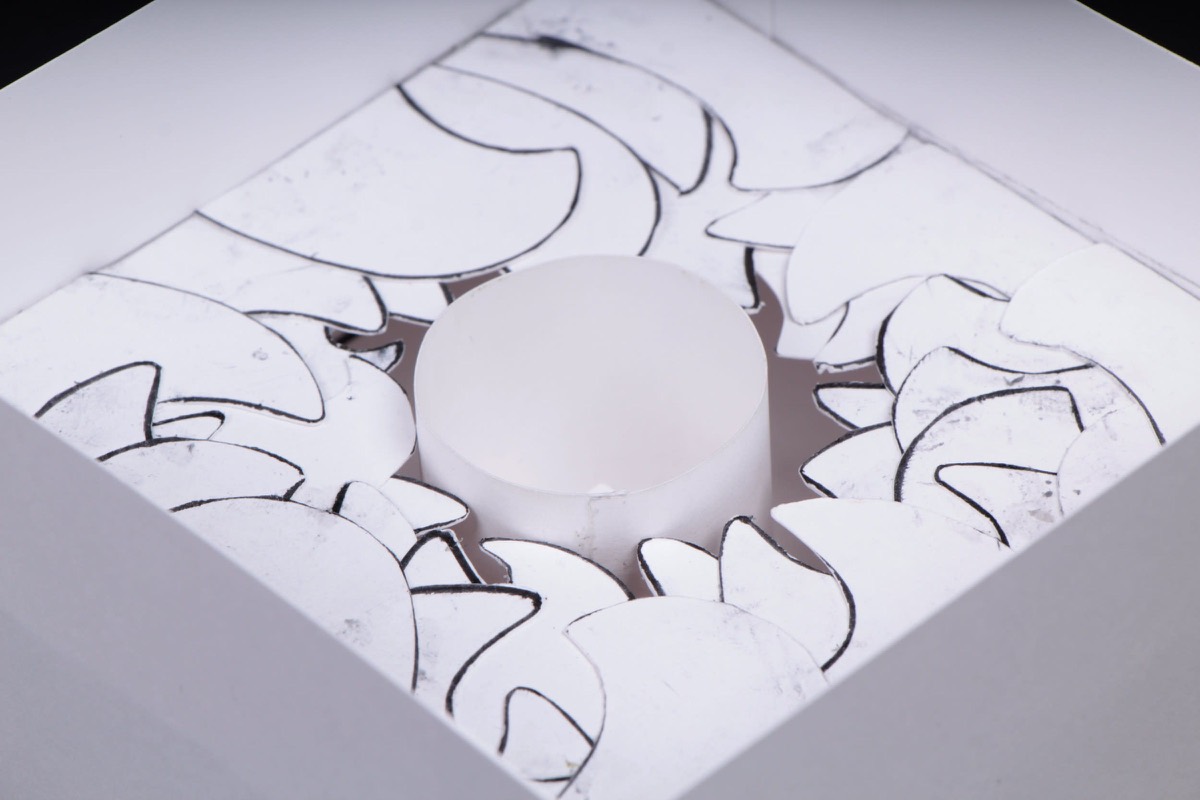
A white paper square with a cut circular opening and curling flaps
Study model
 
Concepts

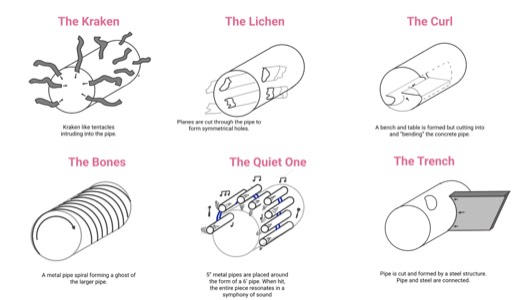
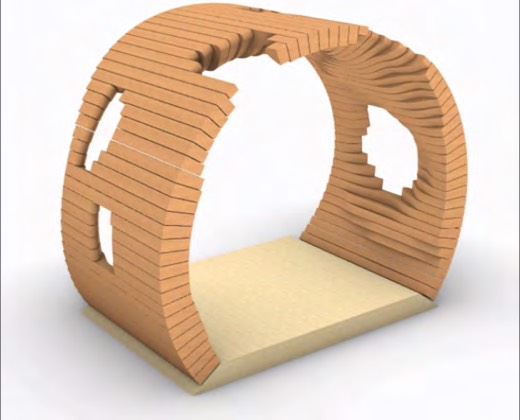
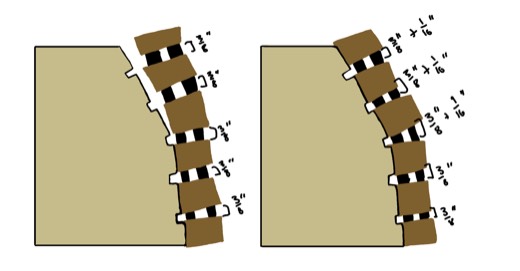
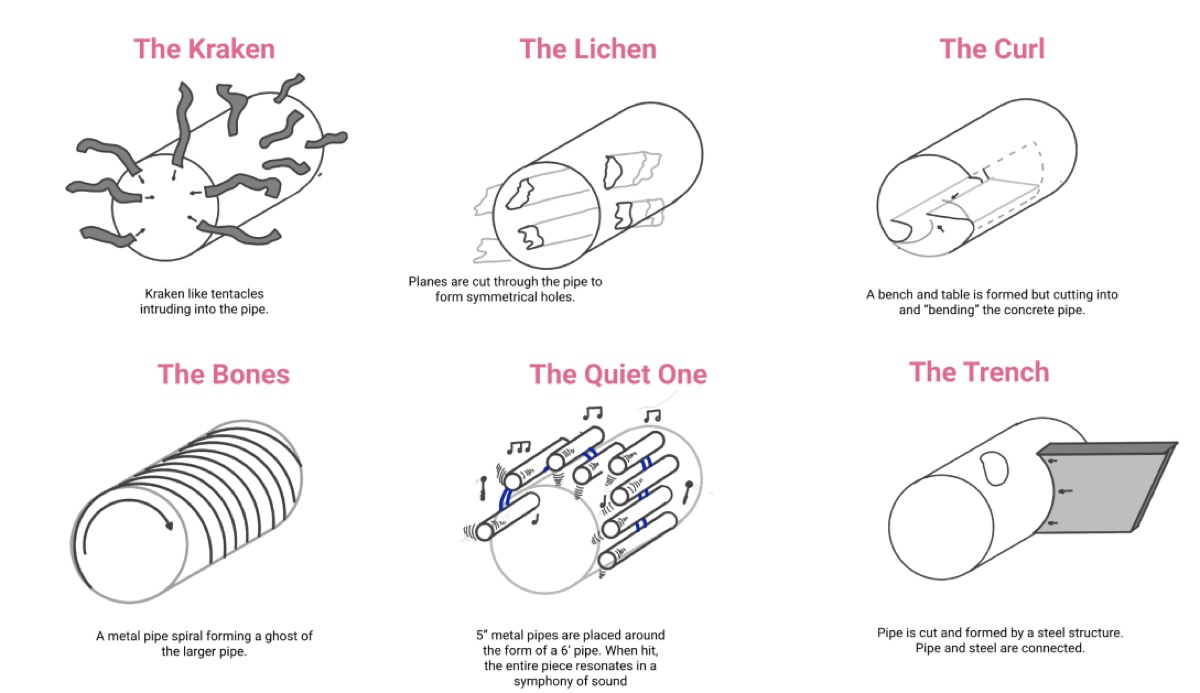
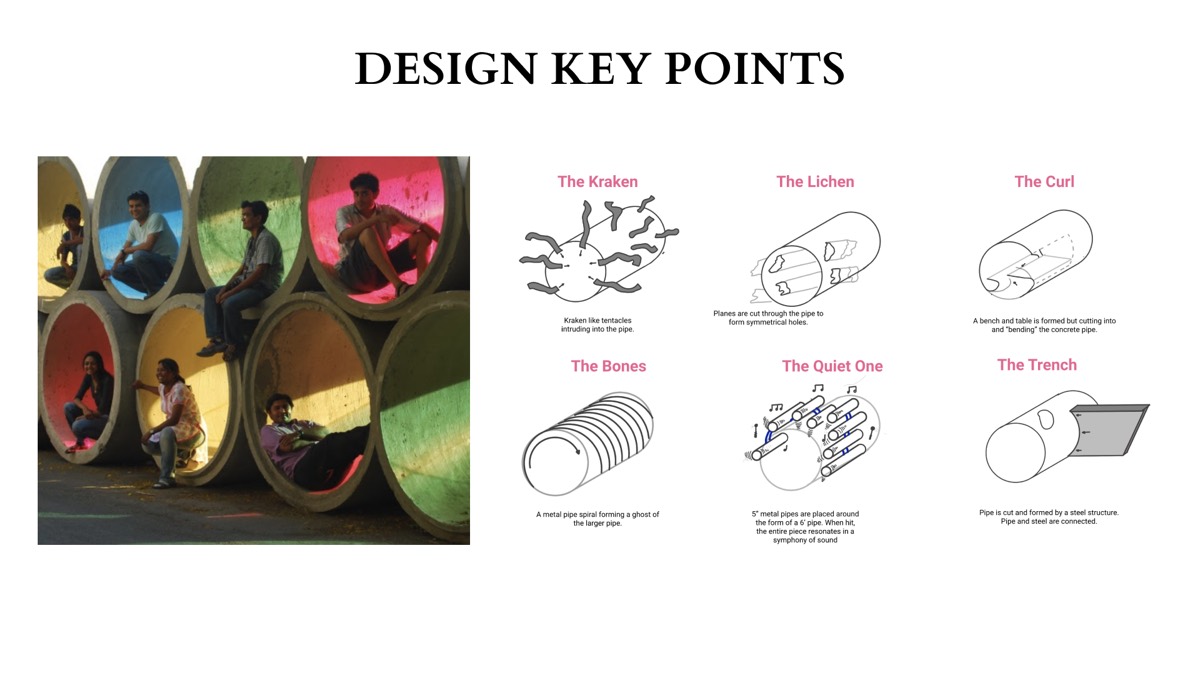
Six "creatures" for the pipe, a student's render, and the fabrication problem.

Six small line drawings of a pipe altered six ways, each titled in pink
The Kraken, the Lichen, the Curl, the Bones, the Quiet One, the Trench
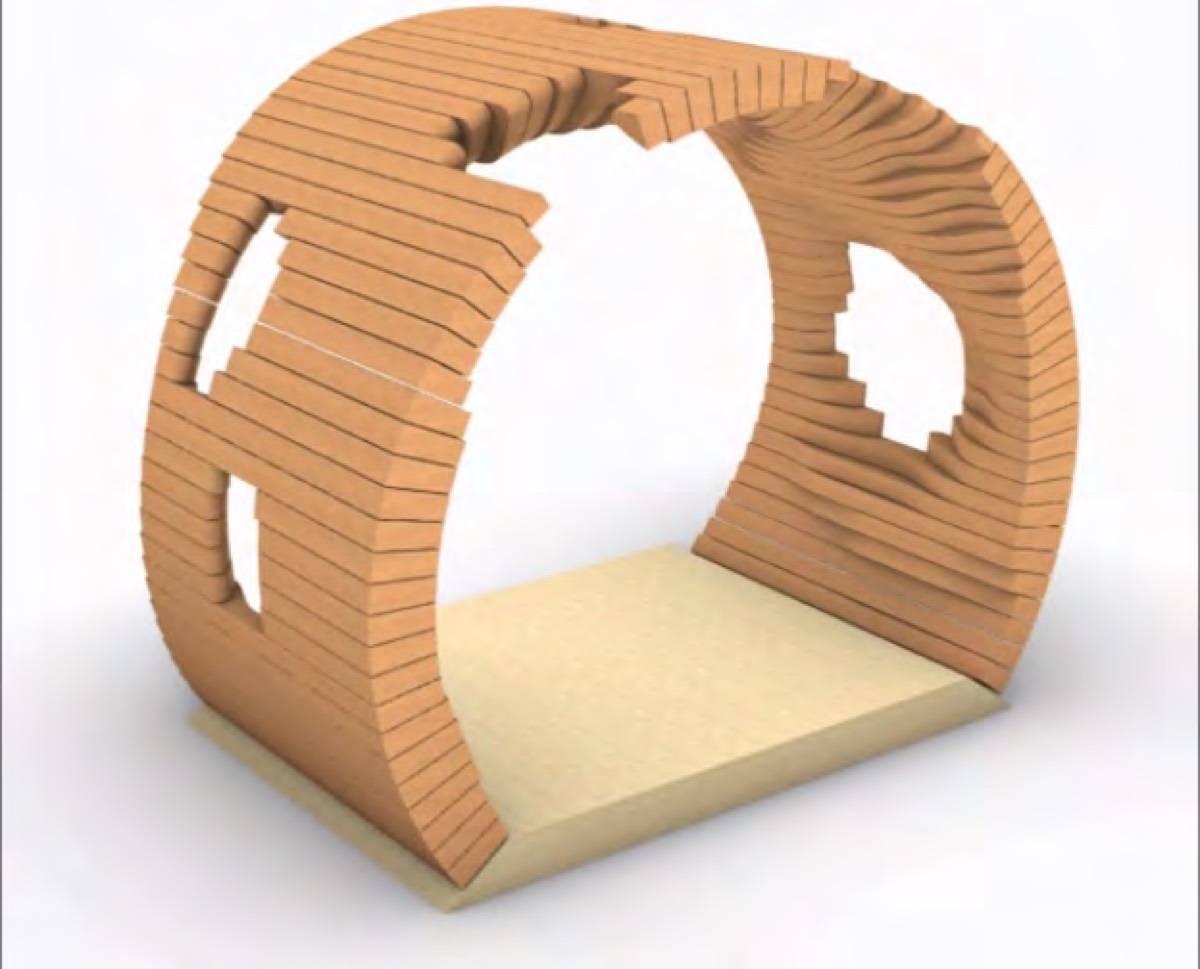
A rendering of a plank arch with cut openings on a sand base
Student render
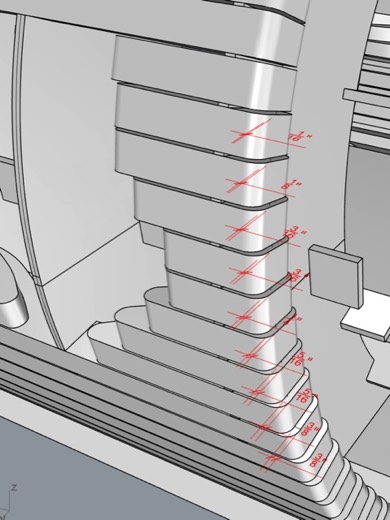
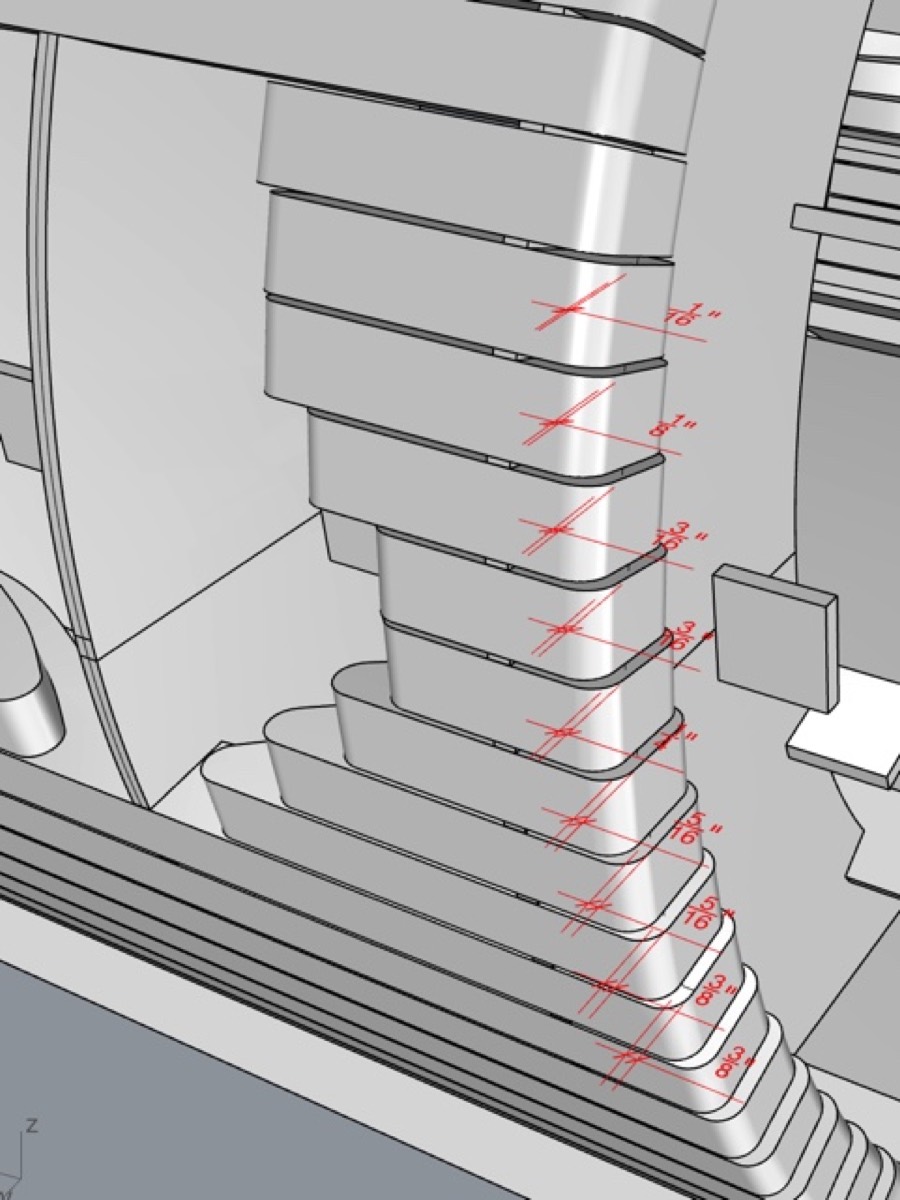
A CAD study of offset ribs
Rib offsets
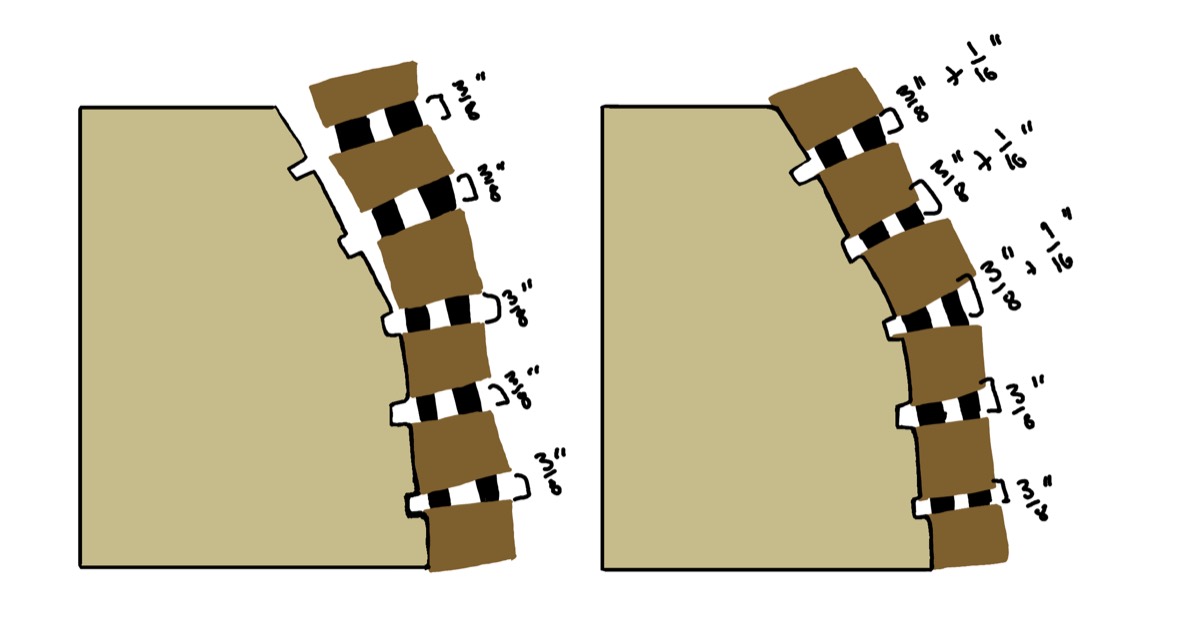
Two hand-dimensioned comparisons of stepped plank profiles
Rib stepping
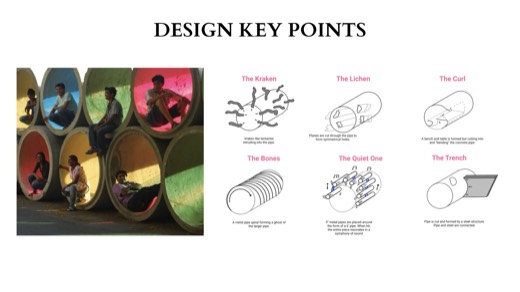
The six creature diagrams beside a photograph of people sitting in coloured concrete pipes
Third iteration, key points
 
Fabrication

From a plywood mock-up at full scale to the jig in the park.

Fabricationloop, 624px
A plywood rib structure standing in the studio
Full-scale mock-up
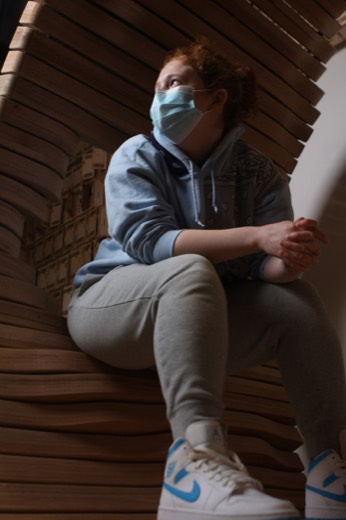
A student inside the plywood ribs, looking out
Inside the mock-up
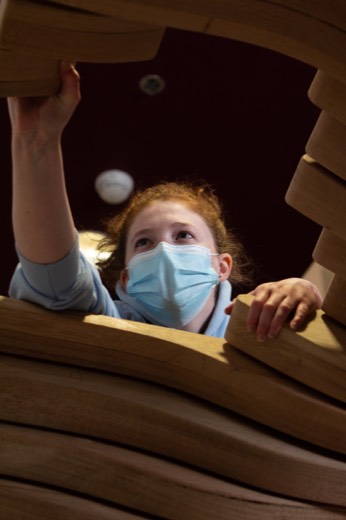
A student lifting a plywood rib into position
Placing a rib
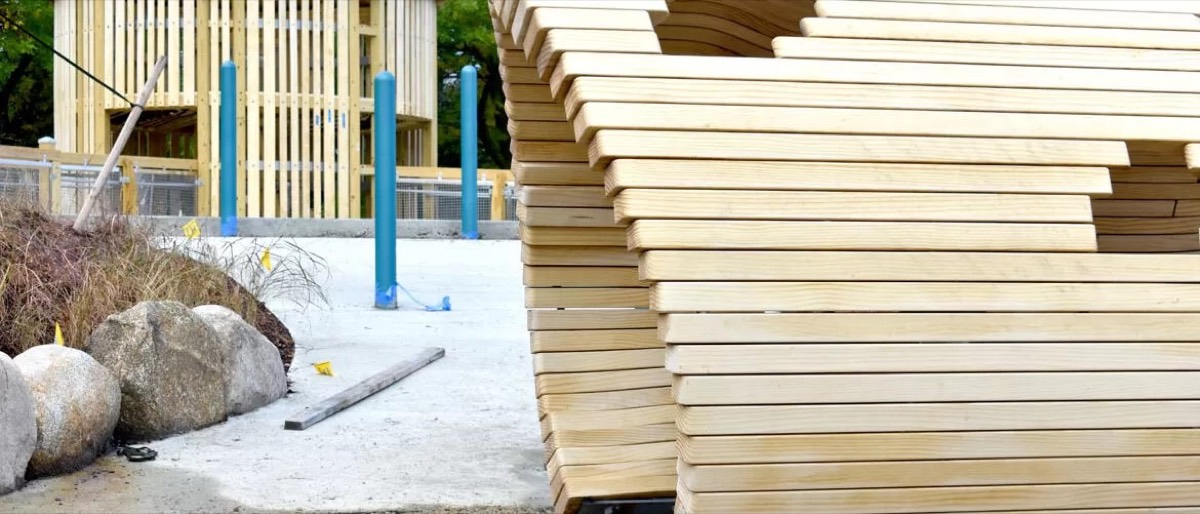
Shaped planks stacked beside the park's timber gazebo
Ribs staged on site
 
Finished

The sculpture, in frames /architecture doesn't use.

The eroded end of the plank arch on green surfacing against blue sky, brick blocks behind
Pipe DreamsAccoya
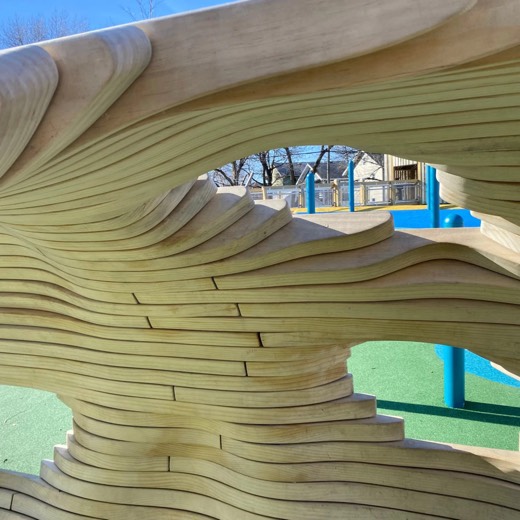
A close oblique of the wave-cut planks with the blue play surface through an opening
StrataAccoya
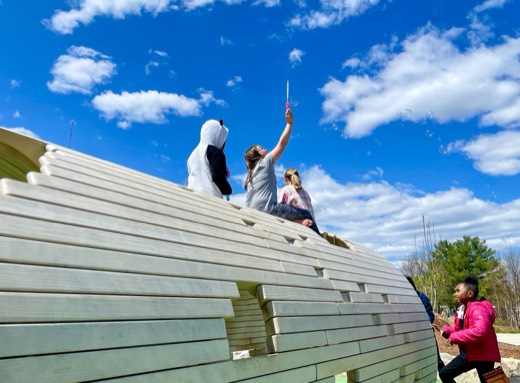
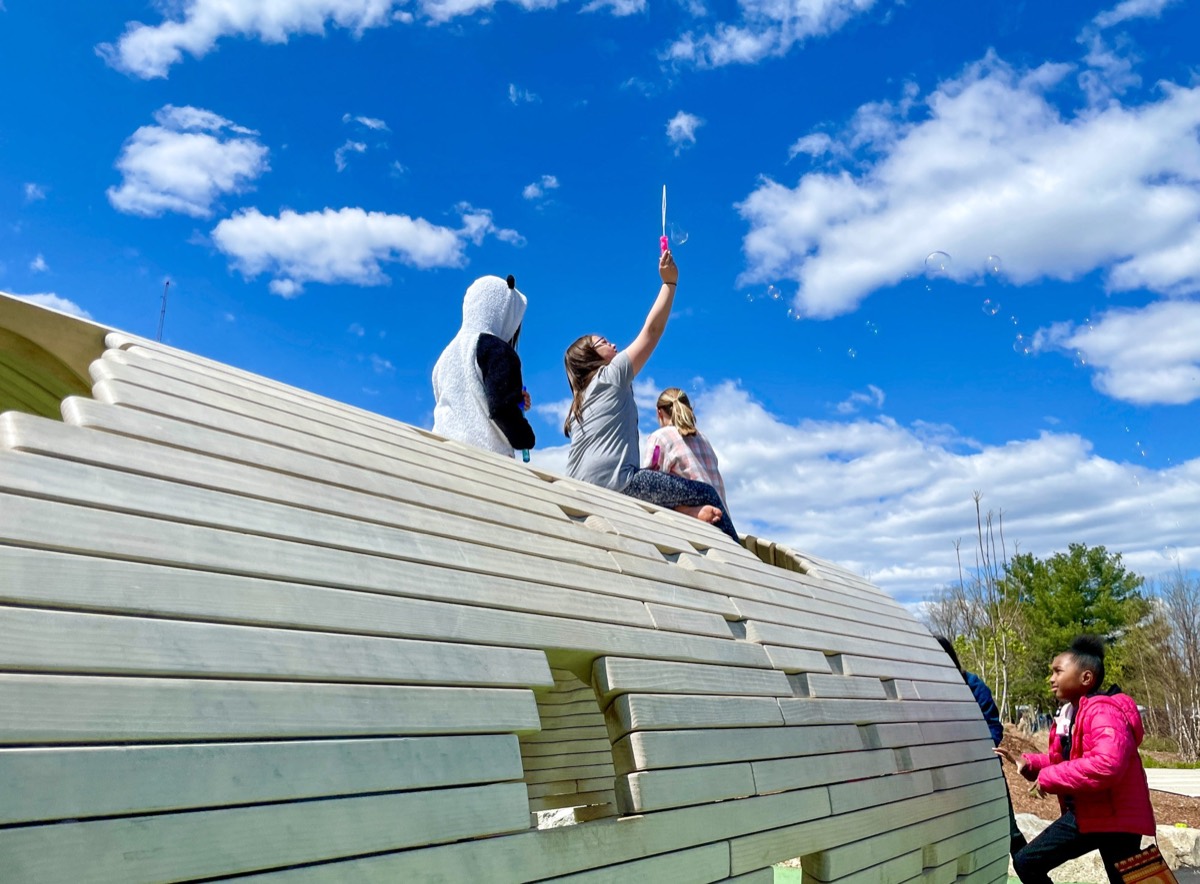
Three children on top of the pipe blowing bubbles against a big sky
On the crownEthan Lacy
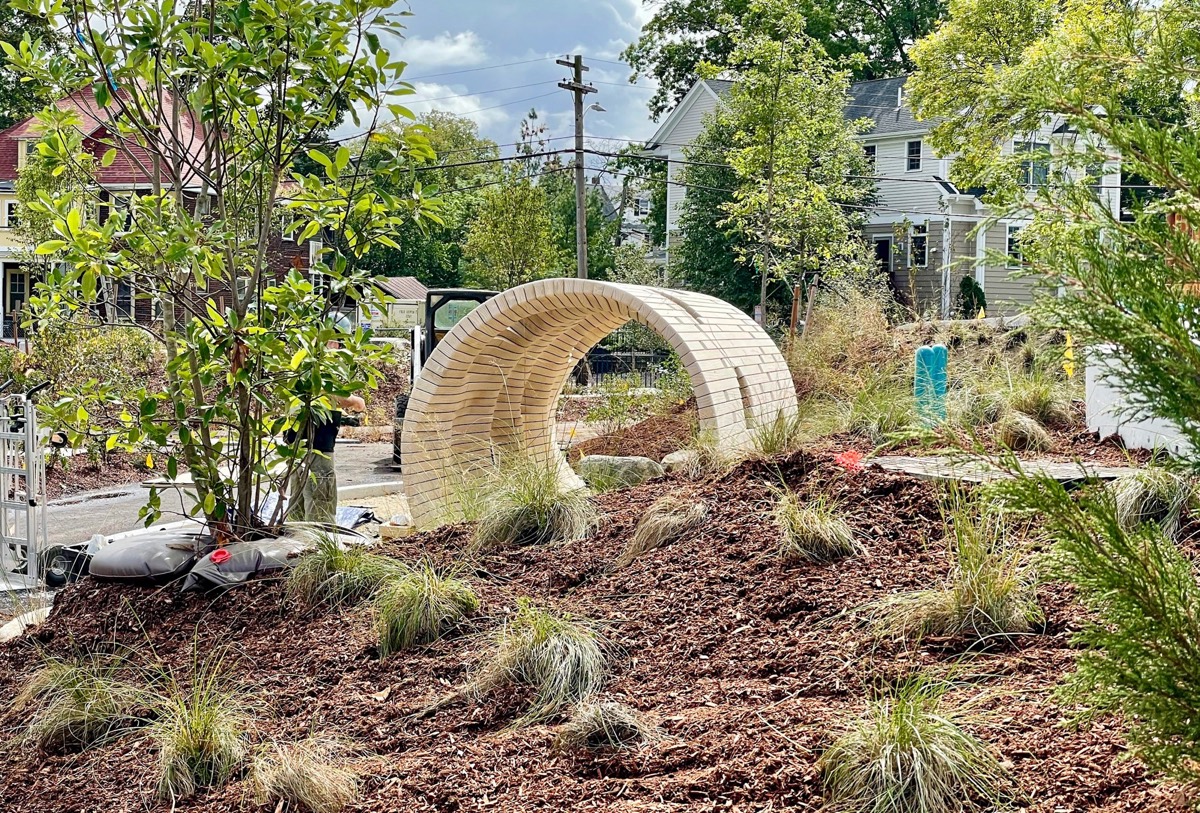
The pipe end-on beyond a freshly planted berm, houses behind
In the plantingEthan Lacy
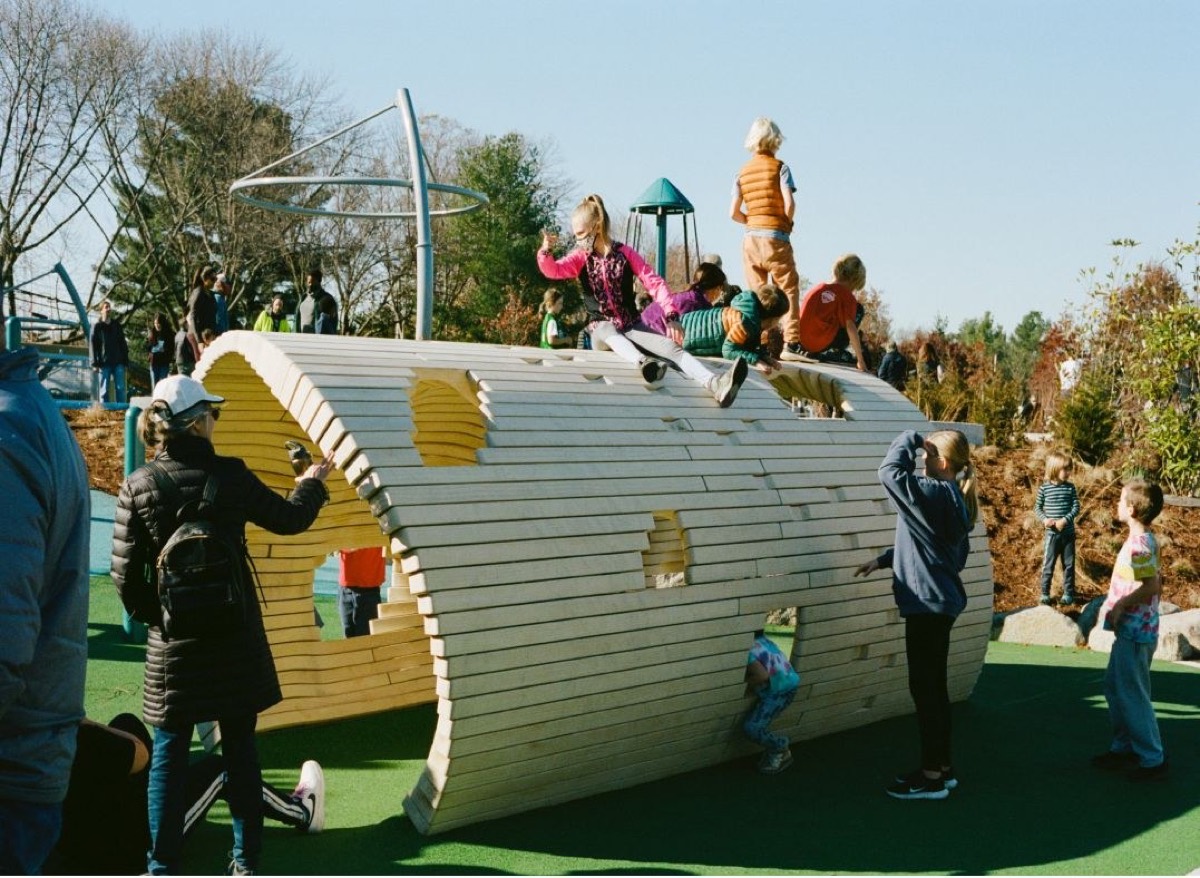
Children climbing on and through the pipe in autumn light
In use
The wave strata sweeping up against blue sky, close
The eroded endAccoya
title
Breaking Bread
360 vr link
Lee Cusack · watch the performance in 360 VR
left column
The roomBehind the screen
right column
Umami, bitter, sourThe beakThe watering holeA note to Lee

NuVu Studio, Cambridge · Spring 2017 · 15 days · co-coached with Lee Cusack and Jenny Kinaird · film by Amro Arida

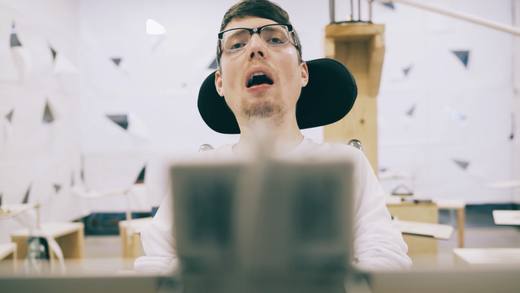
Cooking, eating, and sharing food is a basic biological and social act. In this studio students worked with and for Lee Cusack, a UX designer with spastic quadriplegic cerebral palsy, to understand what the most basic human need asks of someone with SQCP, and to design systems and devices for it. They were led through exercises in empathy, human-centred design, and contemporary performance art, and the studio ended as a performance: Breaking Bread, a ritualized sharing of bread built on intimate interactions, with small teams responsible for the food system, the central watering hole, the food-delivery beak, and the running of the performance itself.

 
The performance

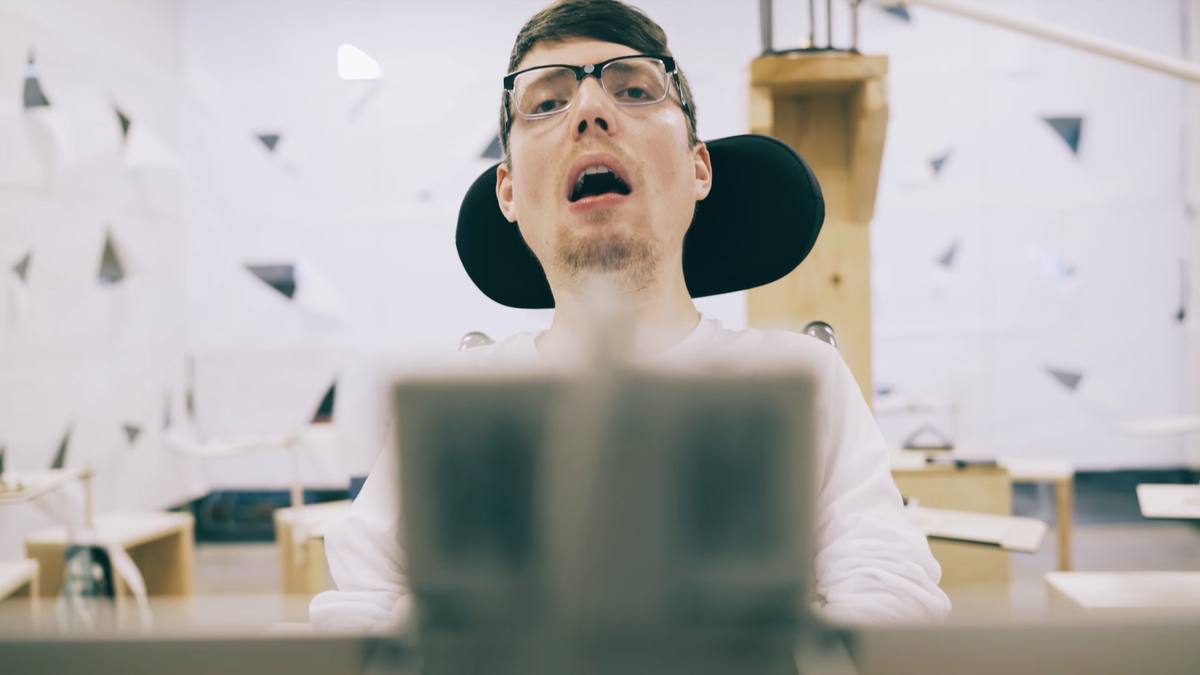
Every frame is from Amro Arida's film. The title opens the film; Lee's portrait opens the 360 recording of the whole performance.

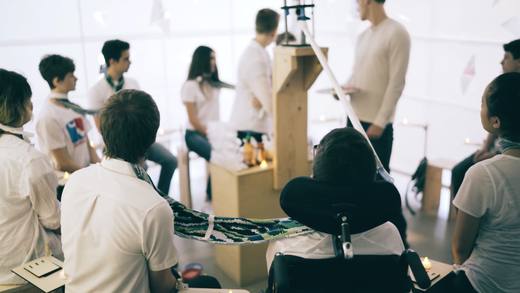
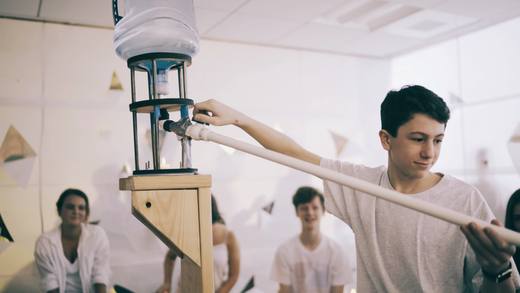
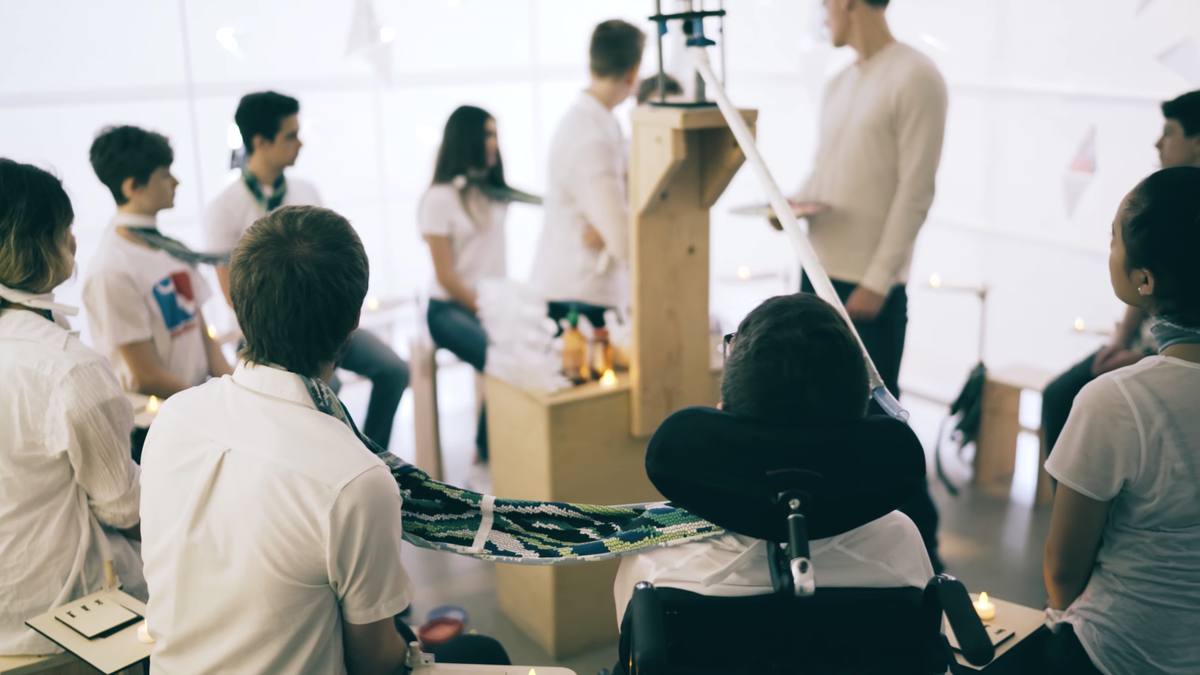
Students in white seated in a circle around a wooden tower, Lee at the centre
The room
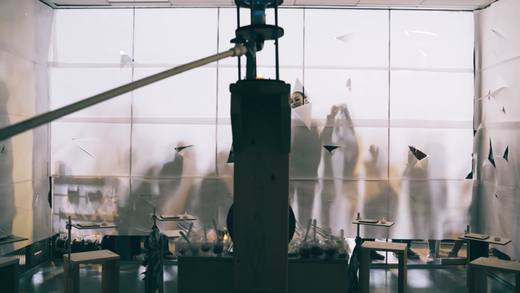
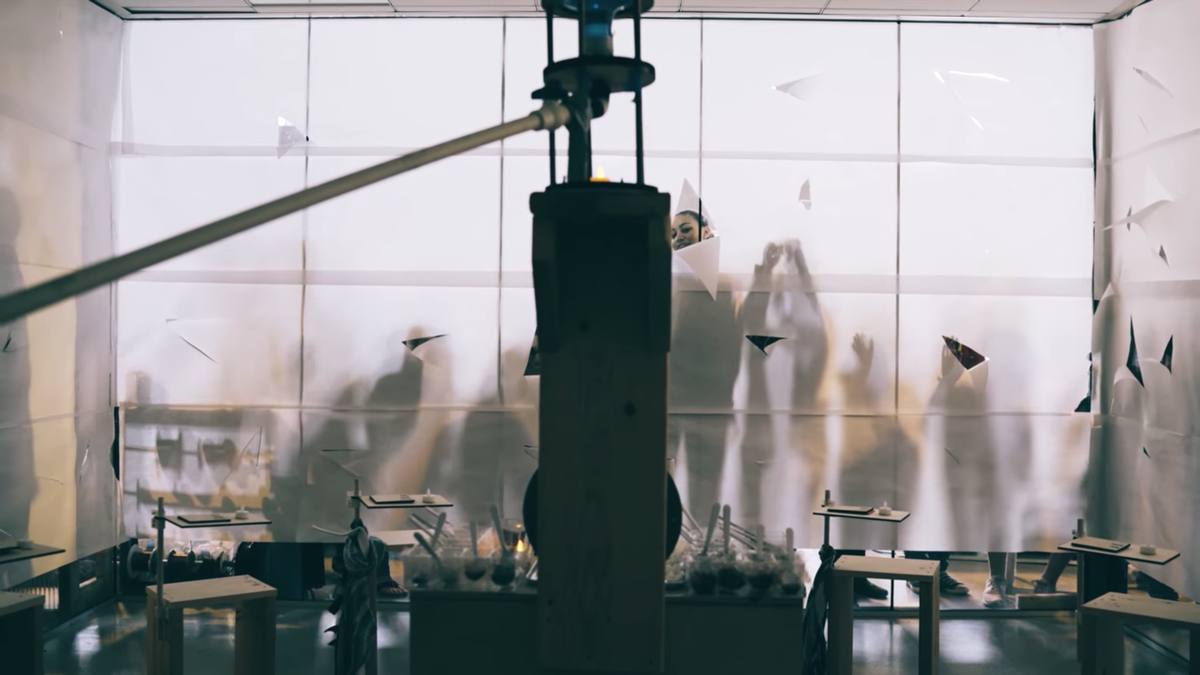
Silhouettes of the participants through a white scrim, the tower and beak in front
Behind the screen
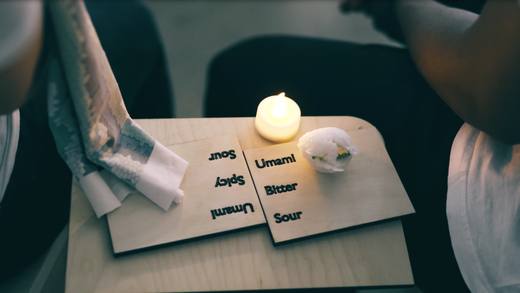
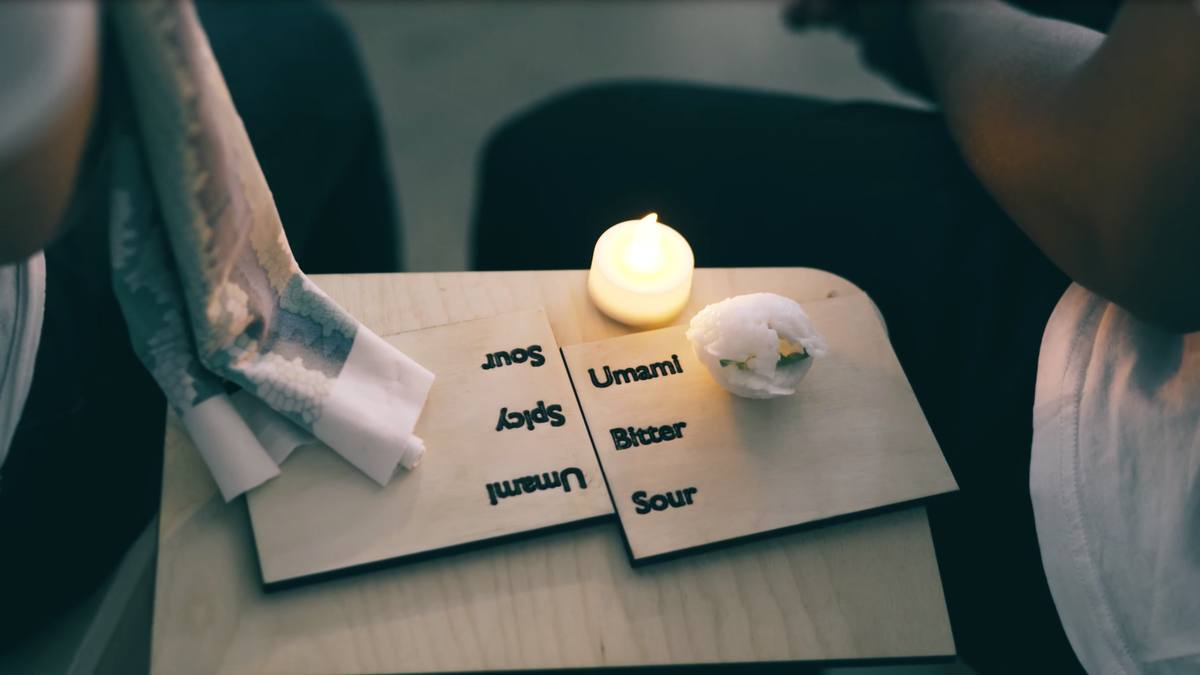
A wooden tray with labelled tasting cups and a candle
Umami, bitter, sour
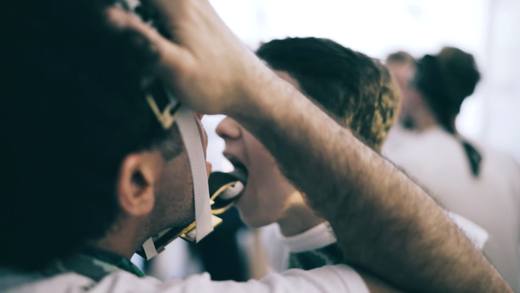
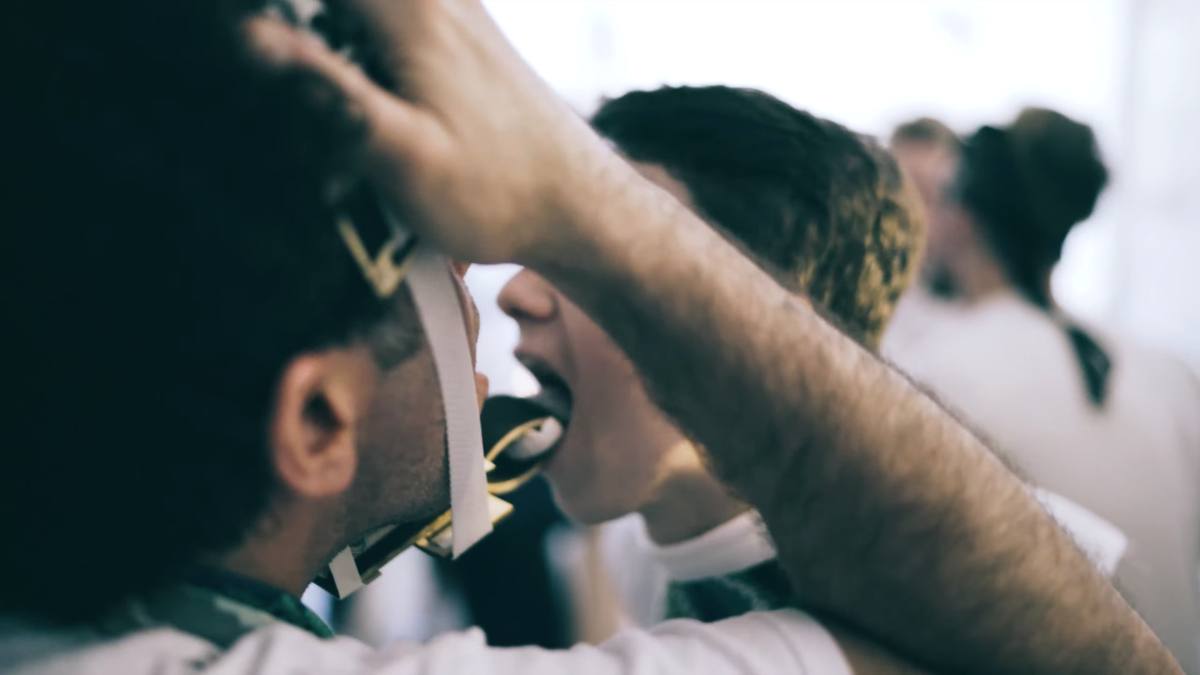
A student feeding another through a hinged wooden beak
The beak
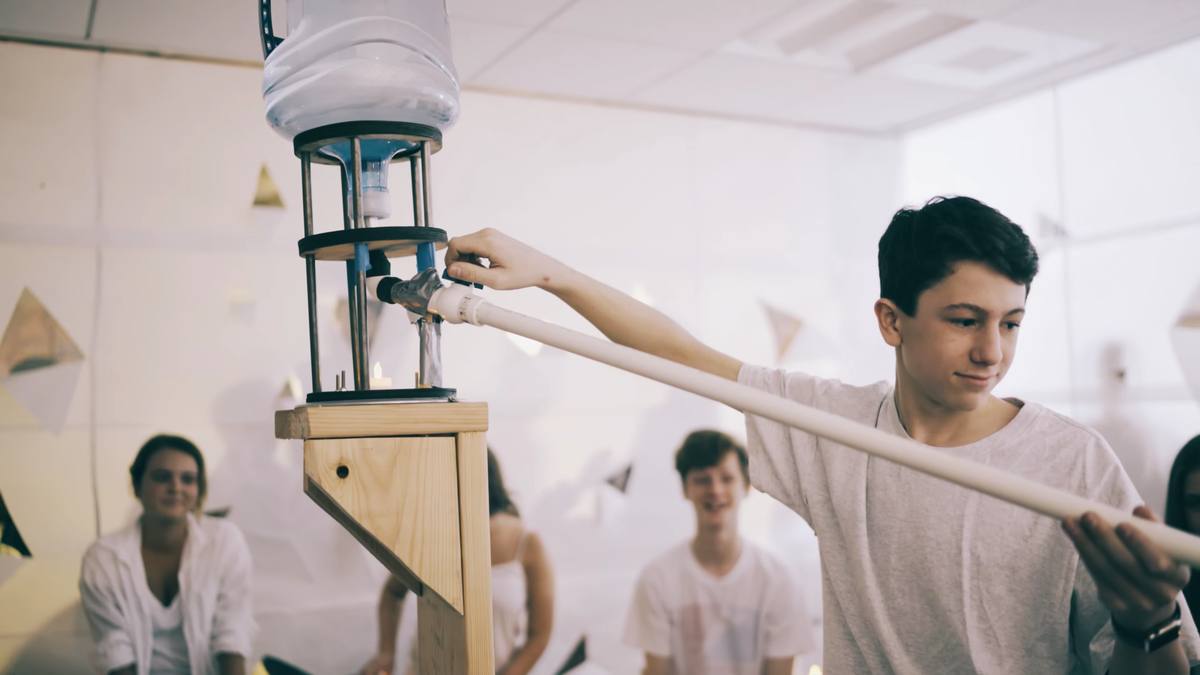
A student pouring from a suspended vessel into the tower's basin
The watering hole
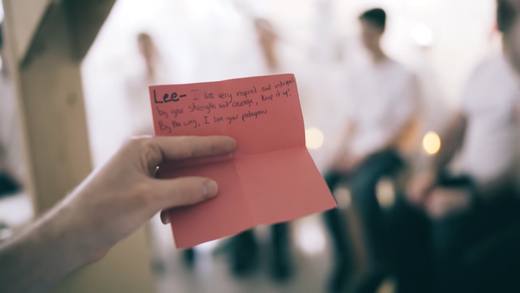
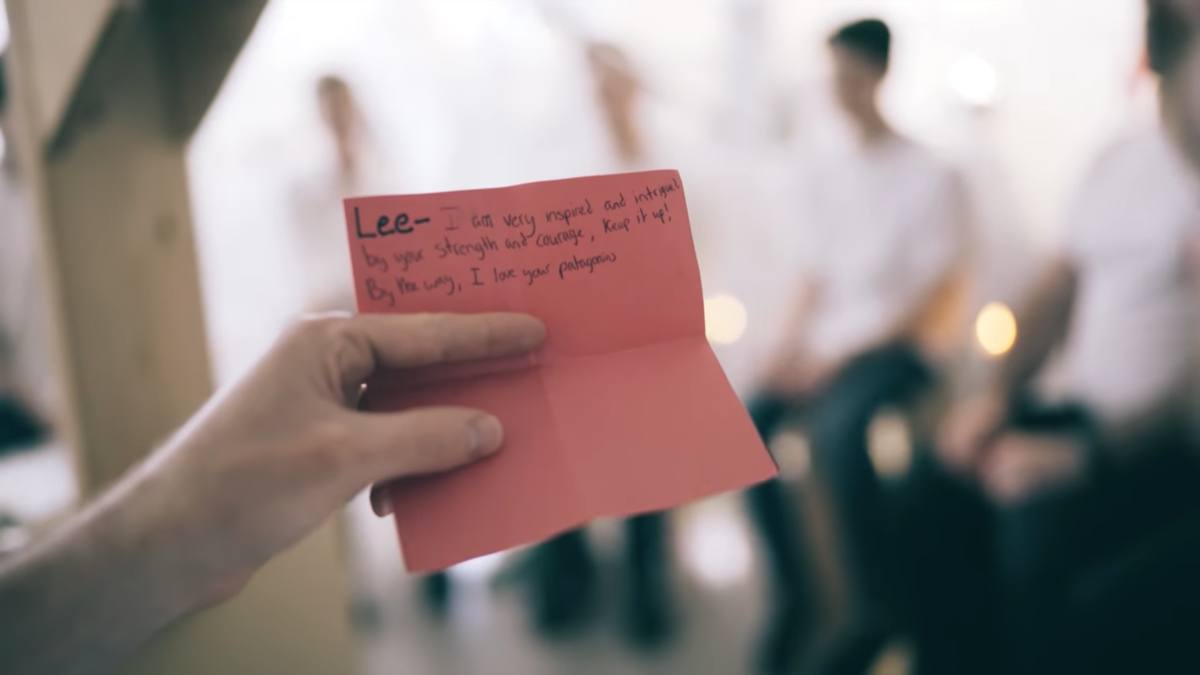
A hand holding a red card with a handwritten note
A note to Lee
biosensor lab
Lab curriculumAt the benchAt the bench
process
BrainstormAnkle cuffFluid testMicroneedle patchWireframesBlinking, smilingWoven tubingFluid Flow
Finalnutrisensor
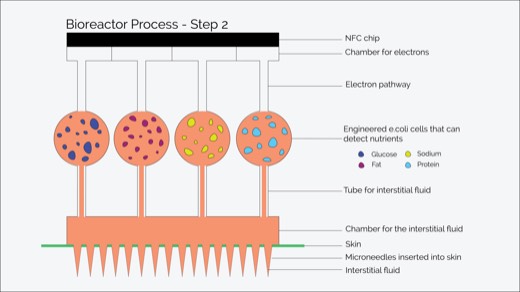
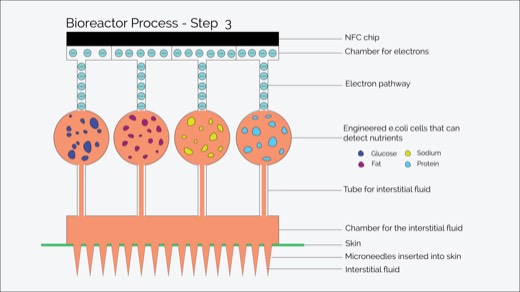
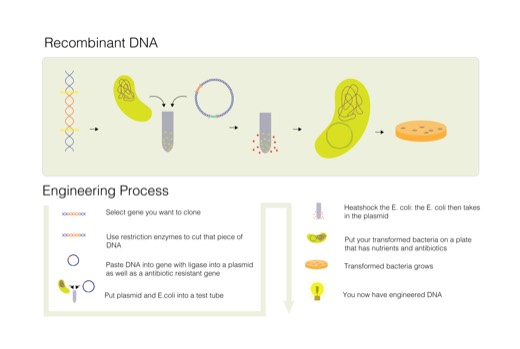
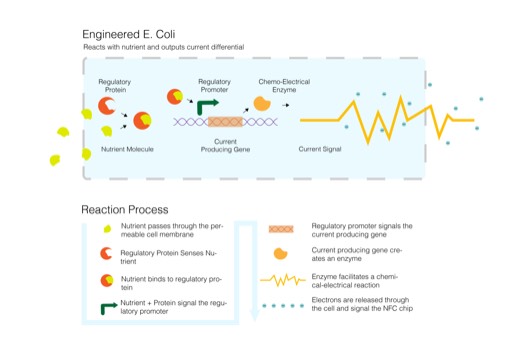
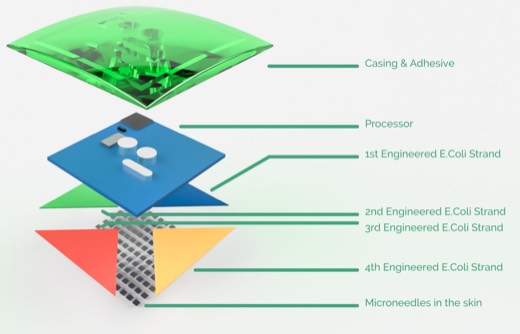
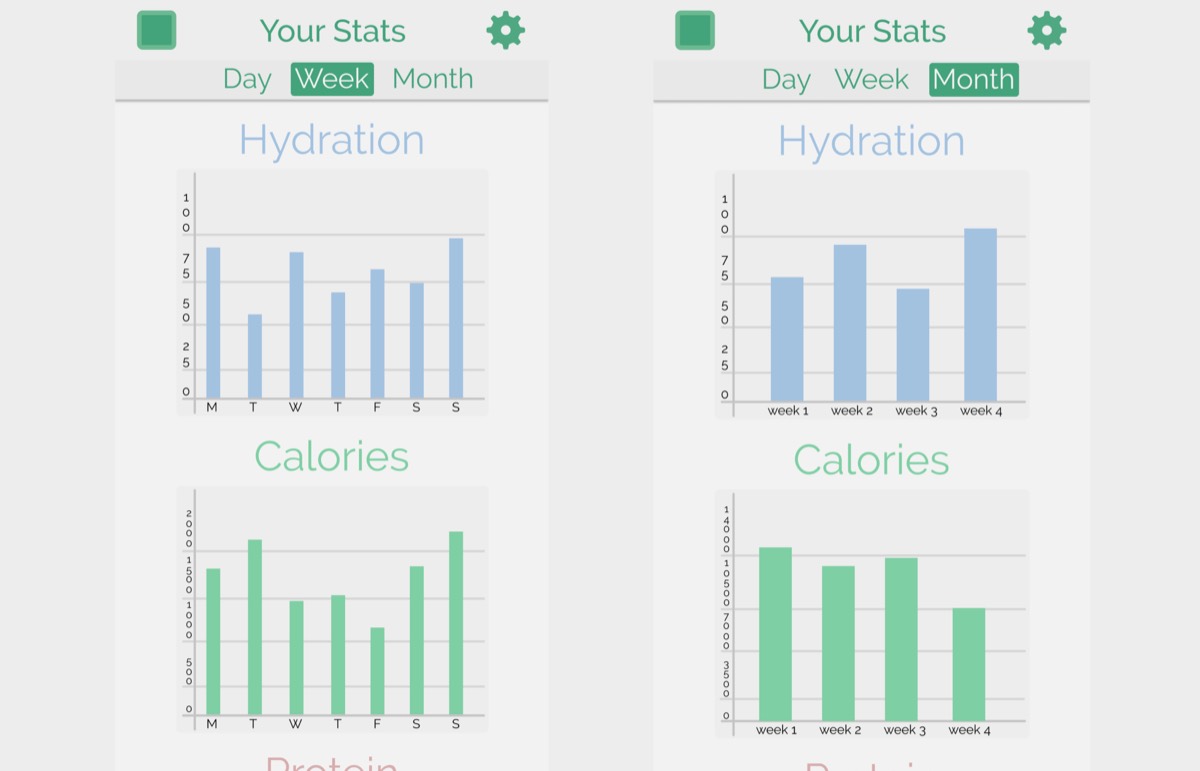
NutriSensor · RenderingOn the armMolecular processBioreactor, step 1Bioreactor, step 2Bioreactor, step 3Recombinant DNAEngineered E. coliExplodedThe app, dayThe app, week and month
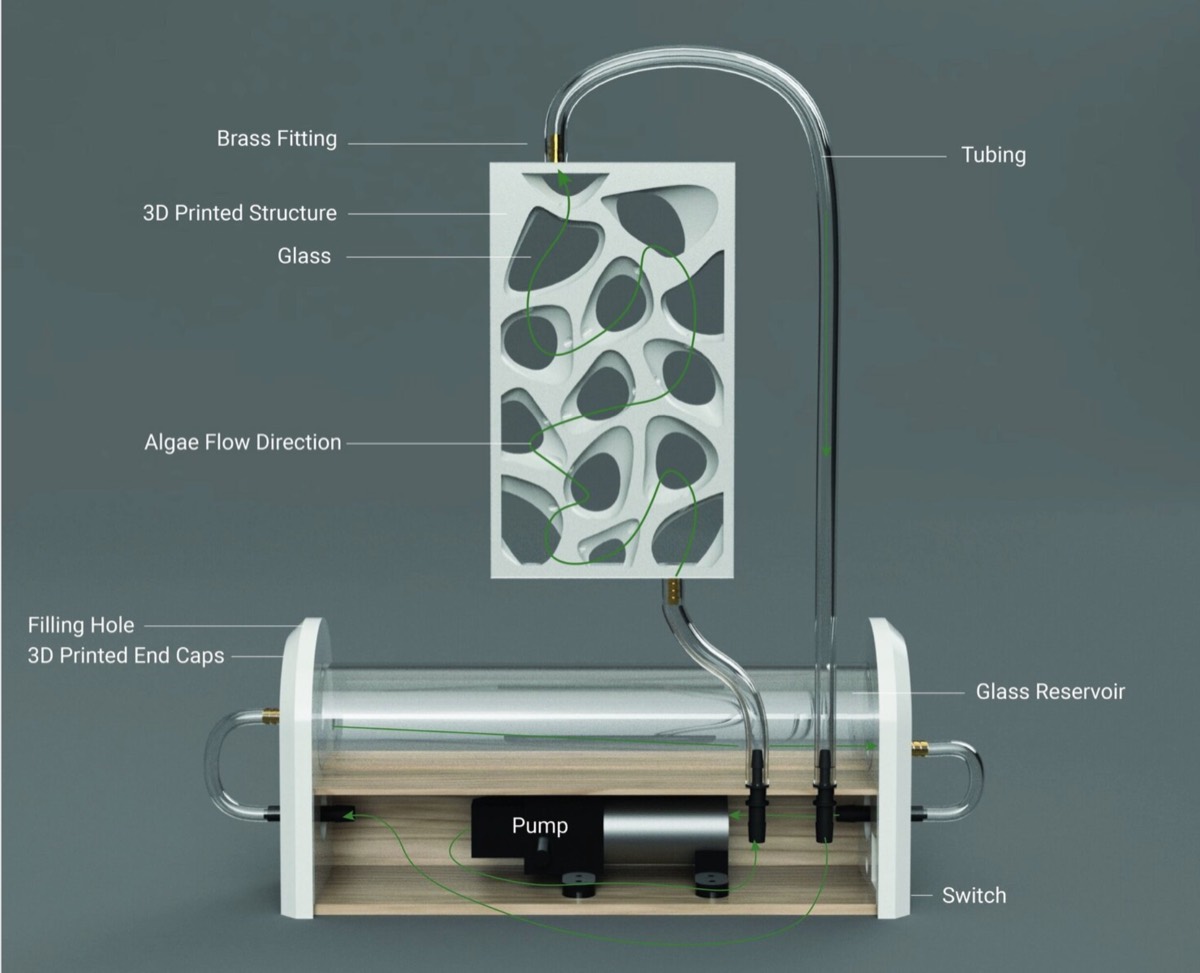
Finalalgae shade
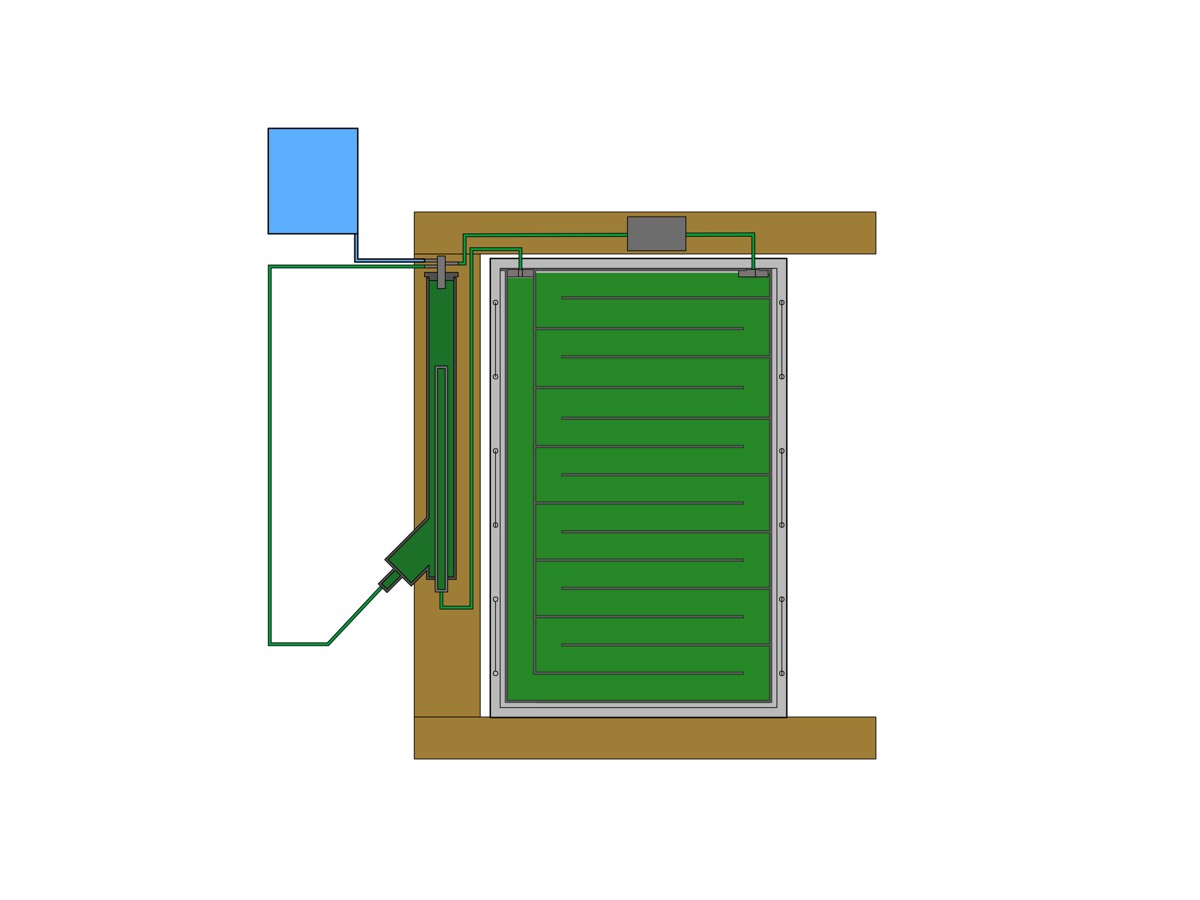
Algae ShadePhotosynthesisOver a daySectionFirst prototypeHex grid, marked upCNCSLA printCutting the cellsThe cell patternOutdoorsAssembly

NuVu Studio, Cambridge · Winter 2017 · 11 days · co-coached with Katia Zolotovsky, bio-designer and architect · lab at BosLab

An experimental studio that took NuVu's curriculum into biology, and asked how a technology like CRISPR could be handled in a conceptual studio. It was the first NuVu studio with a rigorous lab component, and it opened the way to later work in ecosystem design, living architecture, and genetics.

Bacteria in the body outnumber human cells ten to one. If biology can engineer those organisms for new functions, what new abilities could we have? Students began with a crash course in cell and molecular biology and genetics and ran a biosensor and genetics lab at BosLab, a cooperative laboratory. Then they imagined, designed, and built wearable bioreactors and proofs of concept: devices that house engineered living cells and work in symbiosis with the wearer.

 
Biosensor lab

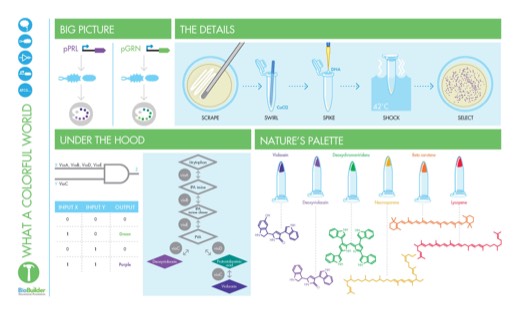
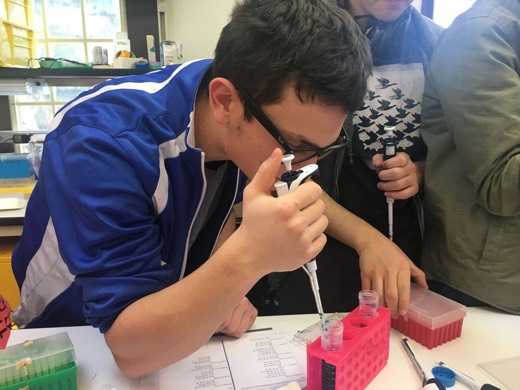
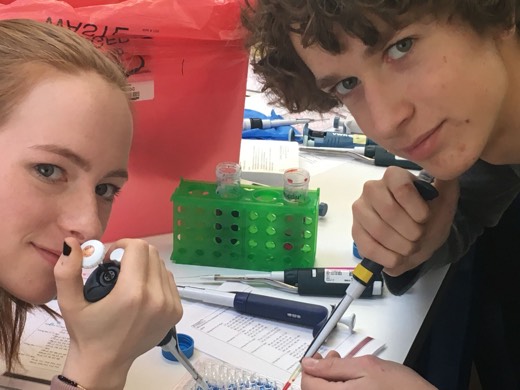
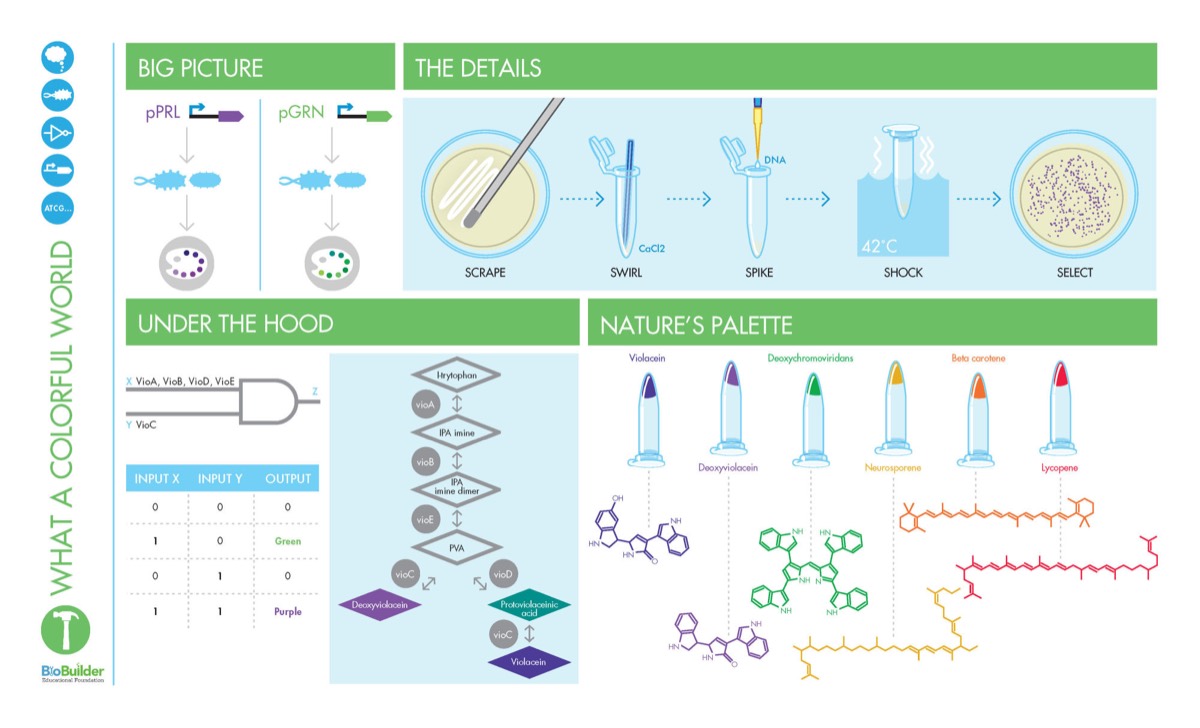
A crash course in cell and molecular biology and genetics, then a biosensor and genetics lab at BosLab, a cooperative laboratory.

A green lab poster, What a Colorful World, with pipetting steps
Lab curriculumBioBuilder
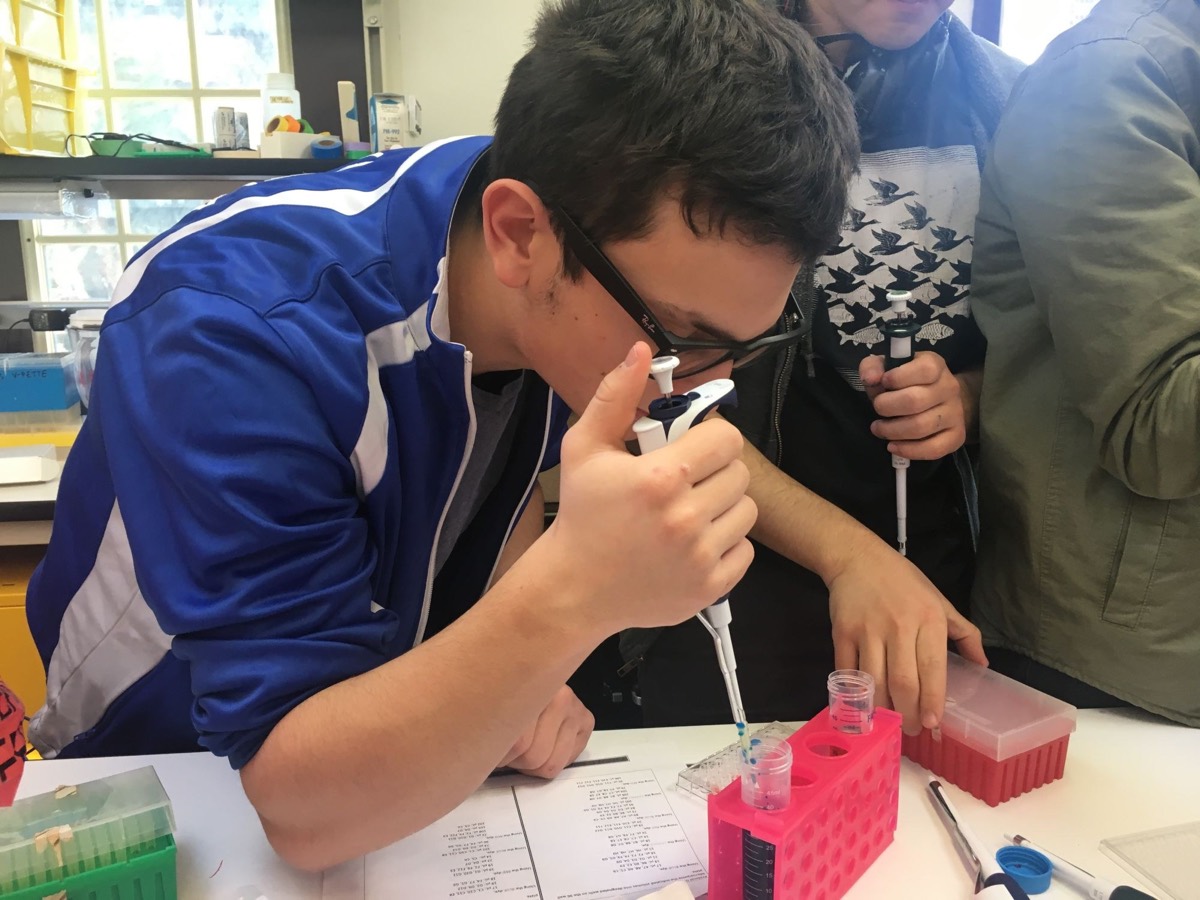
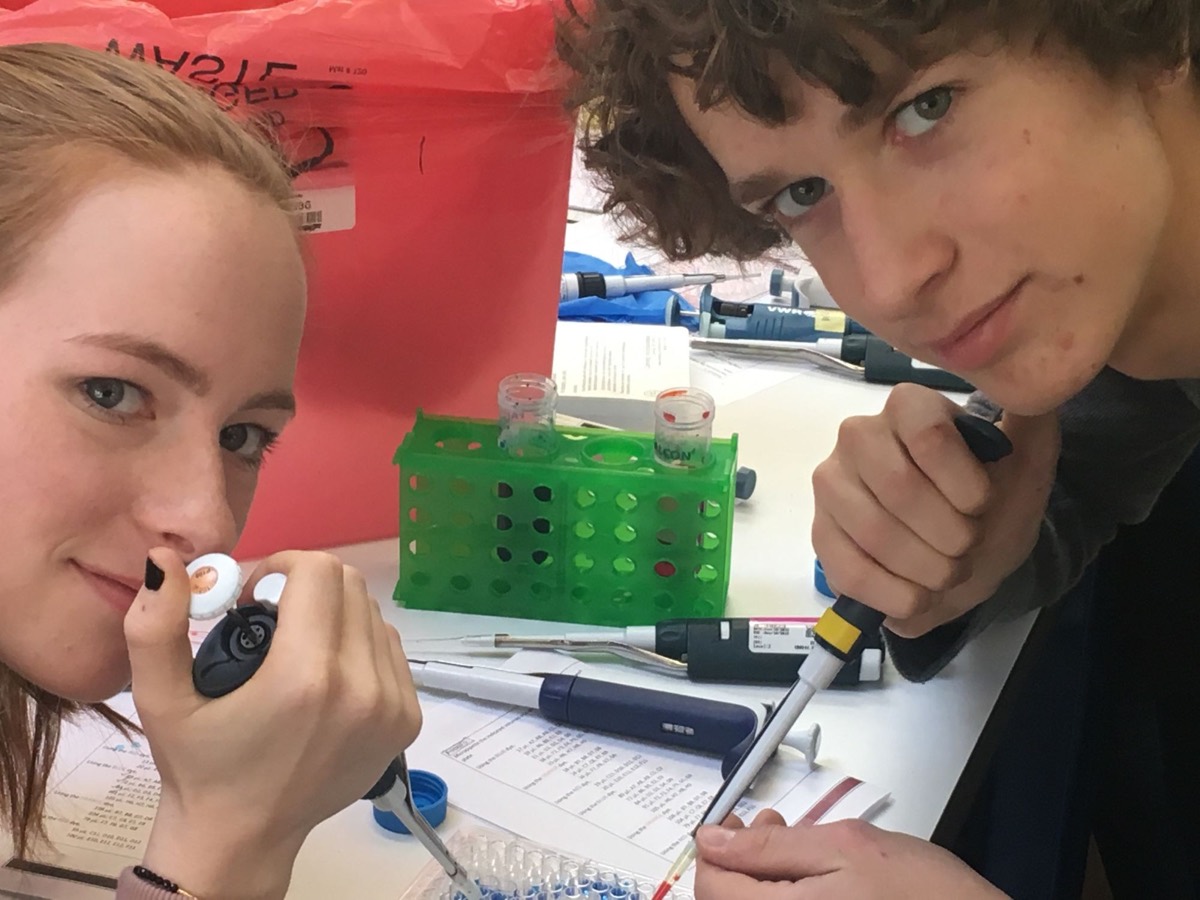
Two students pipetting at a lab bench
At the bench
A student in a lab coat pipetting into a tube rack
At the bench
 
Process

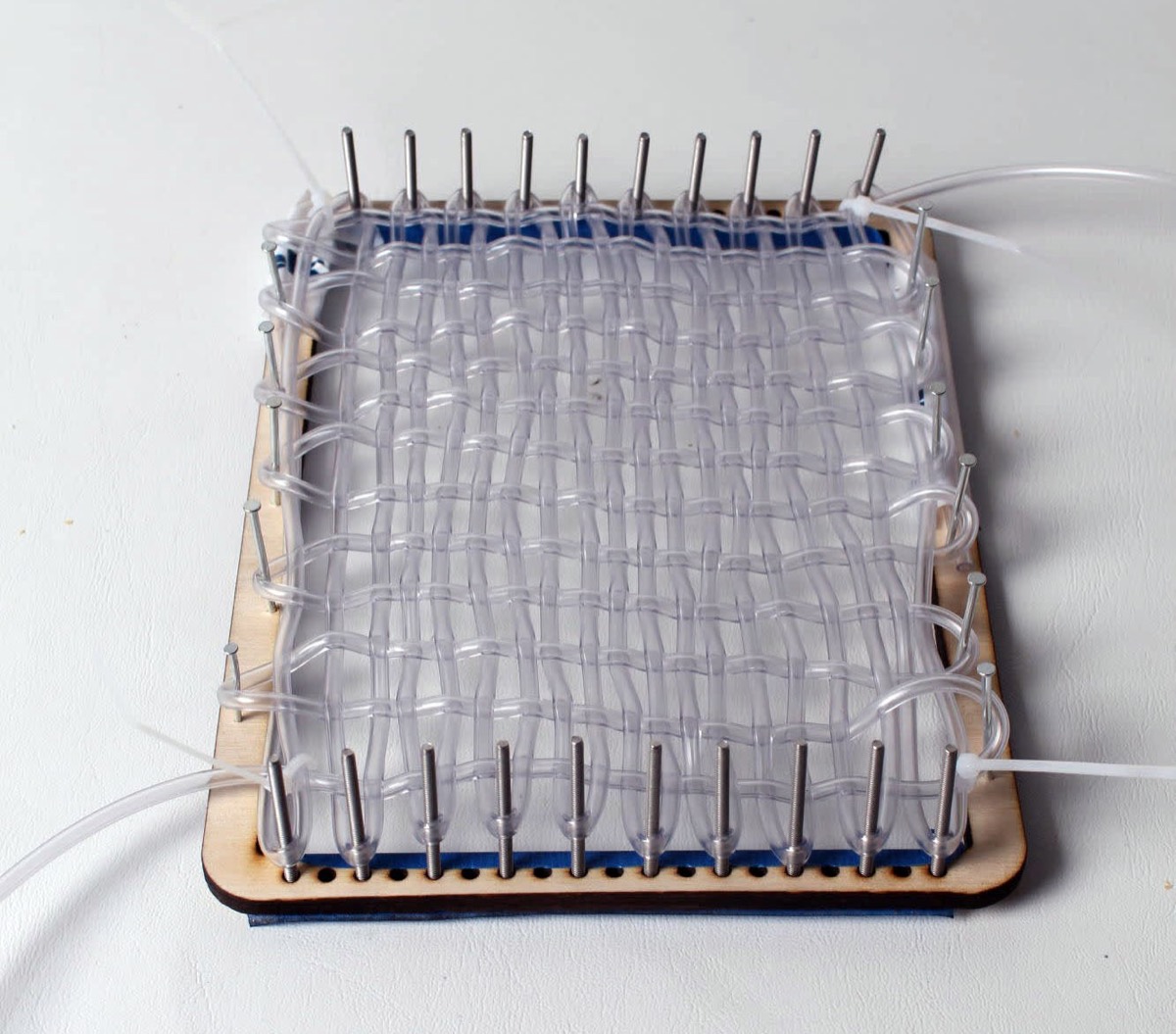
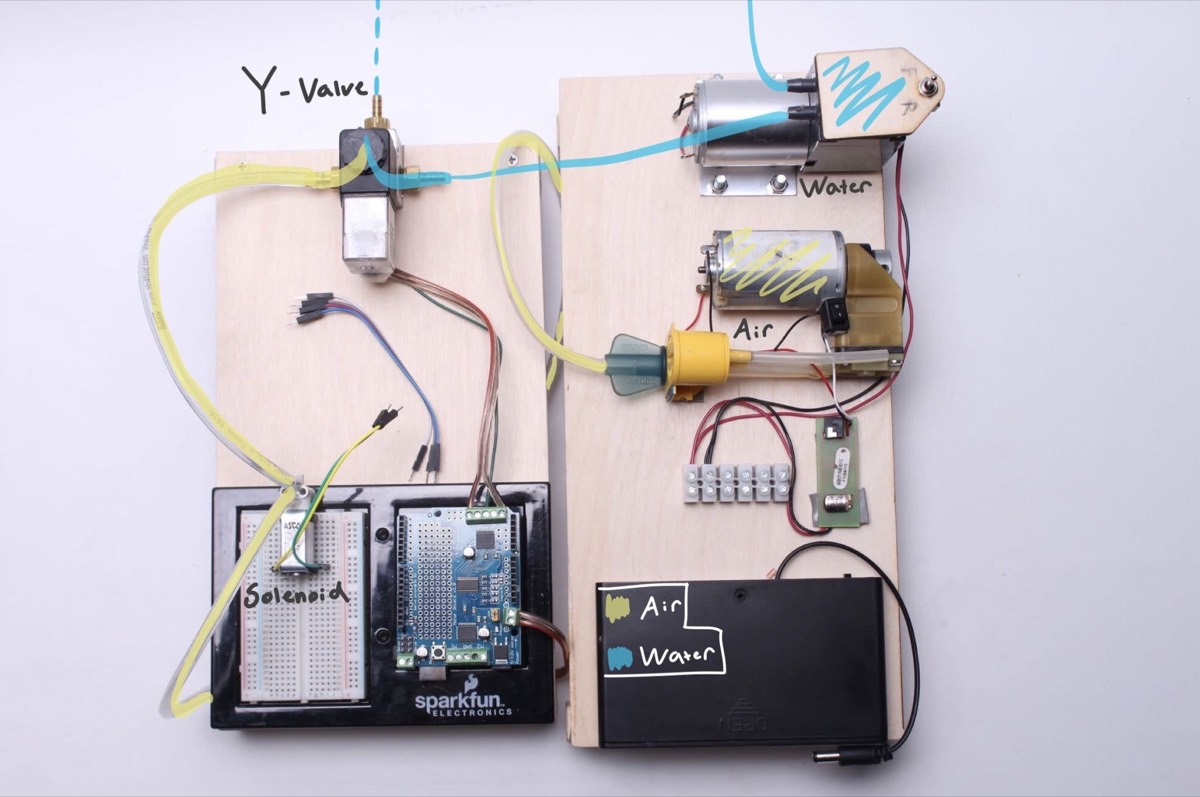
Imagining, designing, and building the devices: sketches, a first cuff, fluid tests, a woven tubing layer, a working rig.

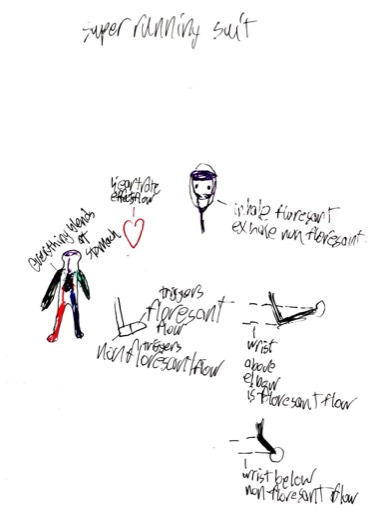
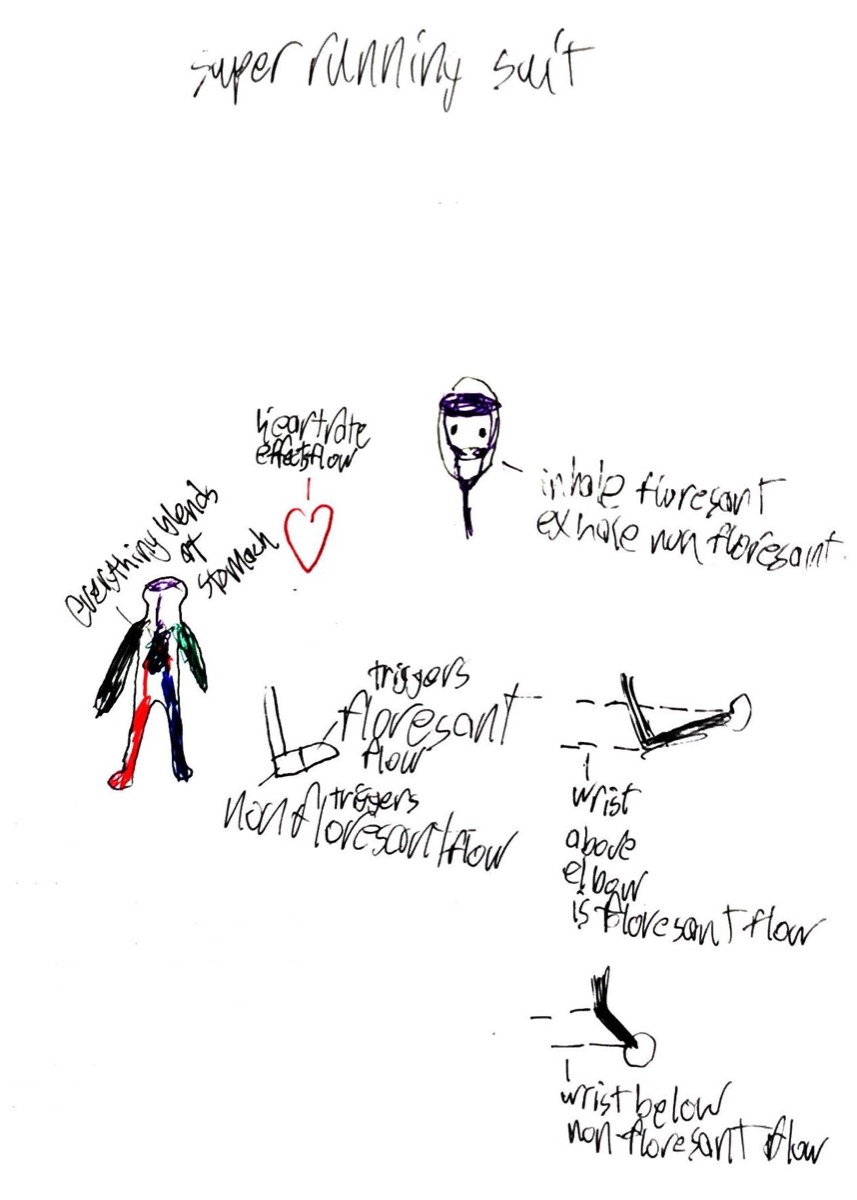
A pencil sketch of a running suit with notes on sensing and feeding
Brainstorm
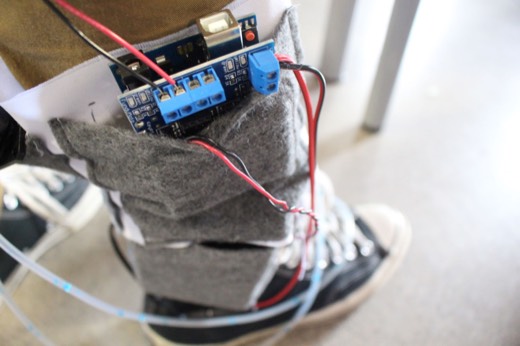
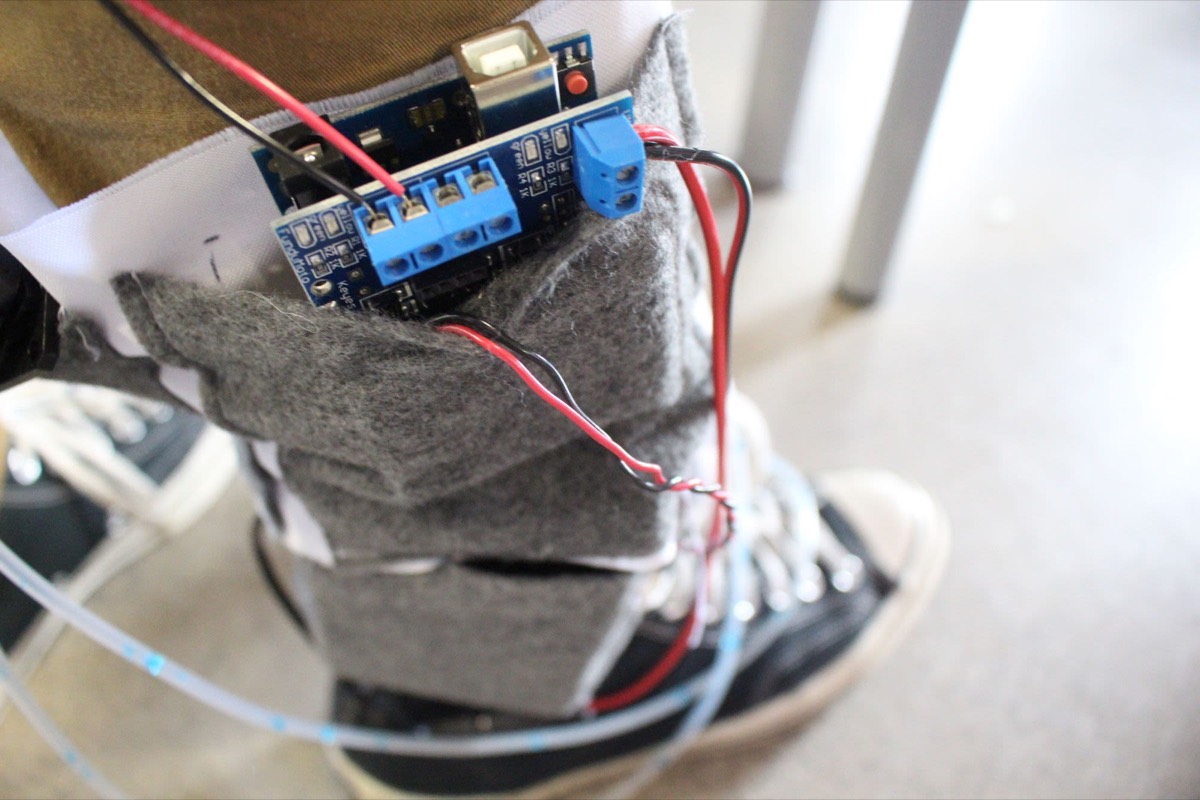
A grey cuff with a circuit board and red tubing on a leg
Ankle cuff
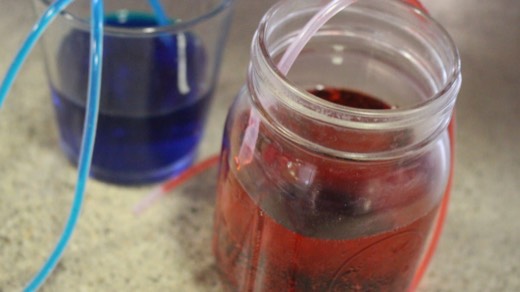
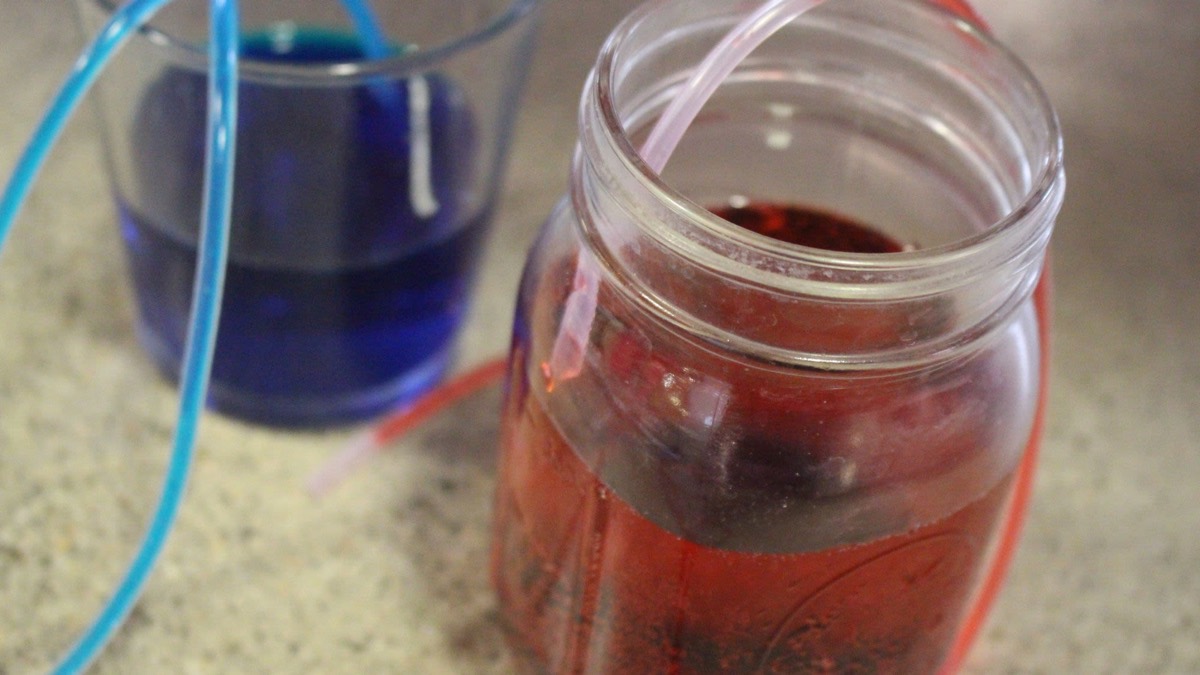
Two jars of blue and red dyed water joined by tubing
Fluid test
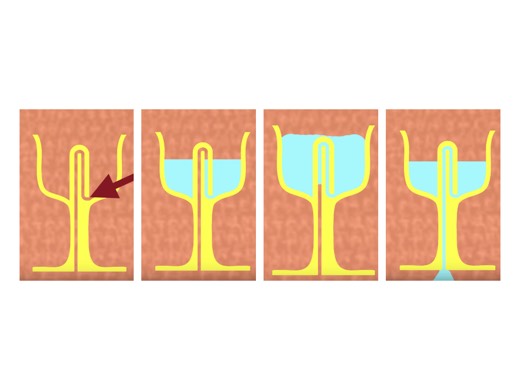
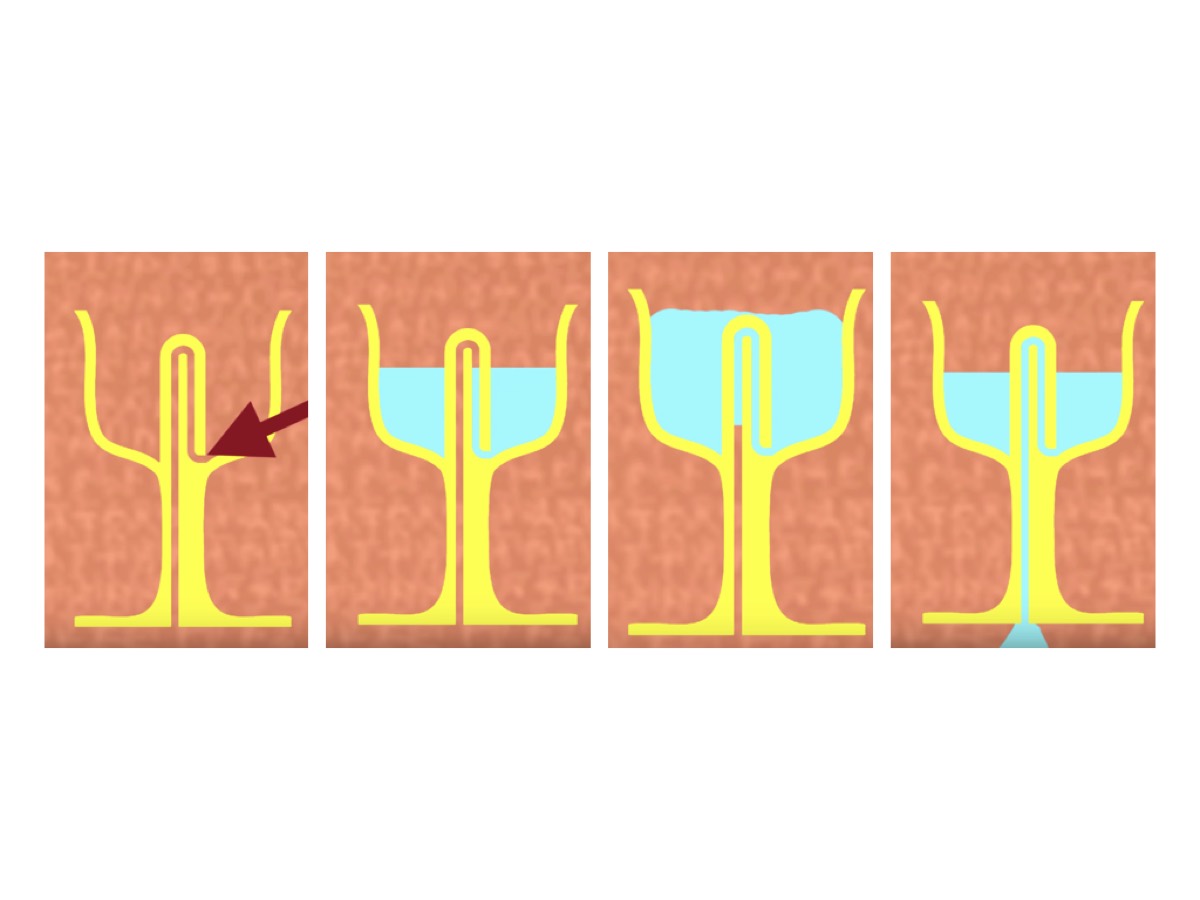
Four coloured section diagrams of a needle patch on skin
Microneedle patch
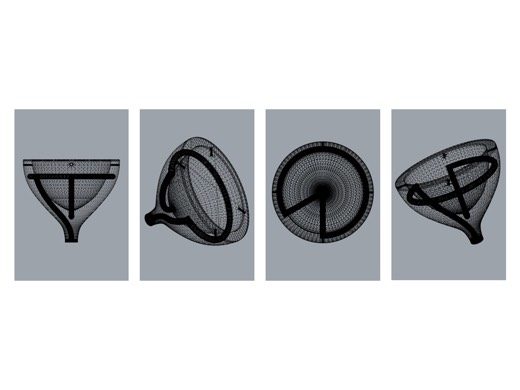
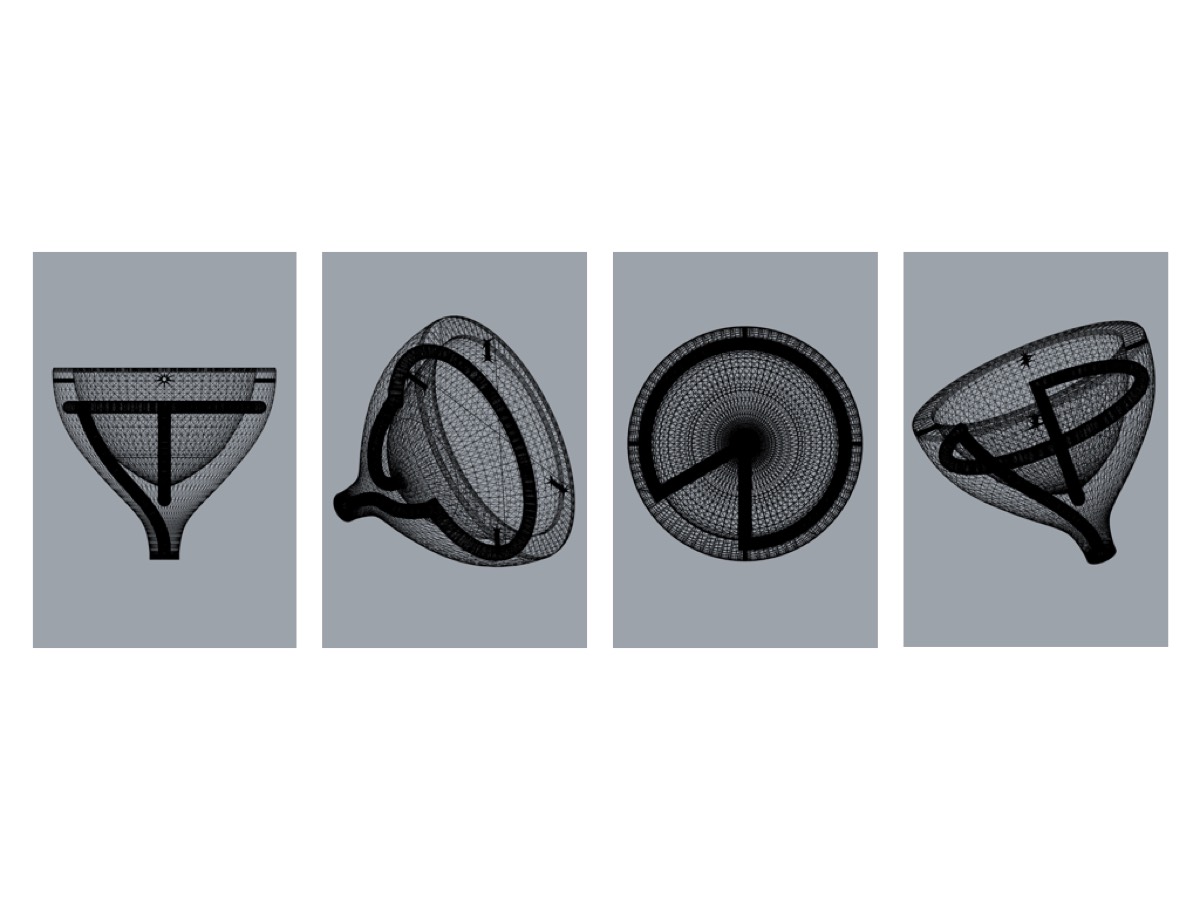
Four grey wireframe views of a cone-shaped patch
Wireframes
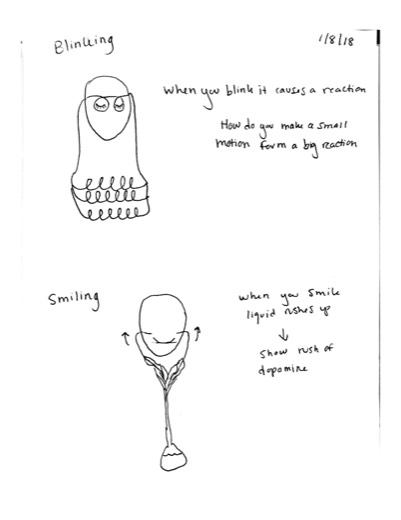
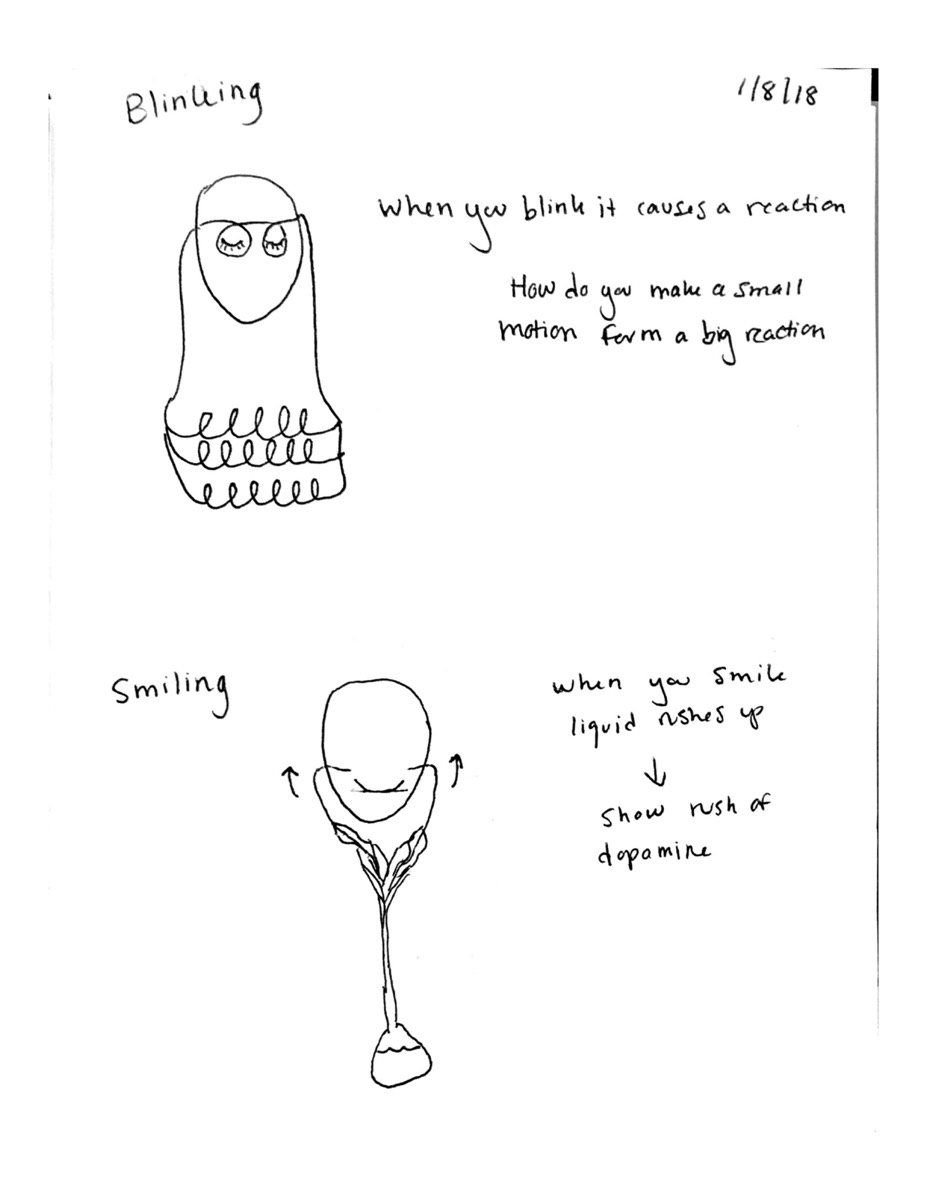
Pencil faces with notes on triggering a response by blinking or smiling
Blinking, smiling
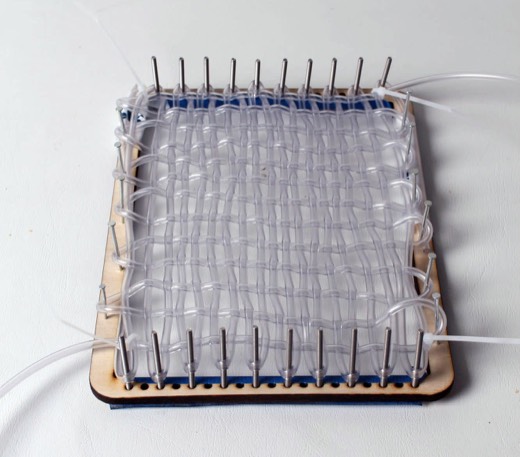
Clear tubing woven on a plywood jig with pins
Woven tubing
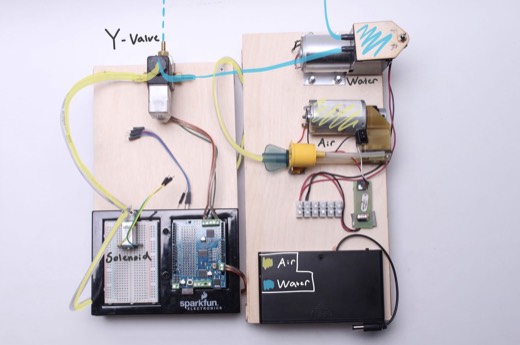
A valve-and-pump rig on a plywood board with an Arduino and tubing
Fluid Flow
 
NutriSensor

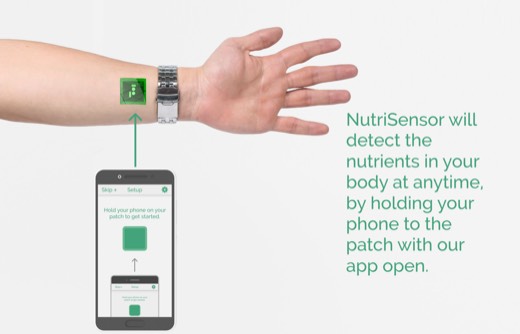
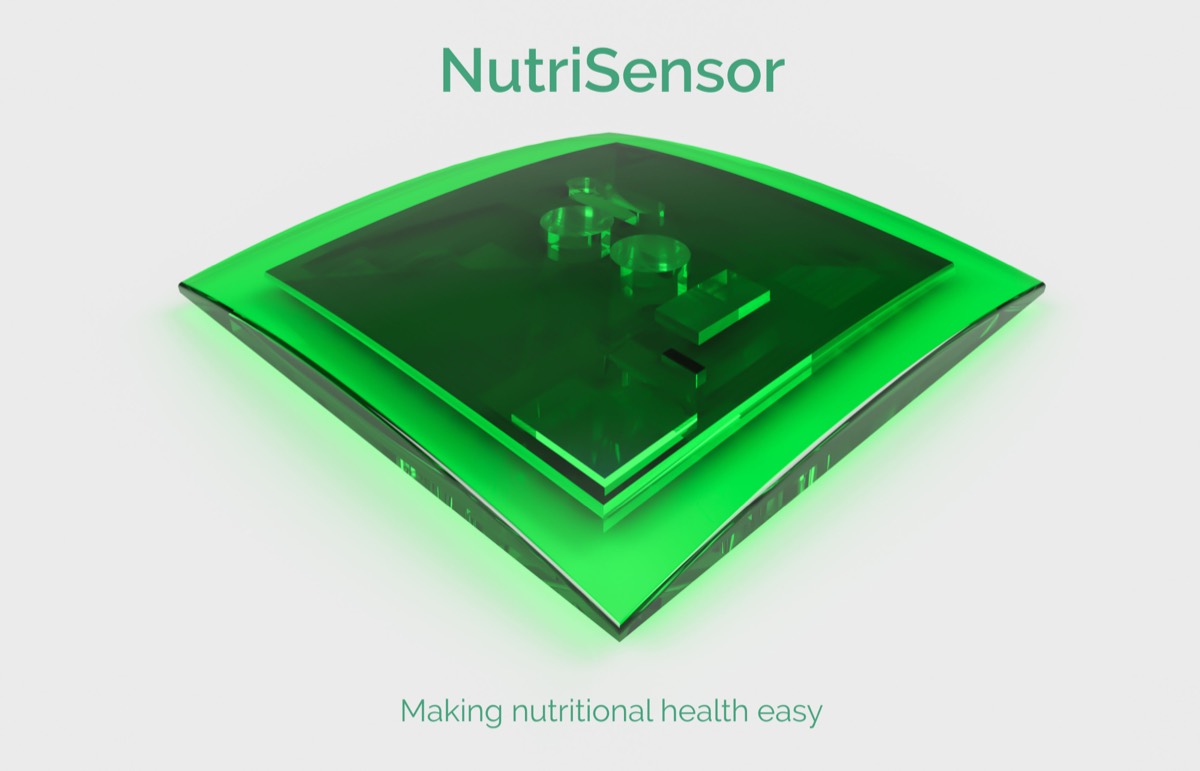
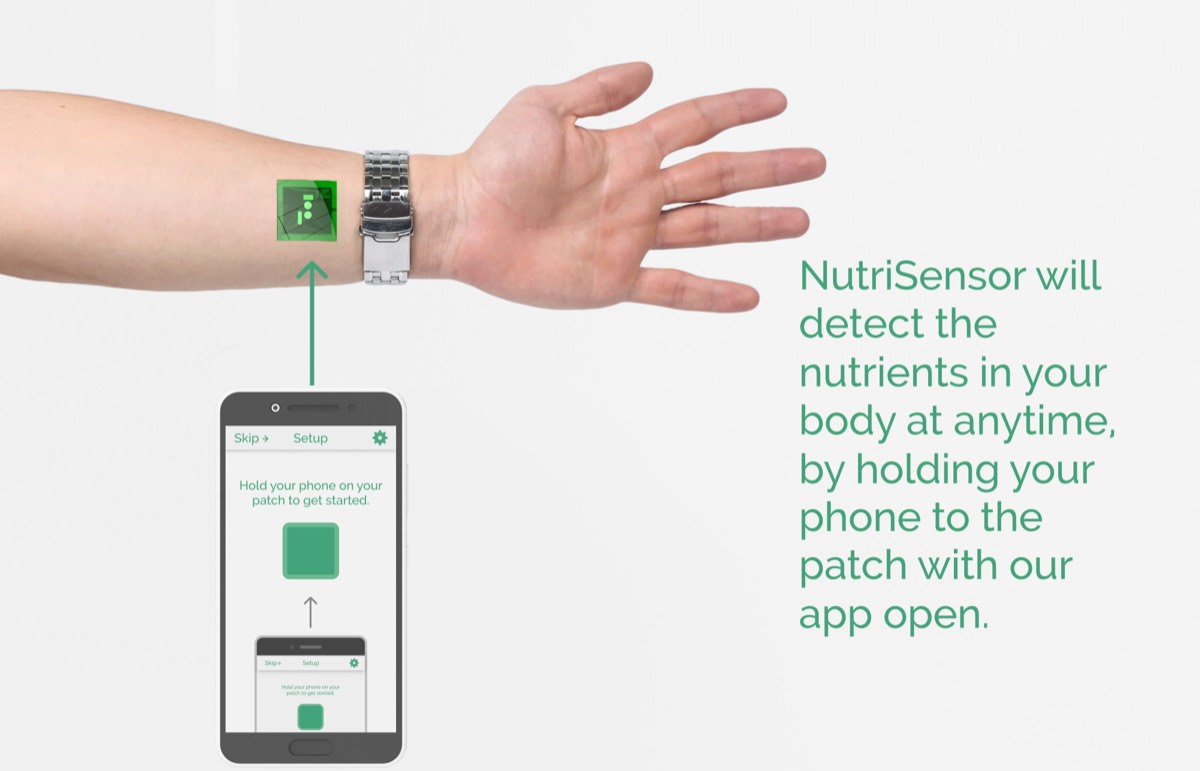
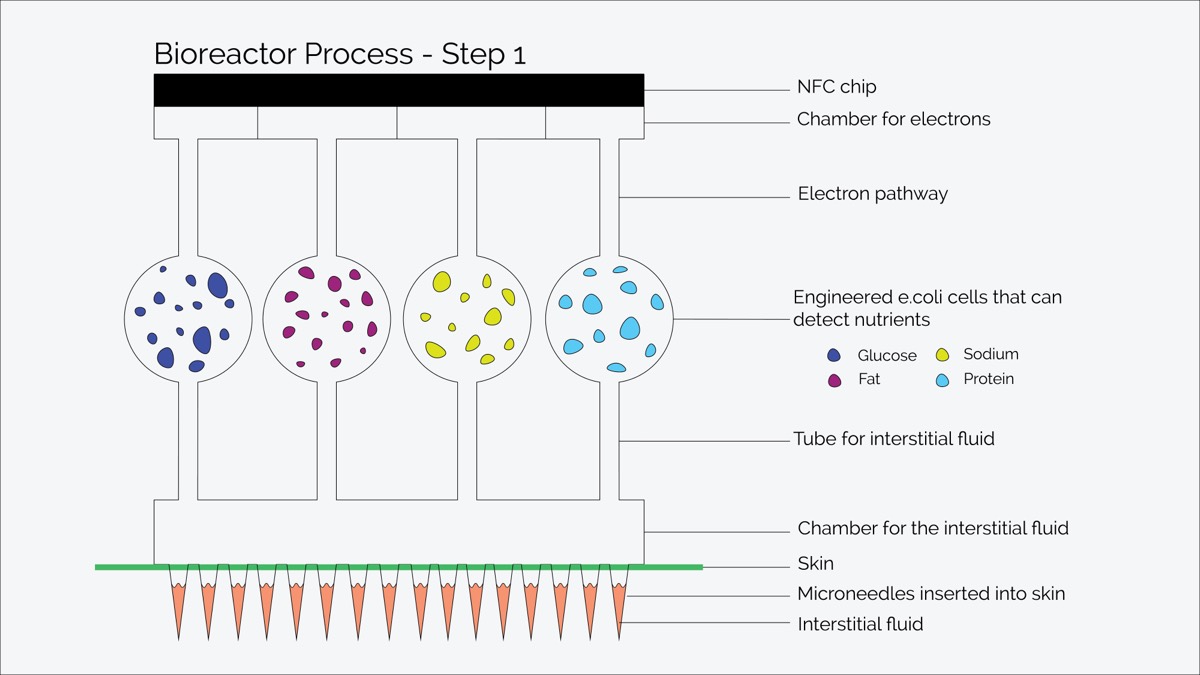
Four students. A patch that houses engineered cells to sense nutrients in the body, read by phone.

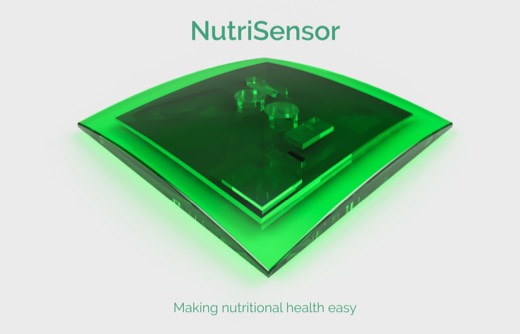
A green translucent square patch, rendered
NutriSensor · Rendering
A hand and forearm with the green patch, a phone showing the app beside it
On the arm
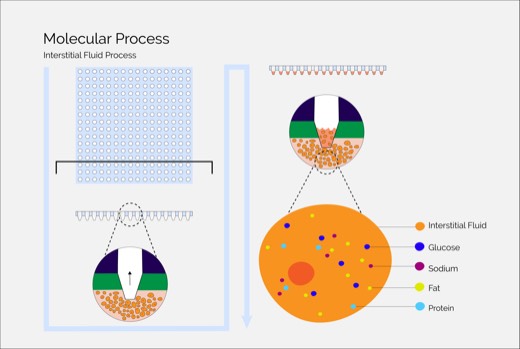
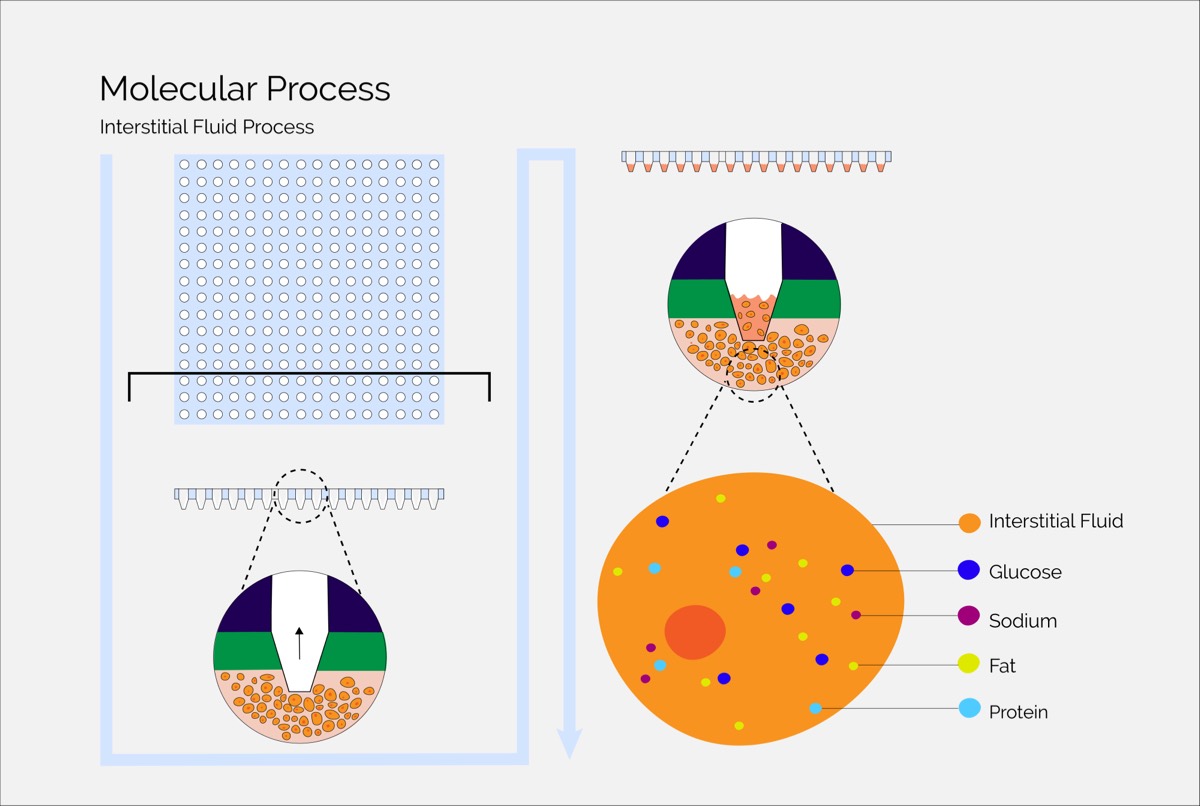
A diagram of the patch in section with cell and fluid callouts
Molecular process
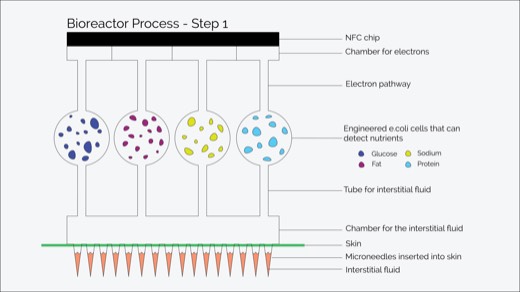
A diagram of engineered E. coli in a chamber above microneedles
Bioreactor, step 1
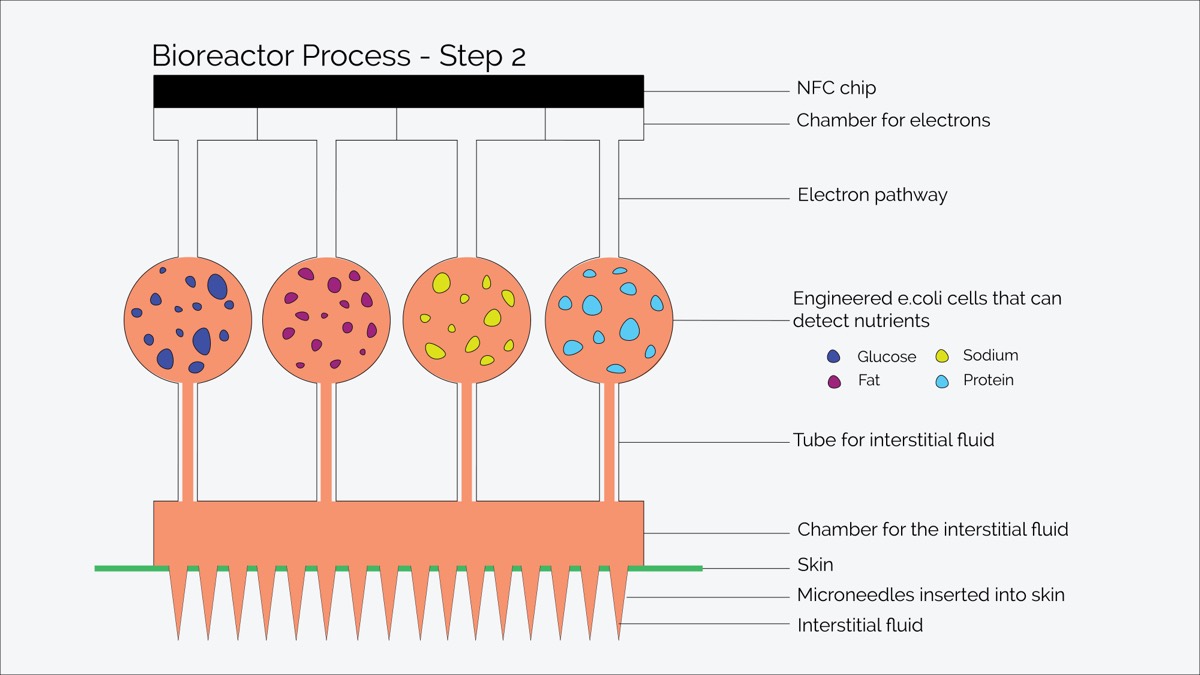
The same diagram, the next state
Bioreactor, step 2
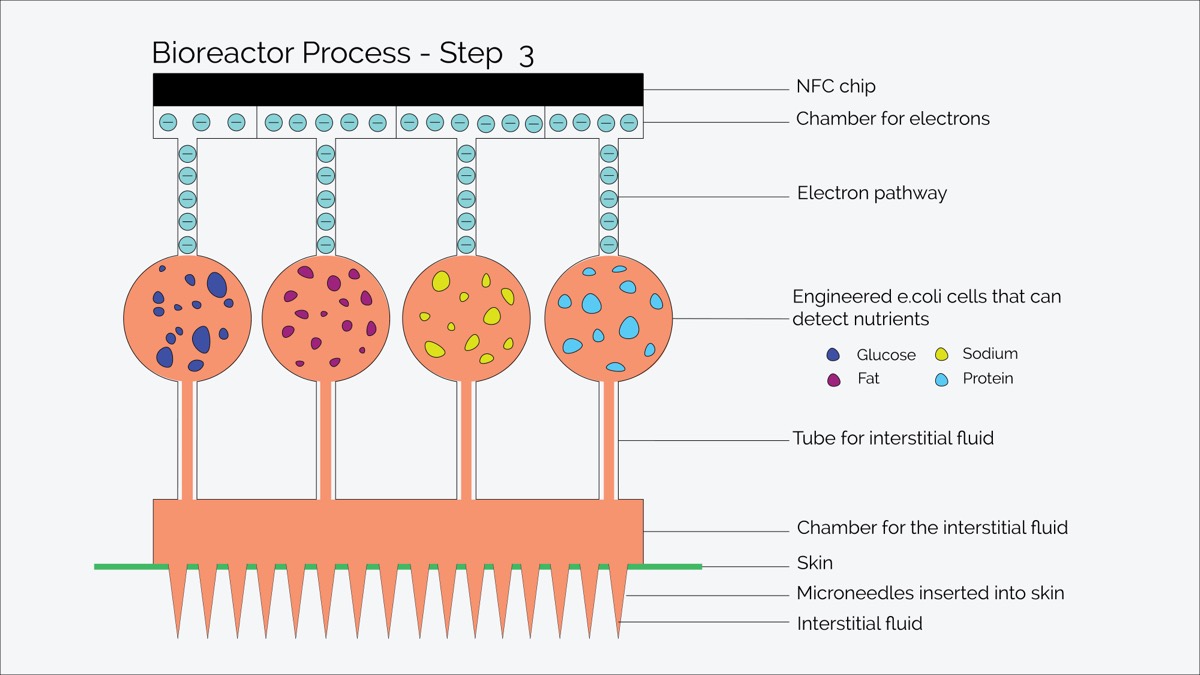
The same diagram, the final state
Bioreactor, step 3
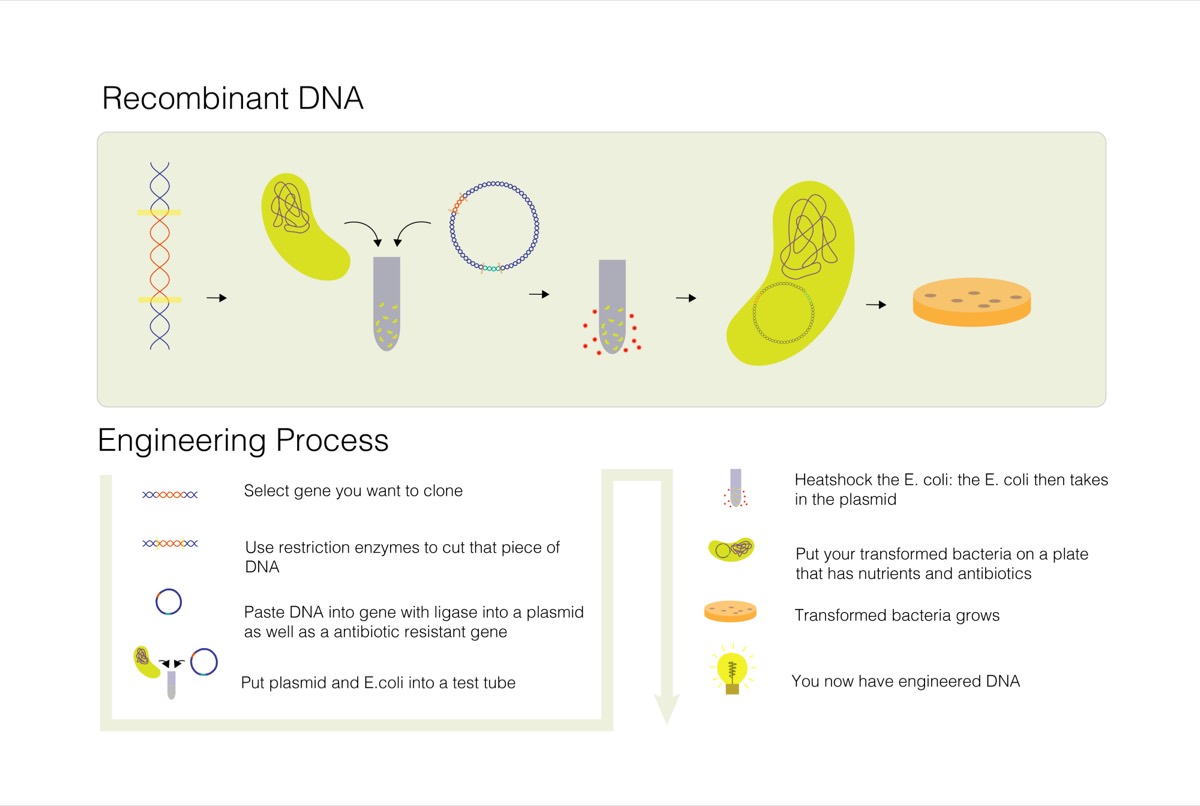
A diagram of plasmid, cell, and engineering process
Recombinant DNA
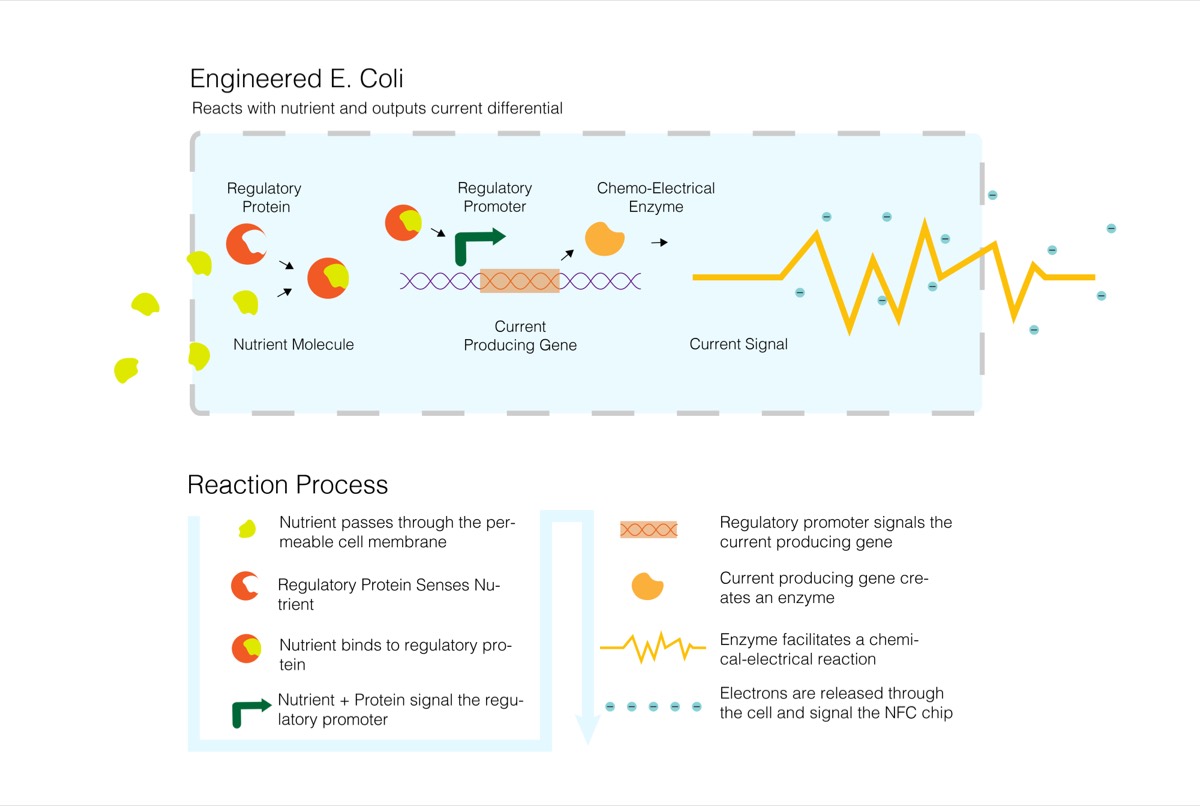
A diagram of the cell's regulatory and reaction process
Engineered E. coli
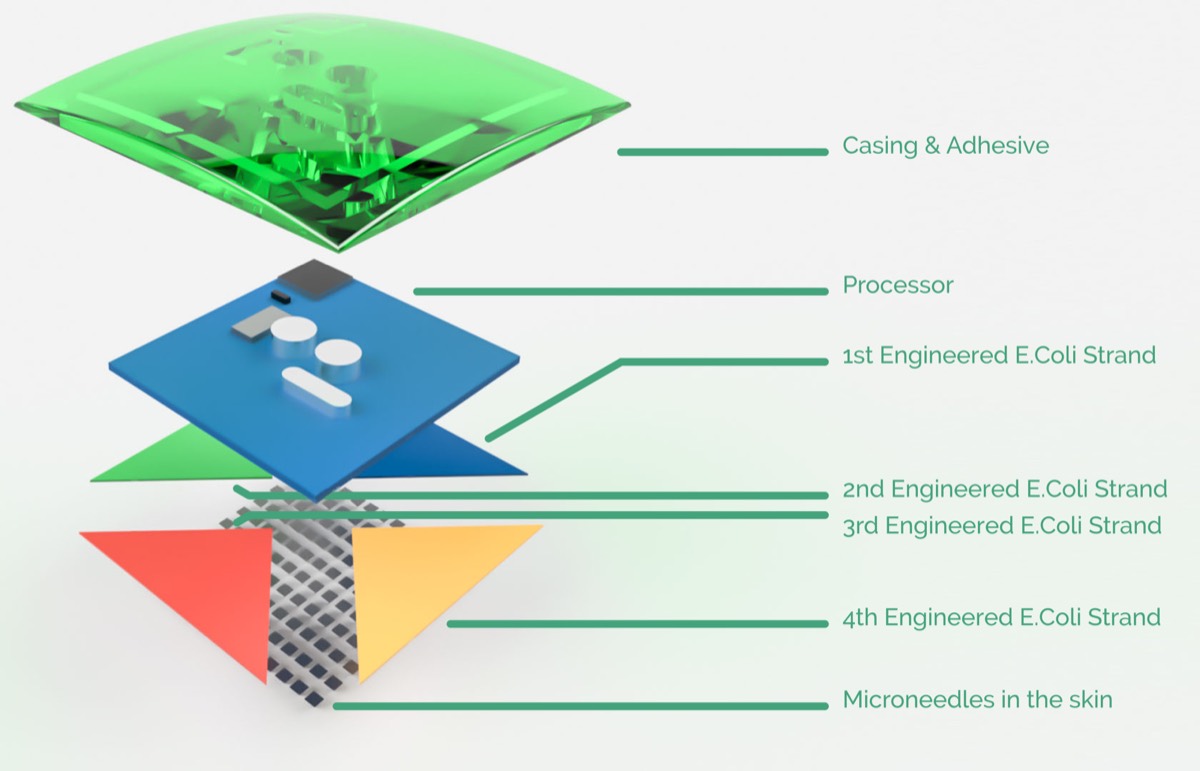
The patch's layers pulled apart and labelled
Exploded
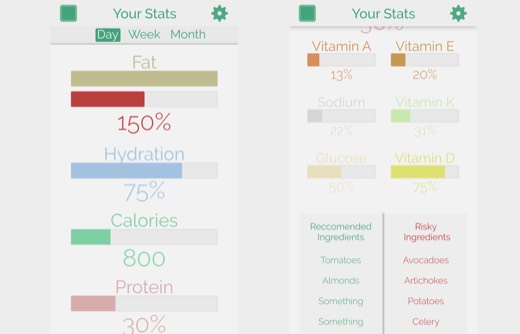
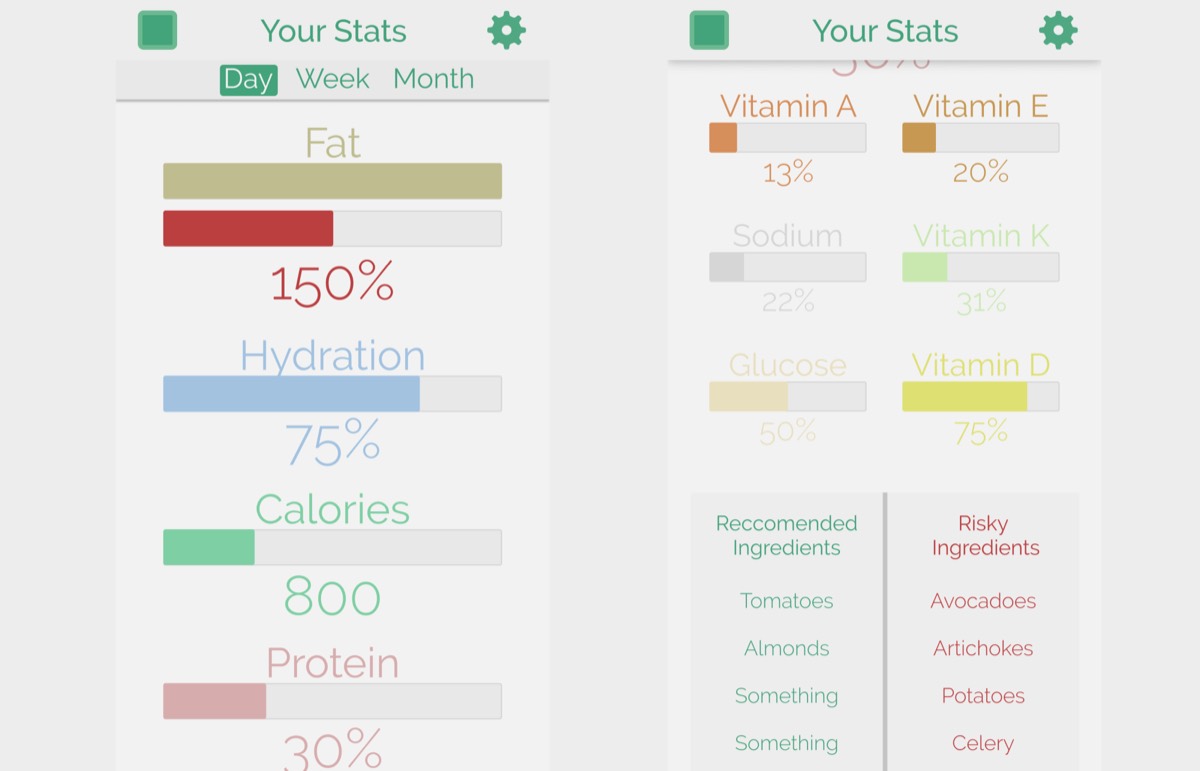
A phone screen with fat, hydration, and calorie readings
The app, day
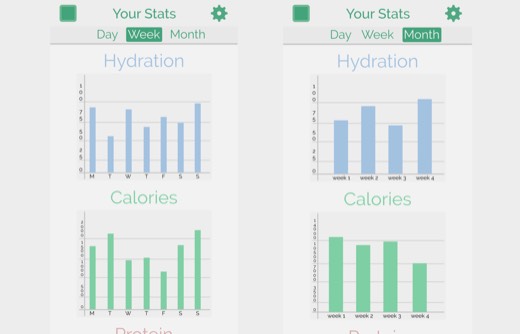
A phone screen with bar charts of protein and hydration
The app, week and month
 
Algae Shade

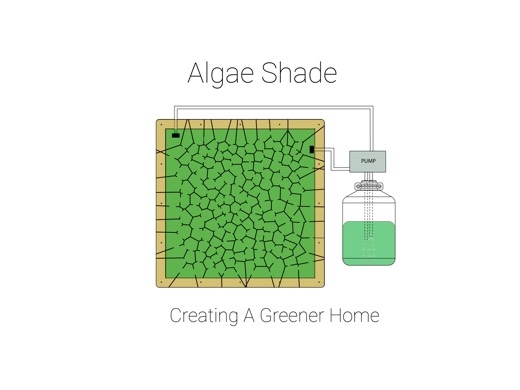
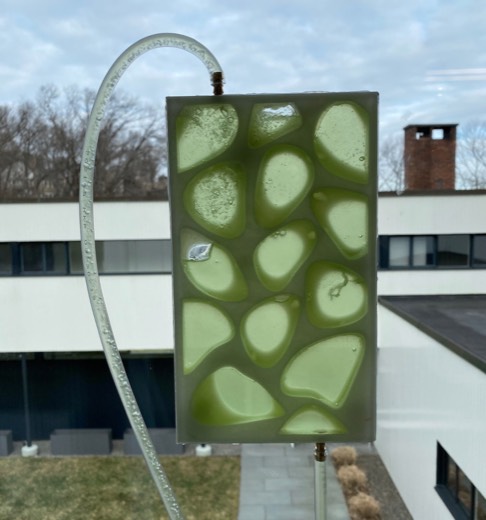
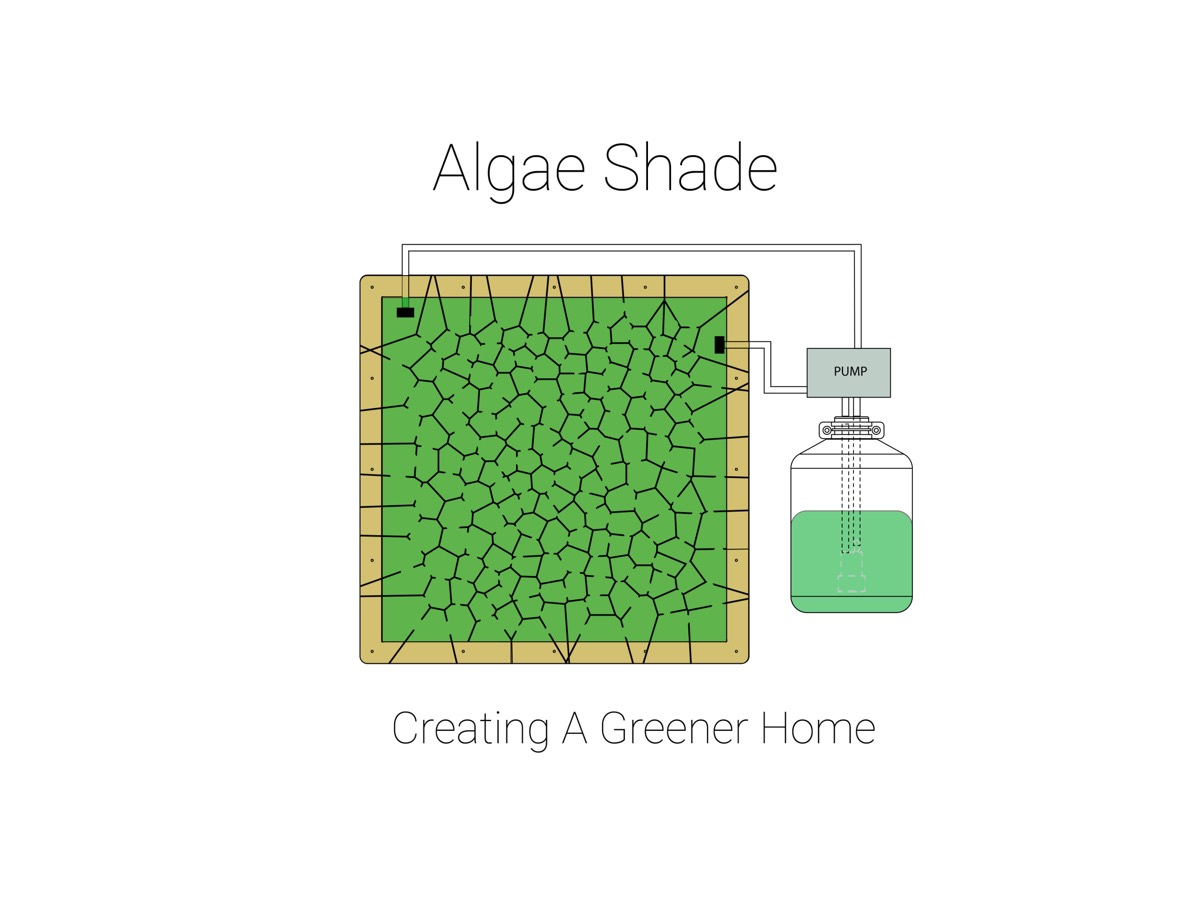
Two students. A window panel of living algae that shades by growing, later developed by the students as Bloom; the students' continuing work, not mine.

A green hexagonal grid in a frame beside a jar, titled Creating a greener home
Algae Shade
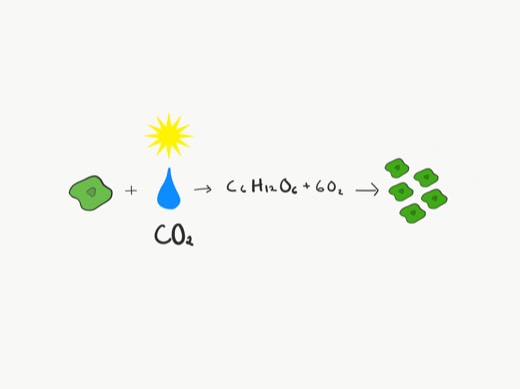
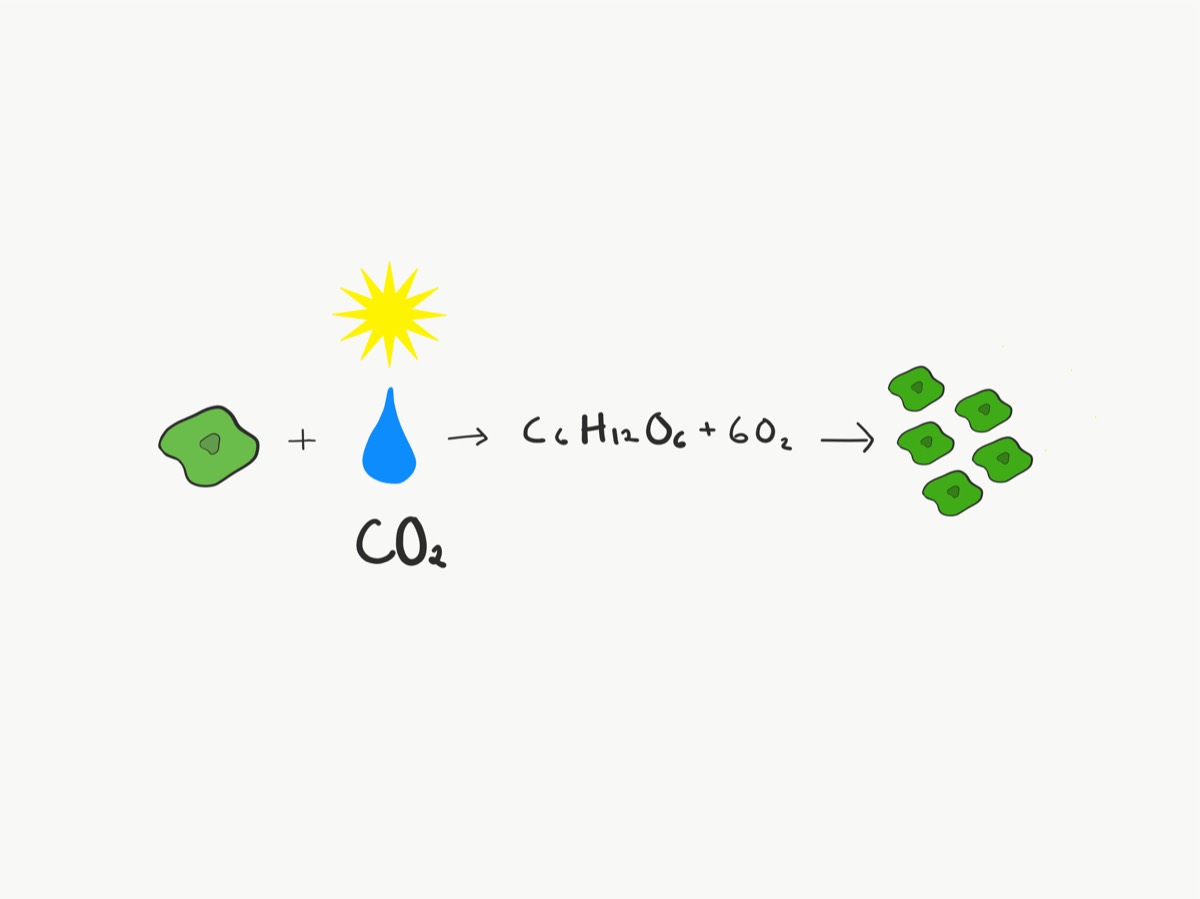
A drawn equation: algae, sun, CO₂ to sugar and oxygen
Photosynthesis
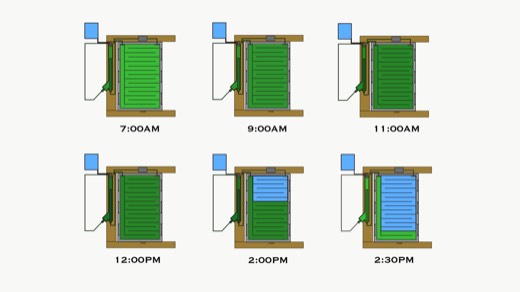
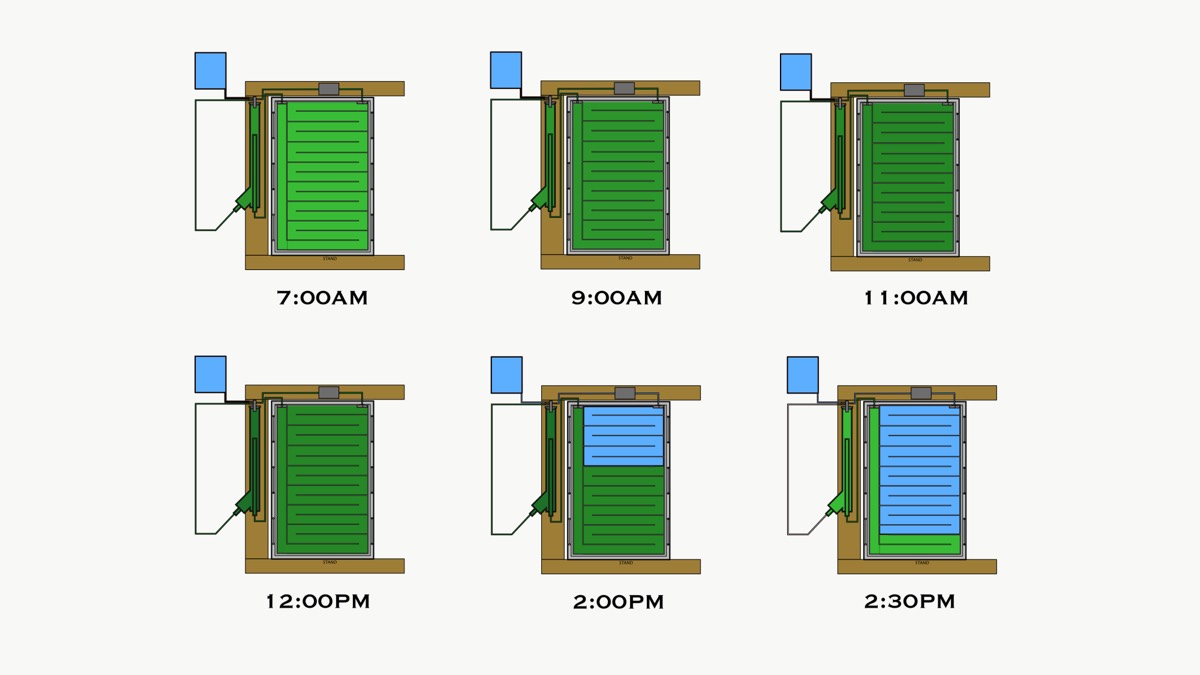
Six window panels from 7 am to 2:30 pm, the green filling in
Over a day
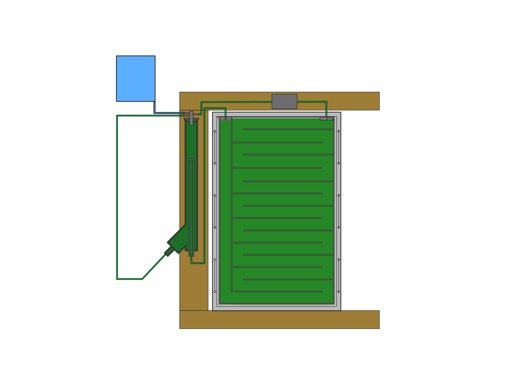
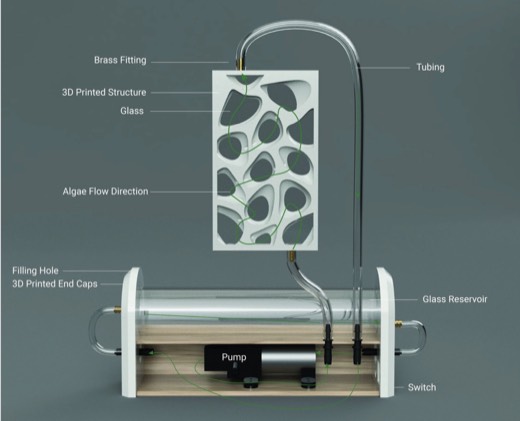
A section through the panel showing the reservoir and the green cells
Section
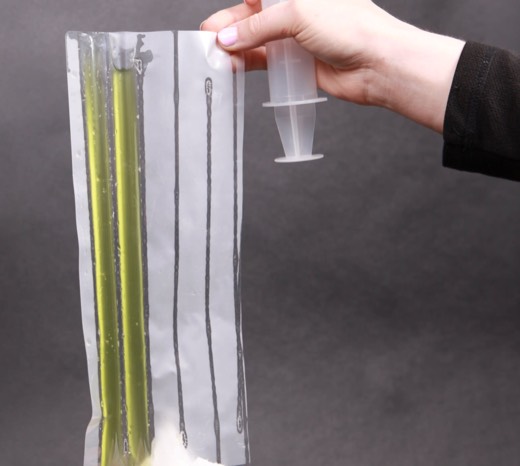
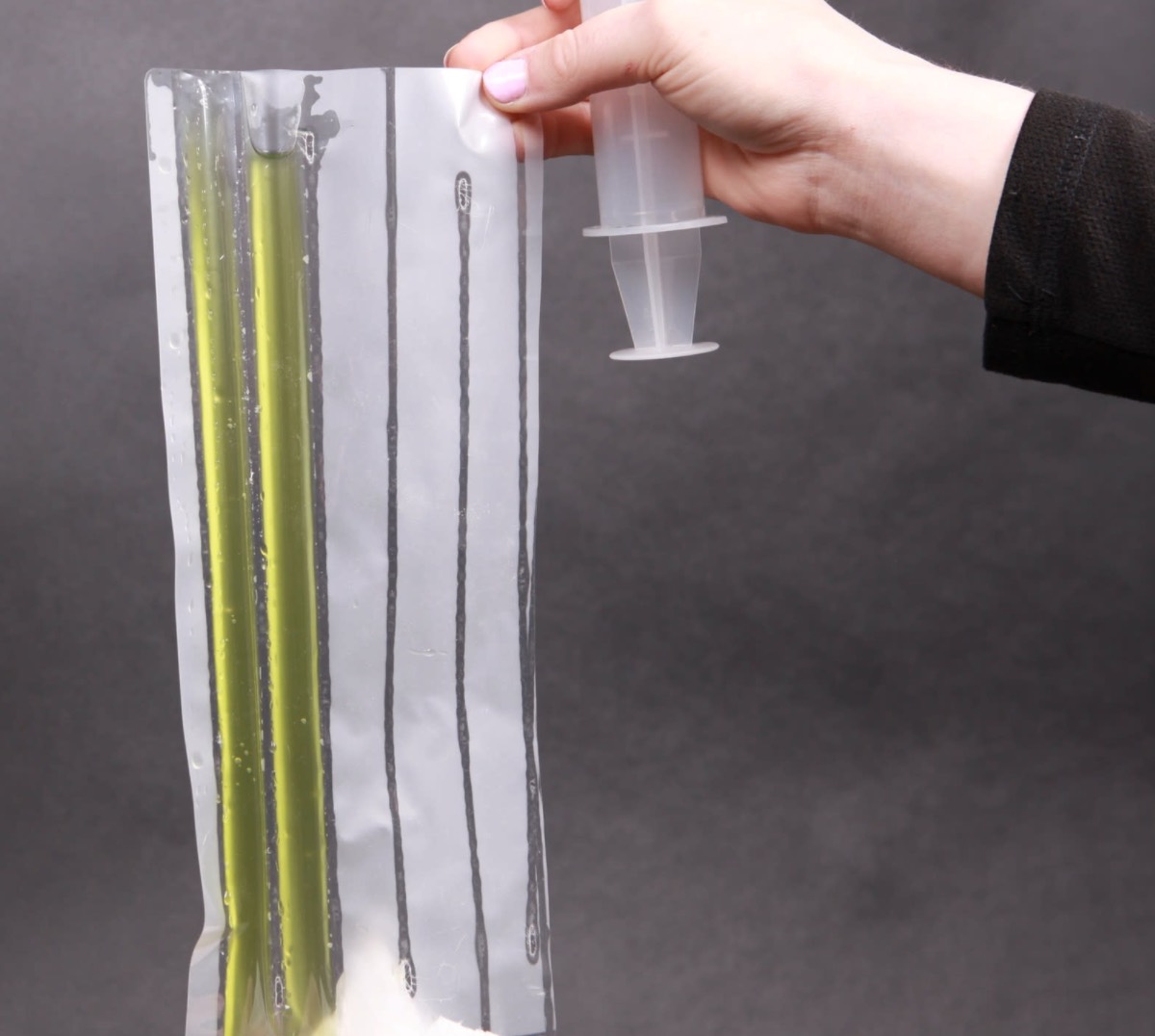
A vacuum-sealed pouch of green algae held in a hand
First prototype
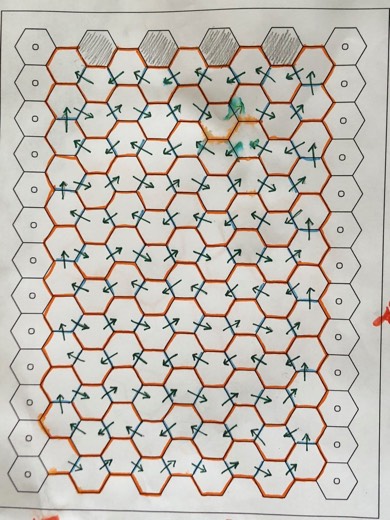
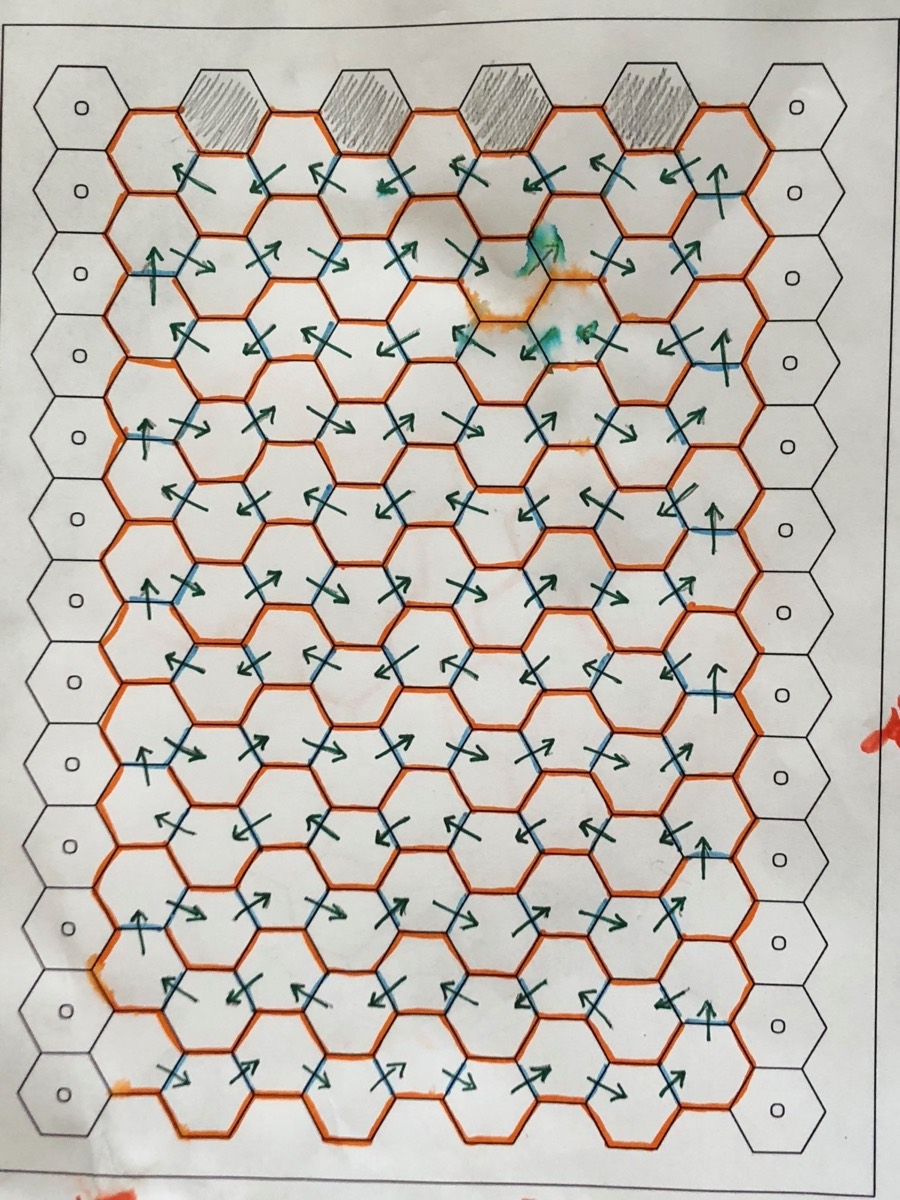
A hexagonal grid drawing with red pen corrections
Hex grid, marked up
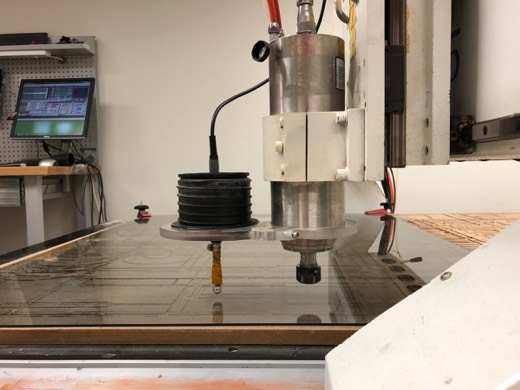
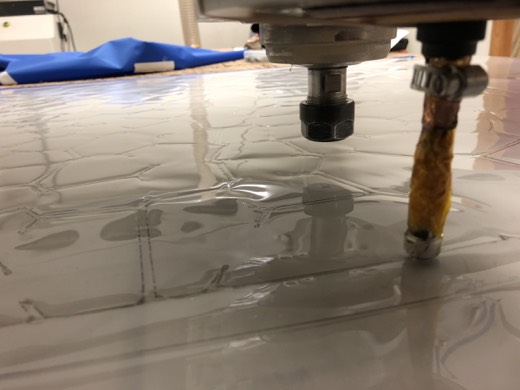
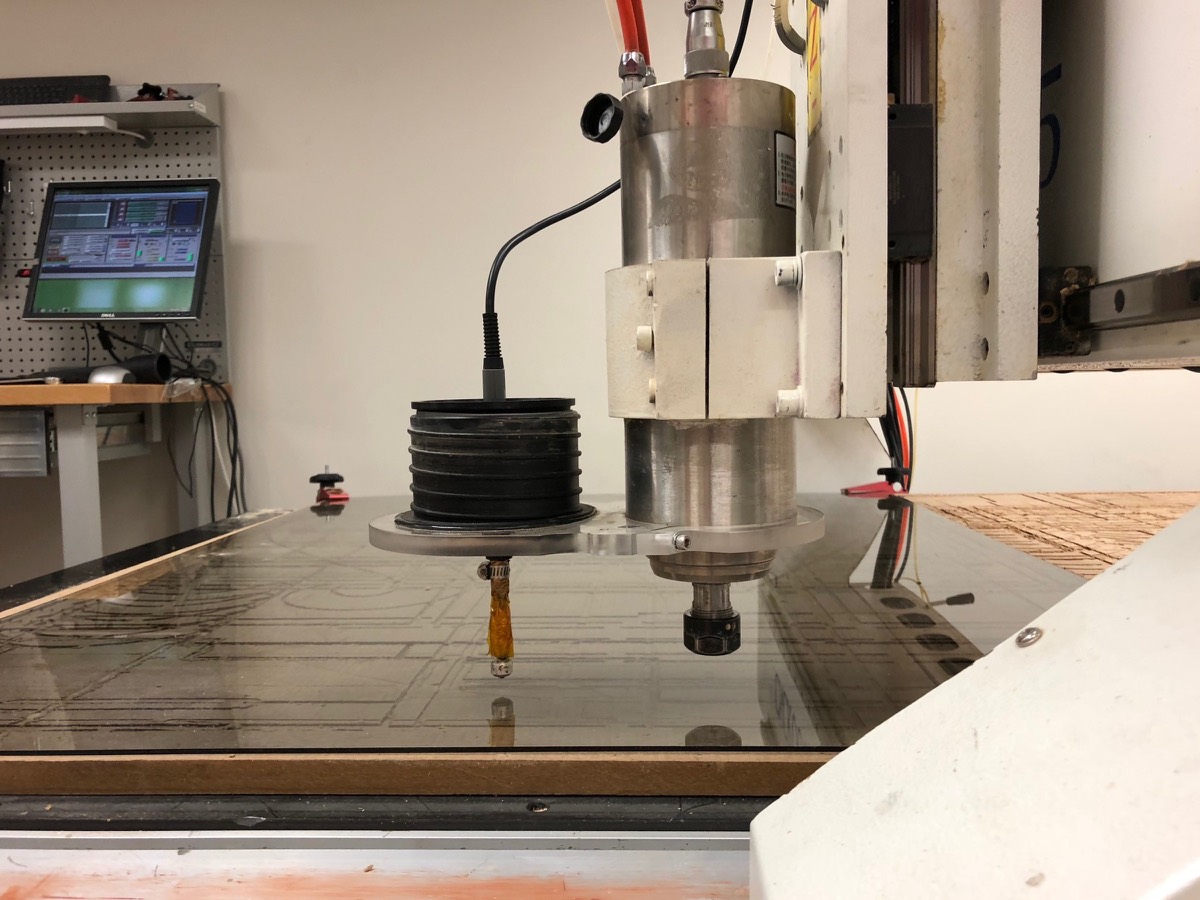
A CNC router cutting a panel
CNC
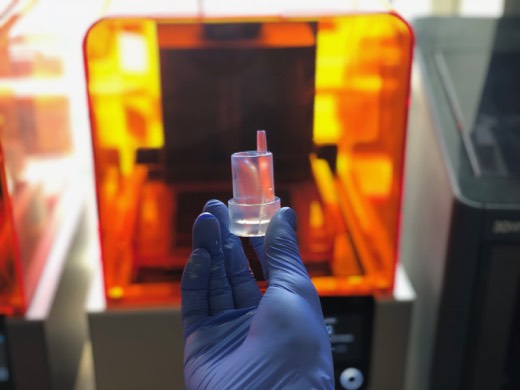
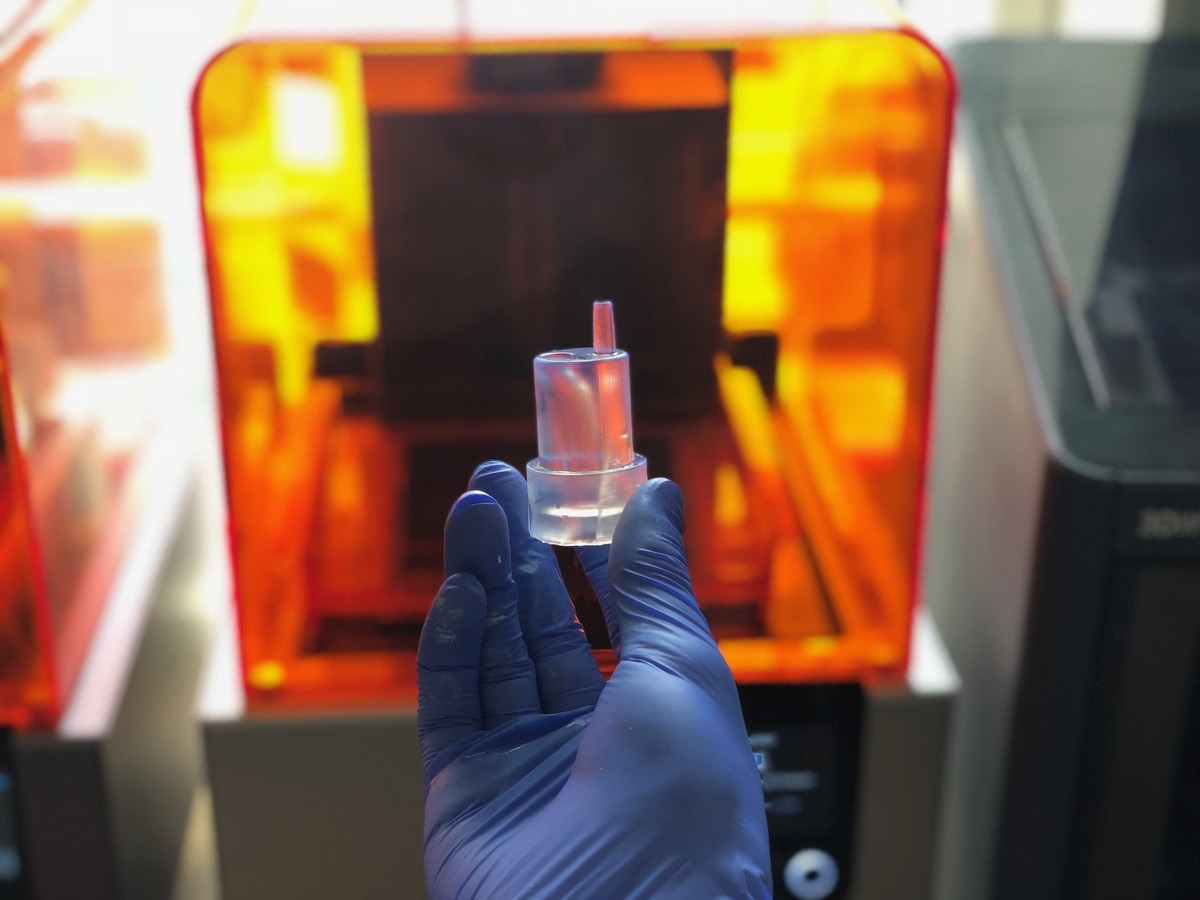
A gloved hand lifting a part from an orange resin printer
SLA print
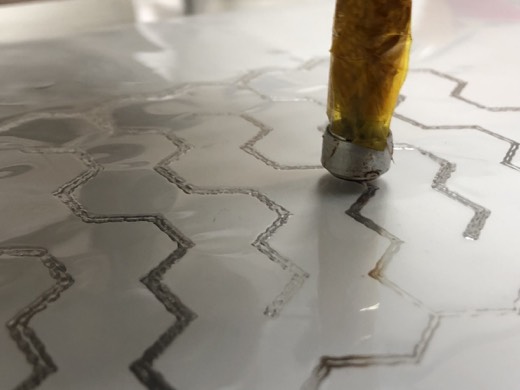
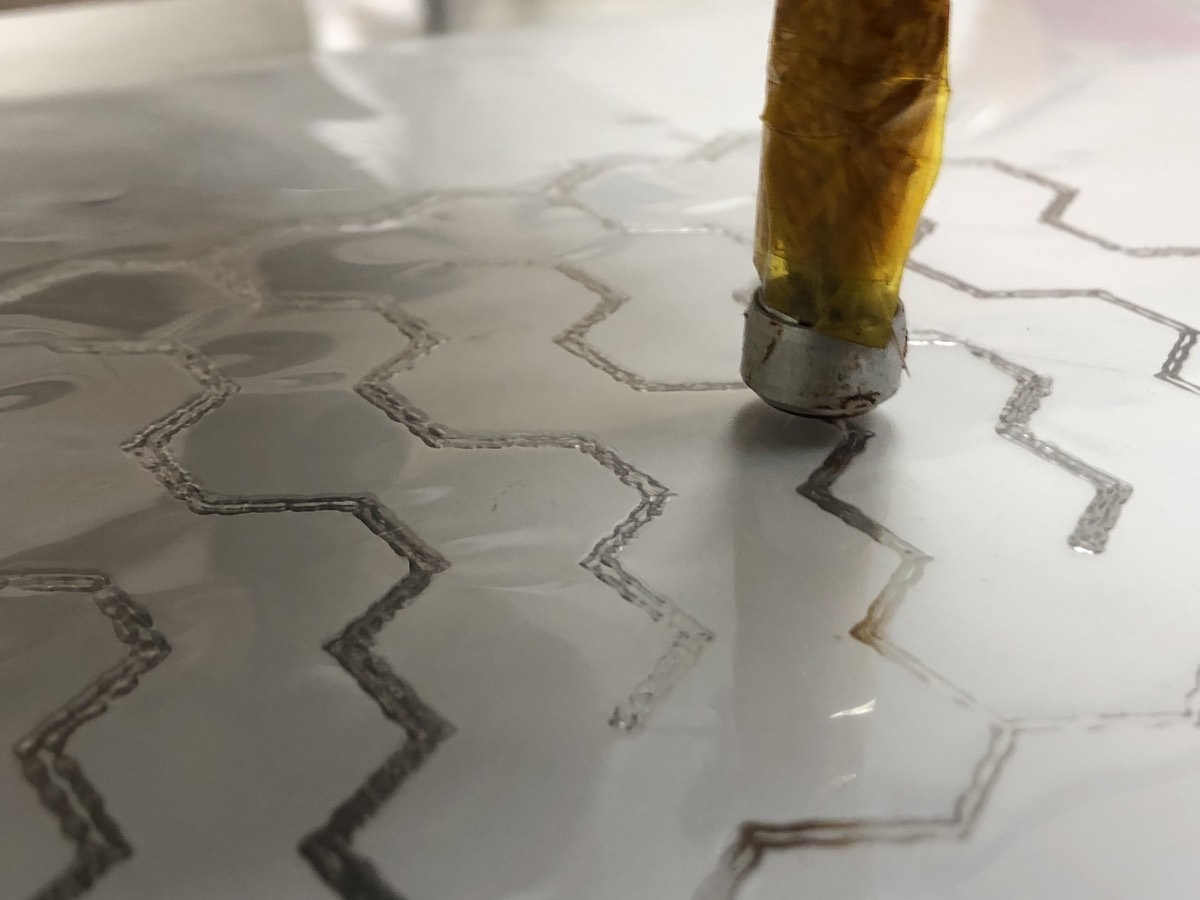
A router bit in acrylic, chips flying
Cutting the cells
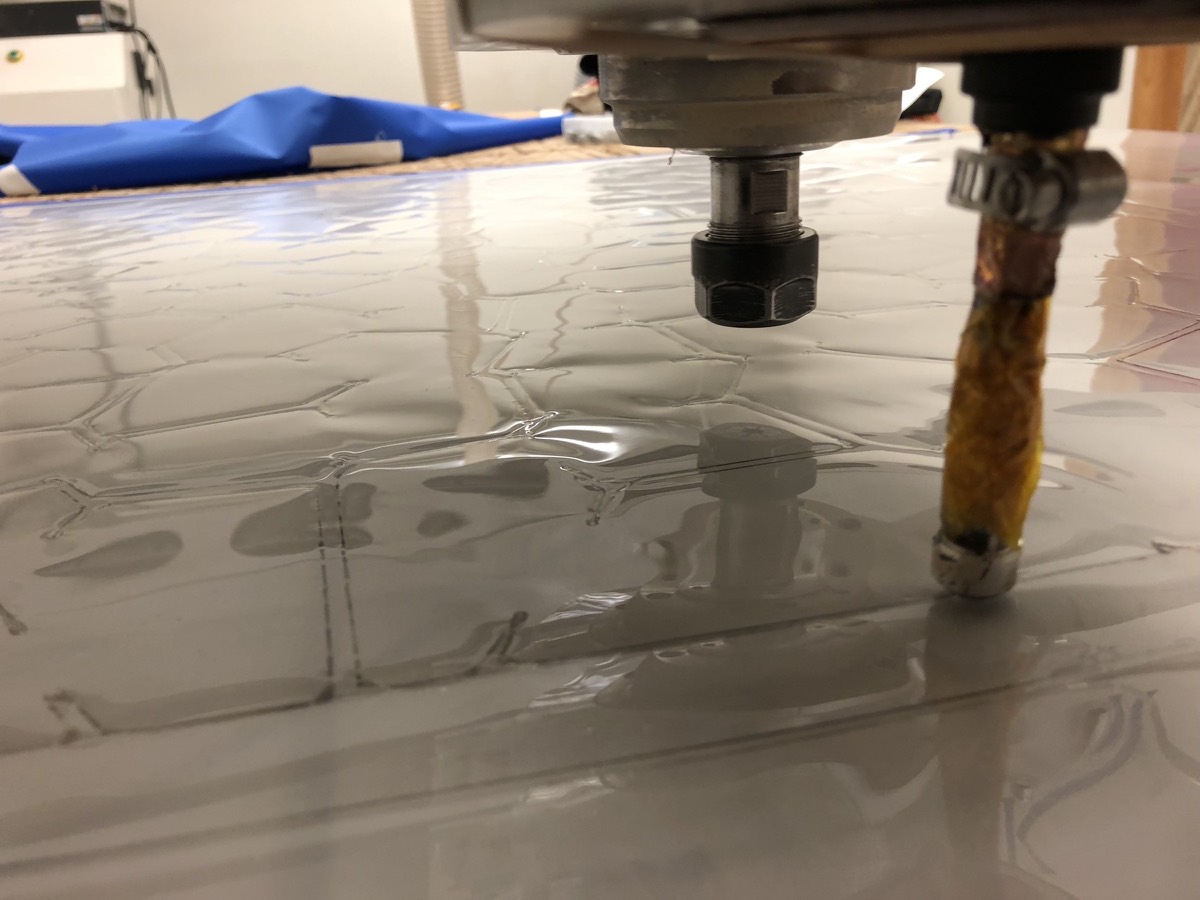
An organic cell pattern being cut in acrylic on the CNC
The cell pattern
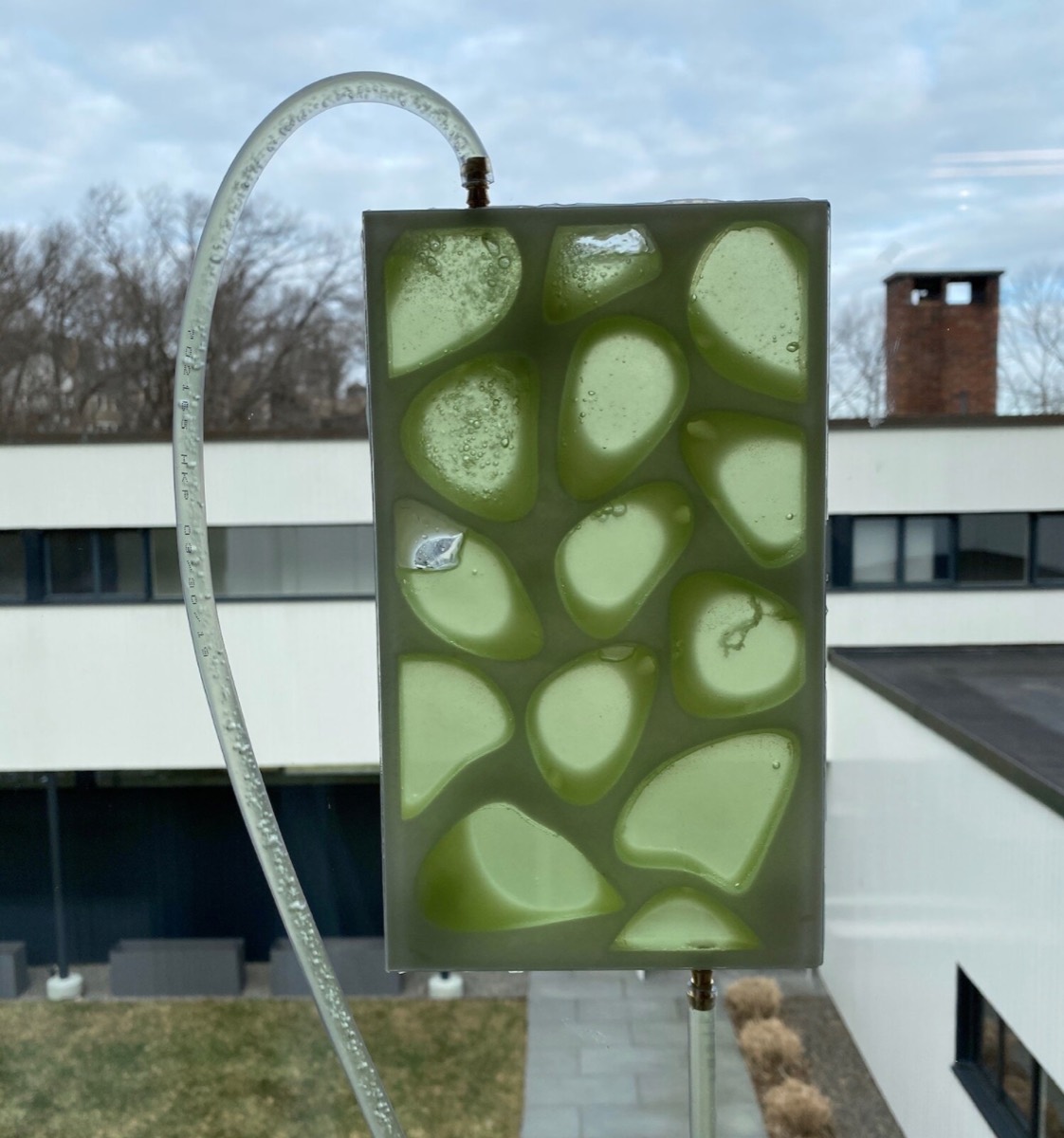
The green panel in its frame held up outside, buildings behind
Outdoors
A labelled drawing of the panel, its reservoir, pump, and frame
Assembly
ant farm
Ant FarmThesisPrecedentForm studyLevel, on tracing paperChipboard layersCharacters
gravity party
Gravity PartyThesisPrecedentUp, right, down, left

NuVu Studio, Cambridge · Fall 2017 · 10 days · co-coached with Seth Alter

Every game occupies its own spatial universe, and an architecture that governs play and sets the depth of the player's experience. How are those worlds imagined and made? Students began with game and architectural precedents and with critical reading of both, then used the tools of spatial description from architecture to conceive, physically develop, and digitally build a game in Unity with clear spatial ideas. Form-building exercises and orthographic and isometric drawings came first, then physical puzzles of spatial complexity, then the games. Two projects.

 
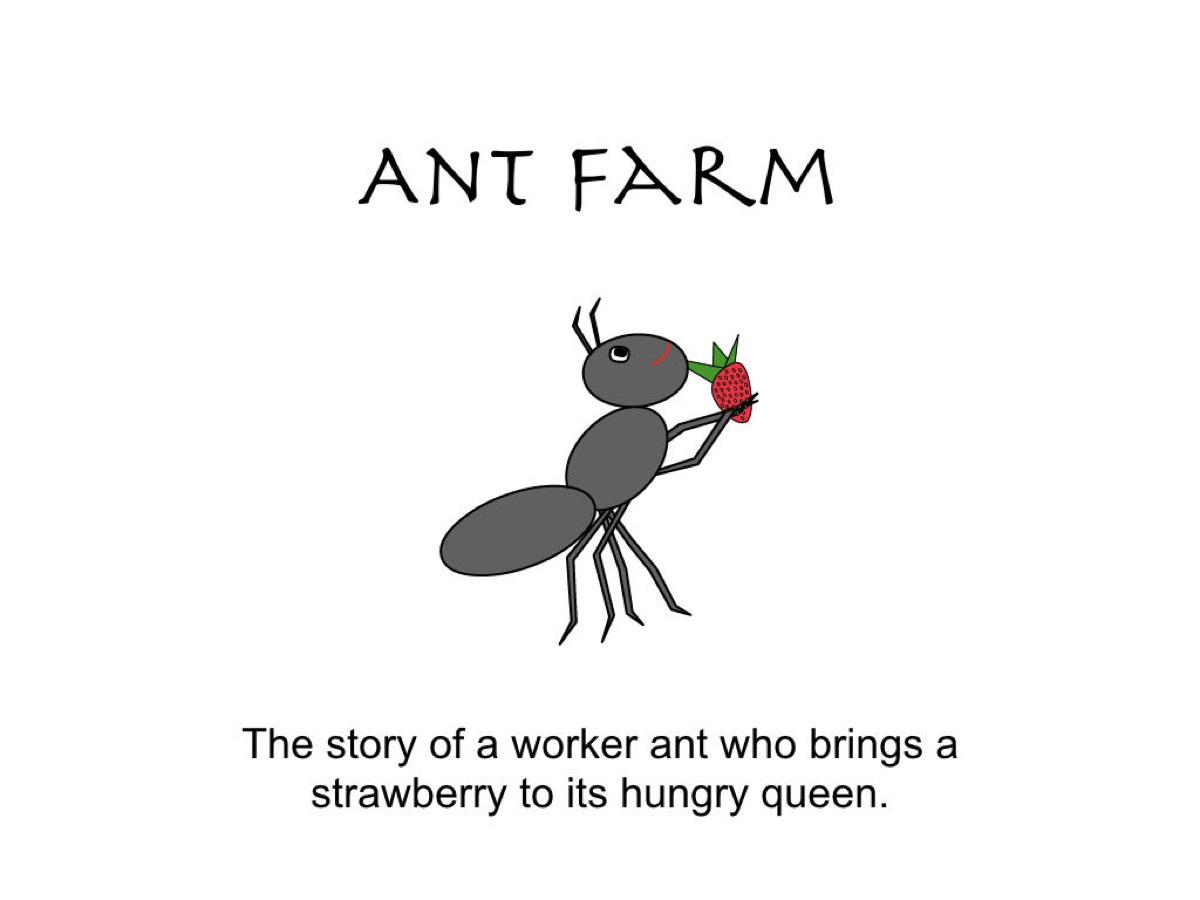
Ant Farm

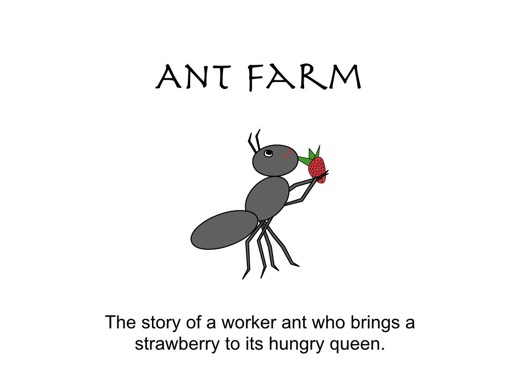
A student. A worker ant carries a strawberry to its hungry queen through a tunnel world designed to make the player notice the spaces they move through and feel differently in each.

A hand-drawn ant with a strawberry under the title
Ant Farm
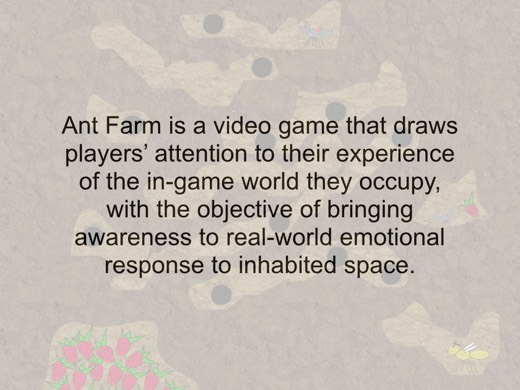
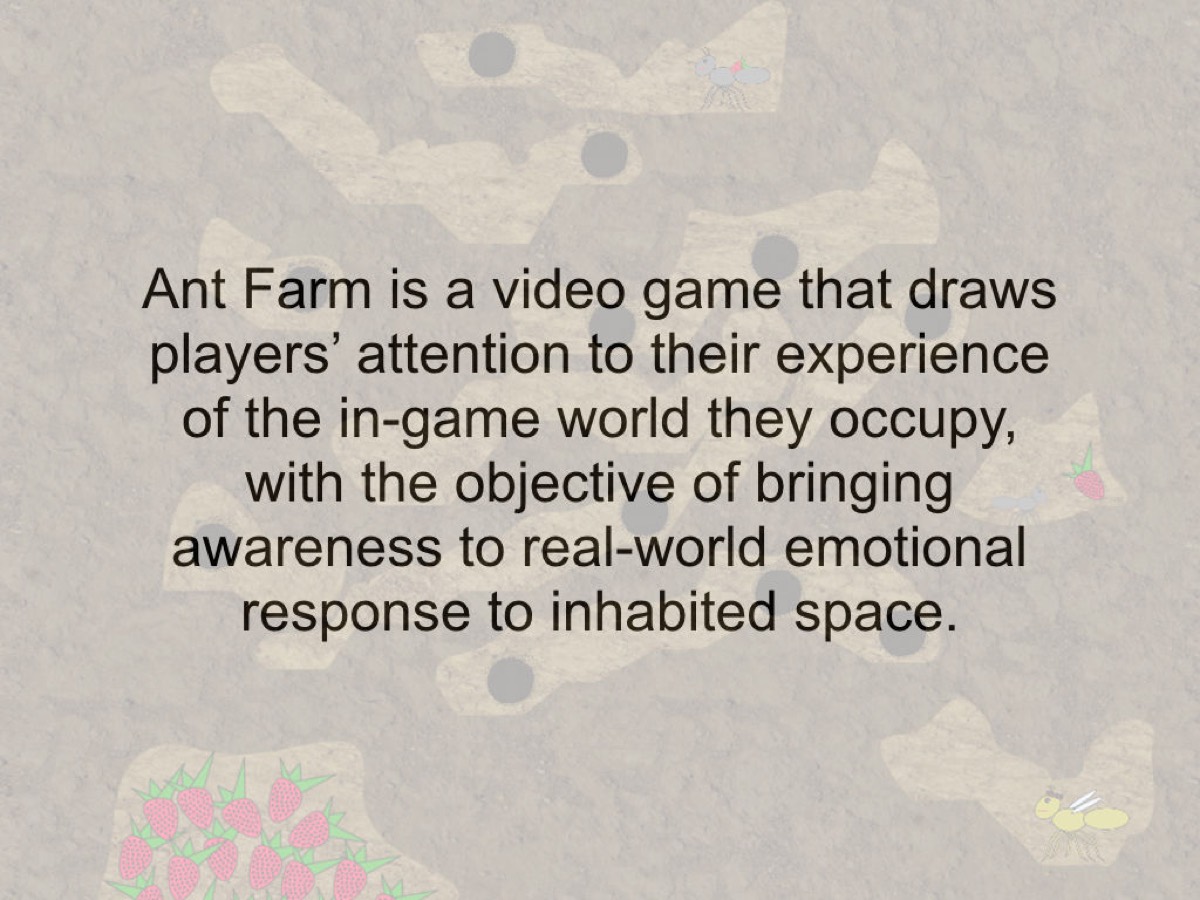
A statement over a faded tunnel screenshot
Thesis
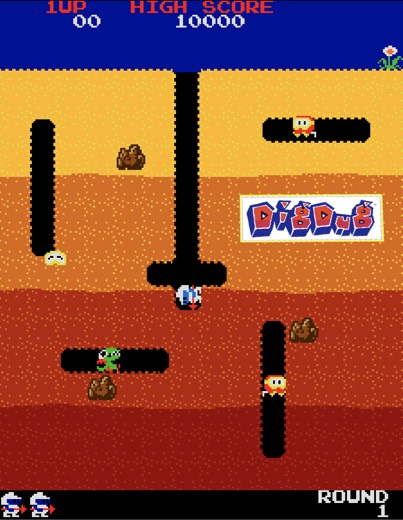
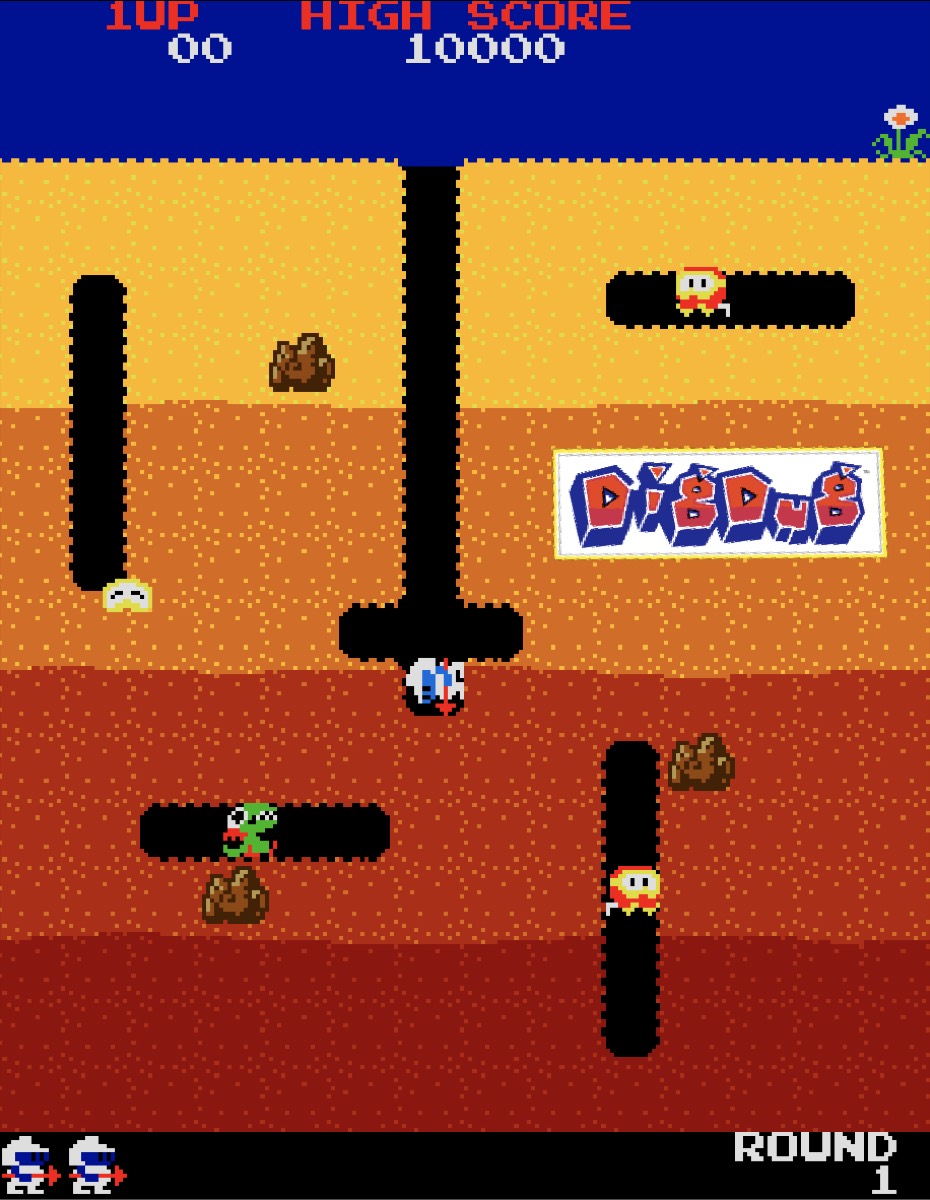
An arcade screenshot of tunnels in coloured earth
PrecedentDig Dug, Namco, 1982
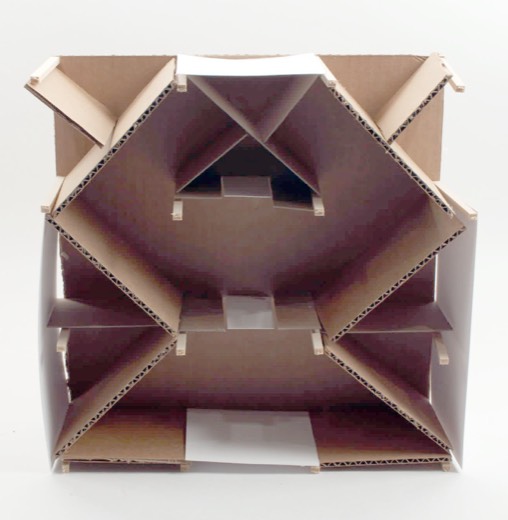
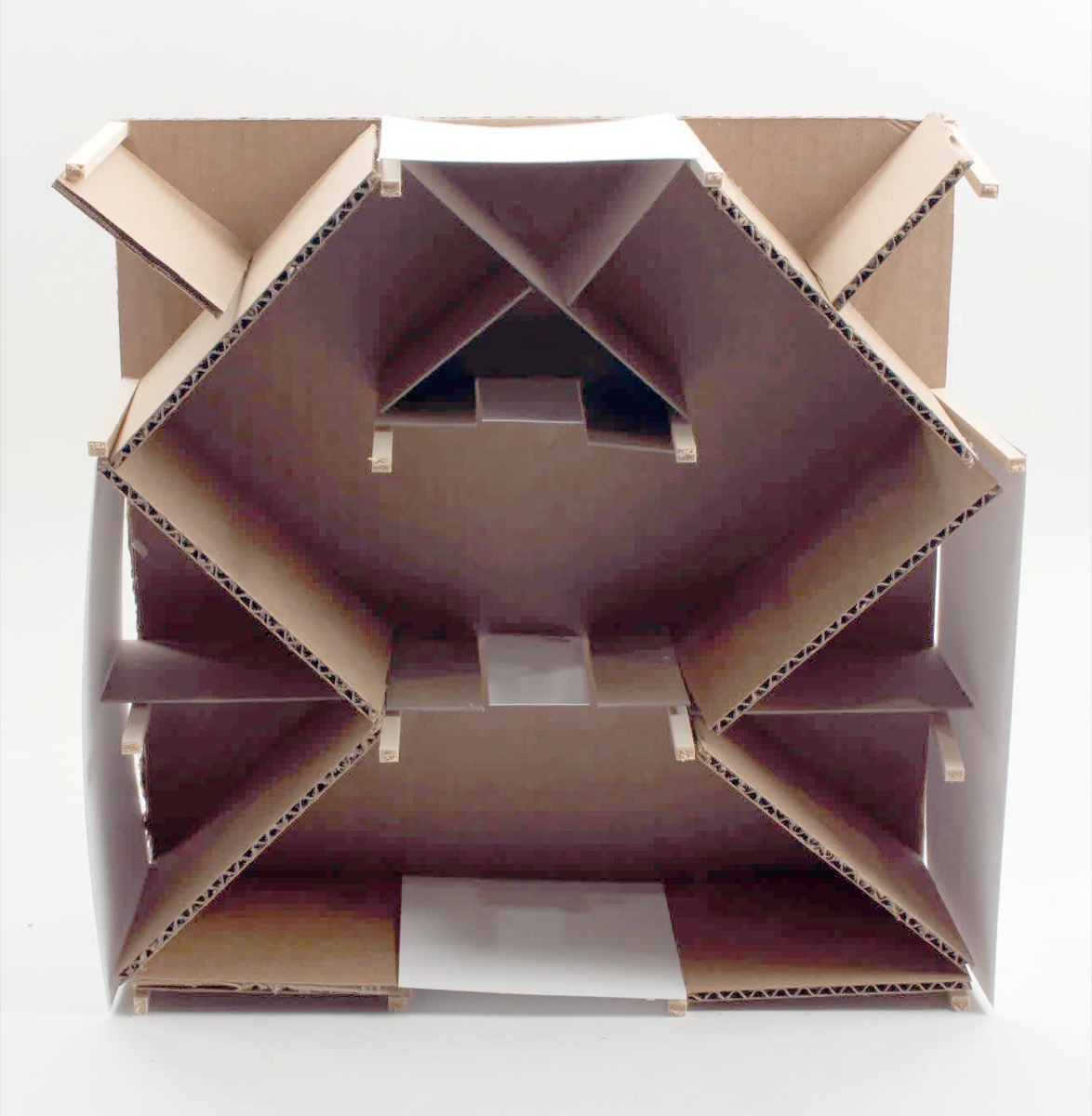
A cardboard model of intersecting planes
Form study
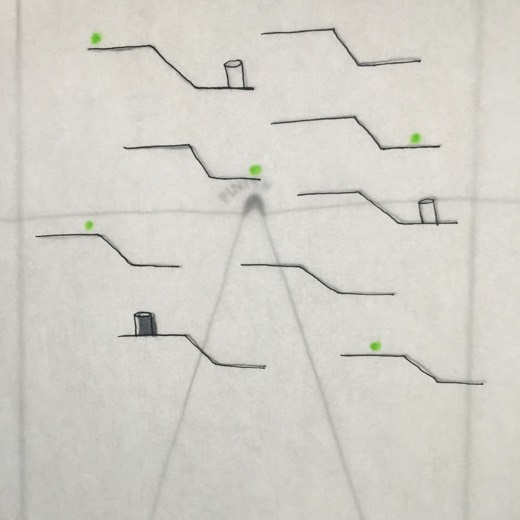
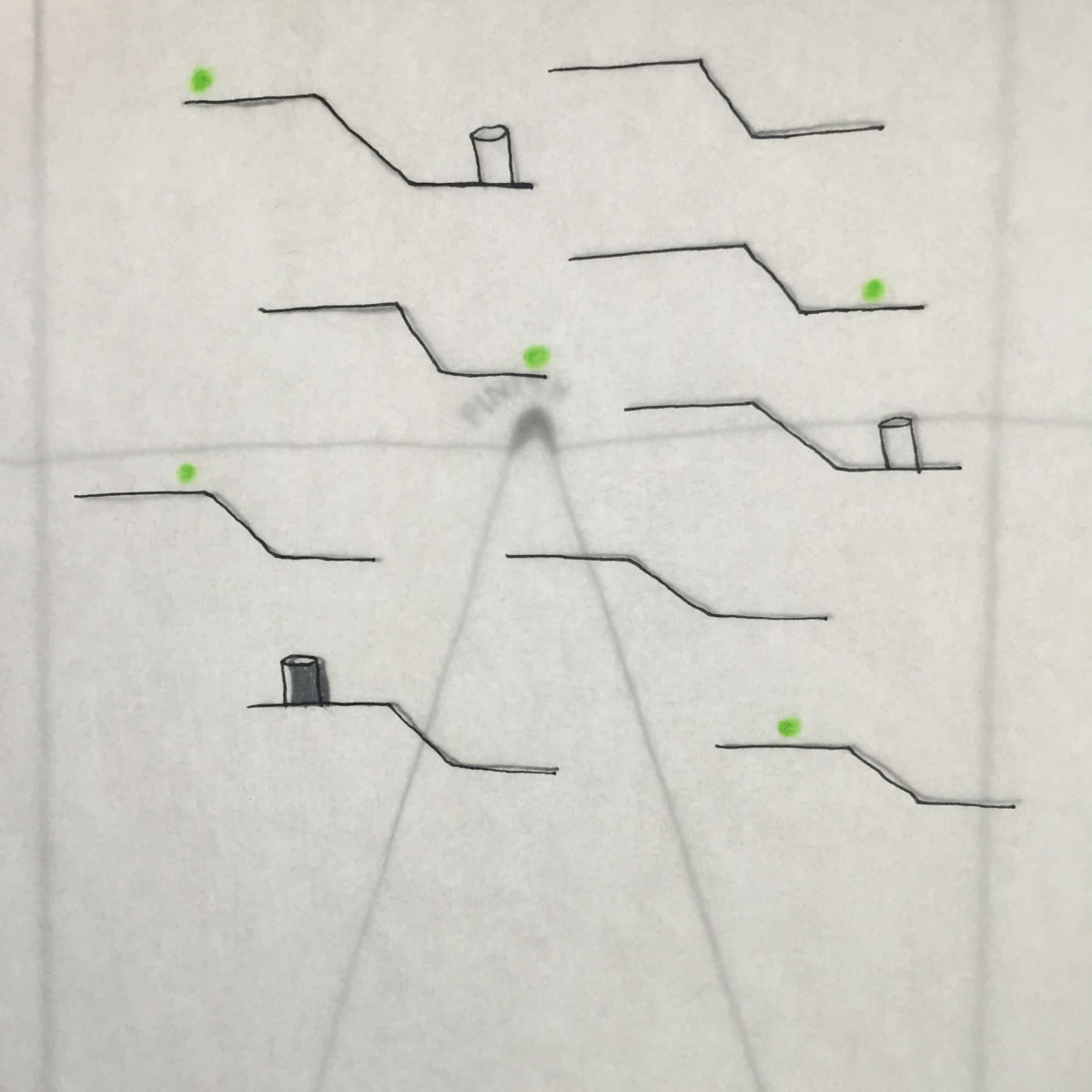
Pencil ledges and small ants drawn on tracing paper
Level, on tracing paper
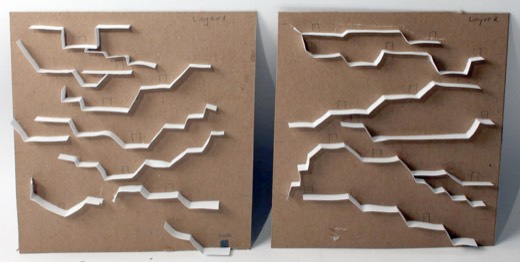
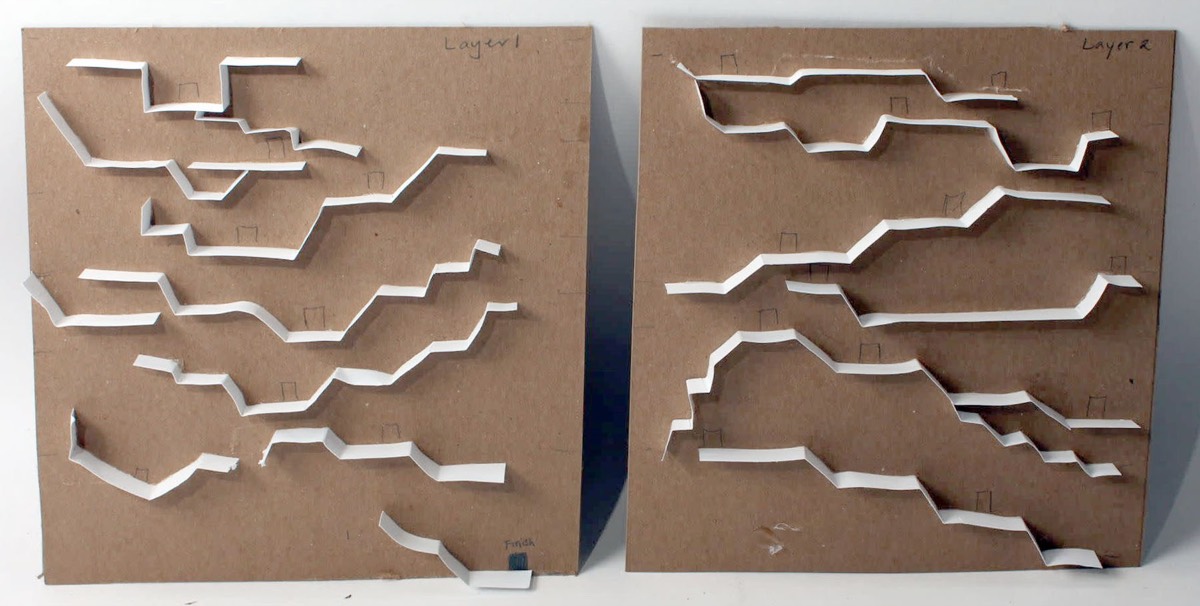
Two chipboard sheets cut with branching tunnels
Chipboard layers
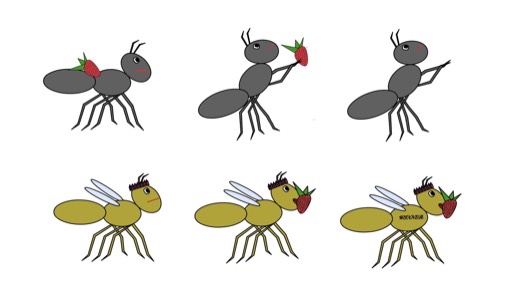
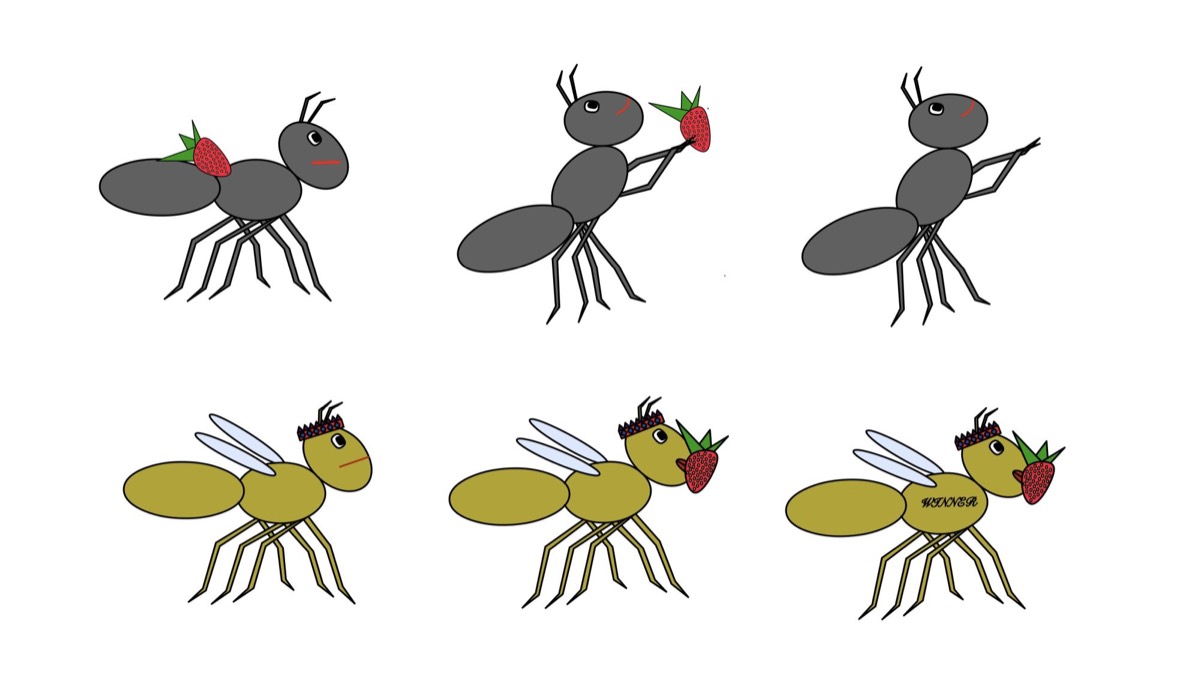
Six drawn ants, grey and yellow, in different poses
Characters
Gameplayloop, 720px
 
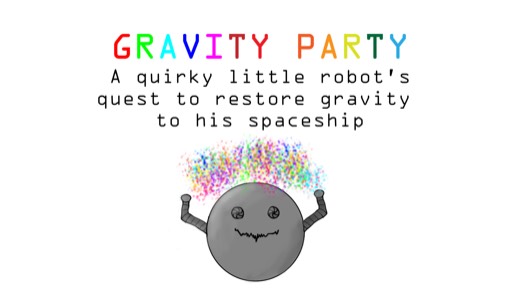
Gravity Party

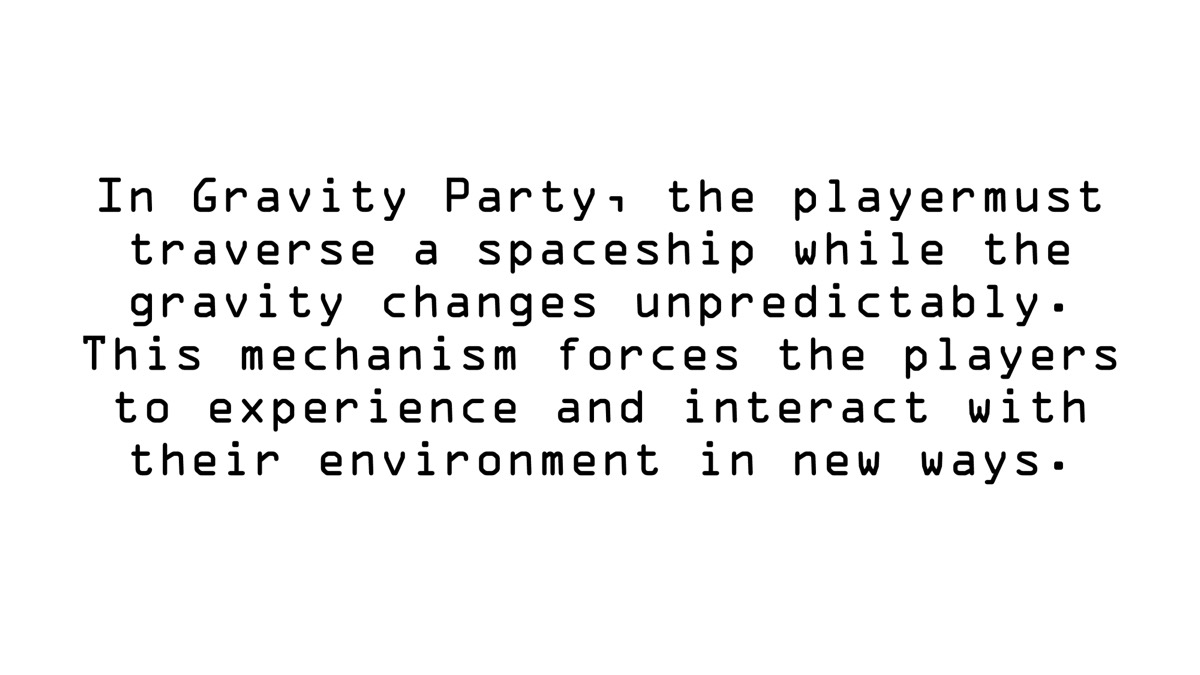
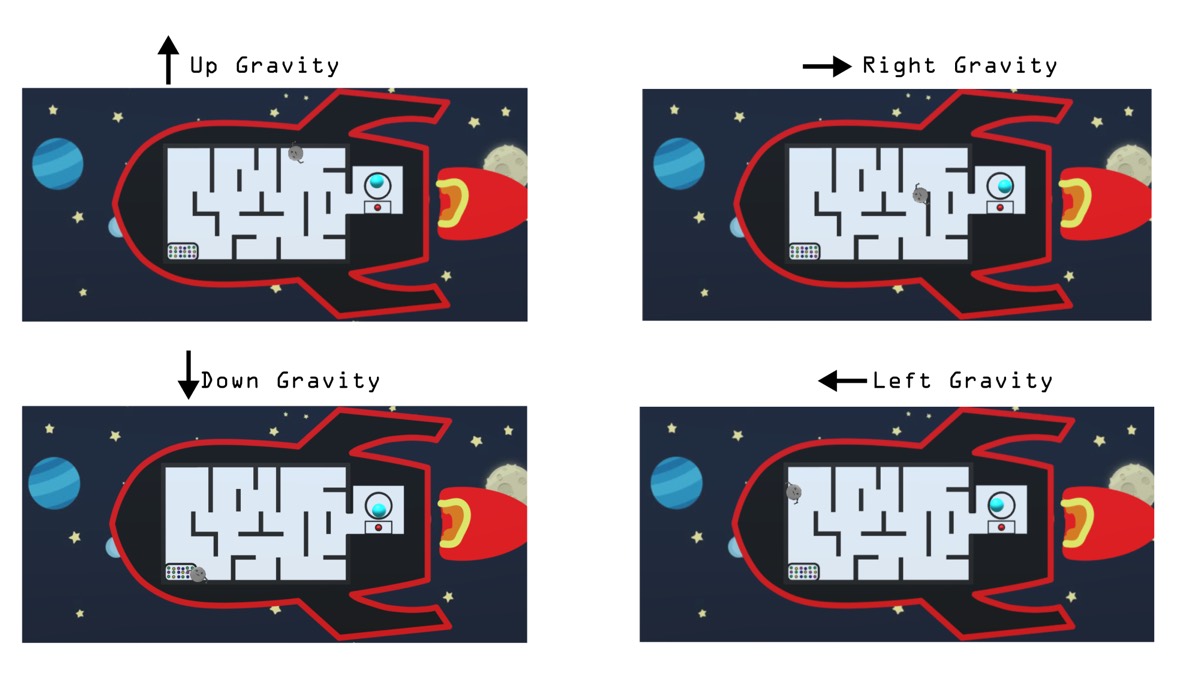
A student. A spaceship whose gravity generator is failing; the player crosses it as gravity flips, and has to see the environment anew each time.

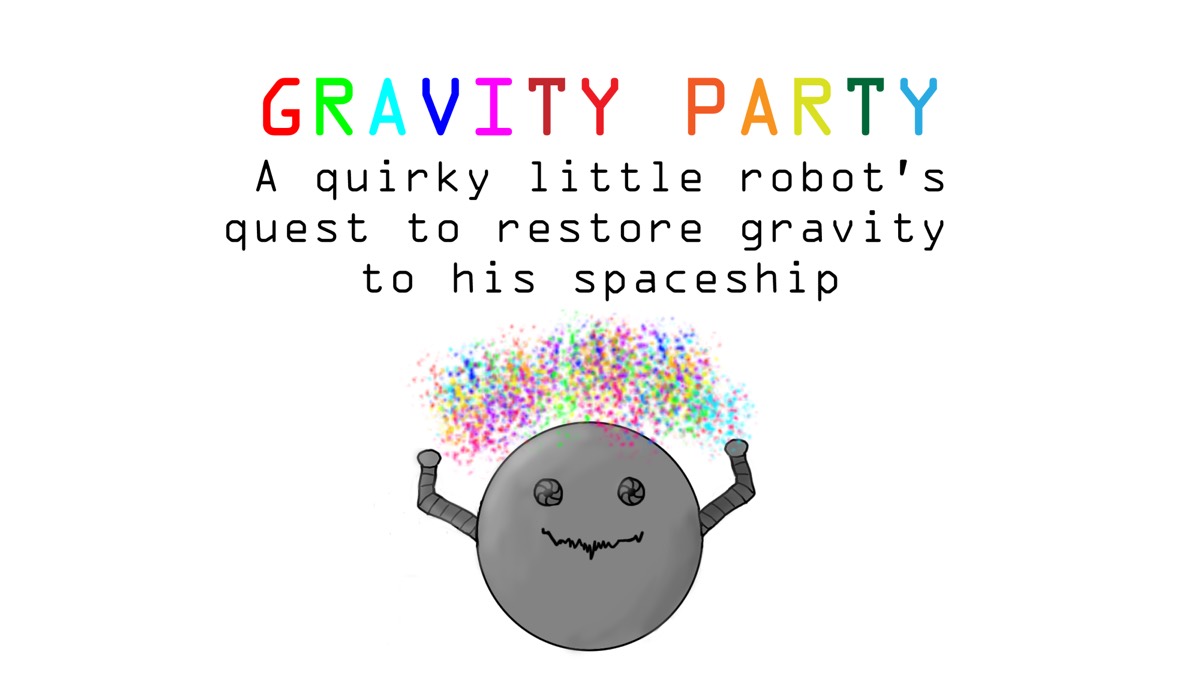
A round grey robot with a crown under the title in rainbow letters
Gravity Party
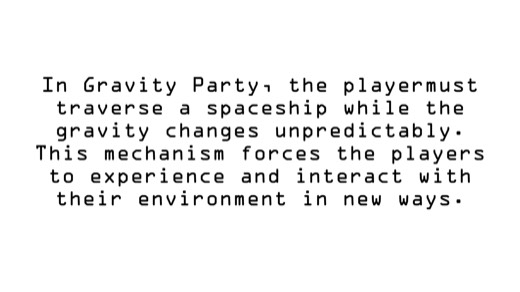
The premise in monospace type
Thesis
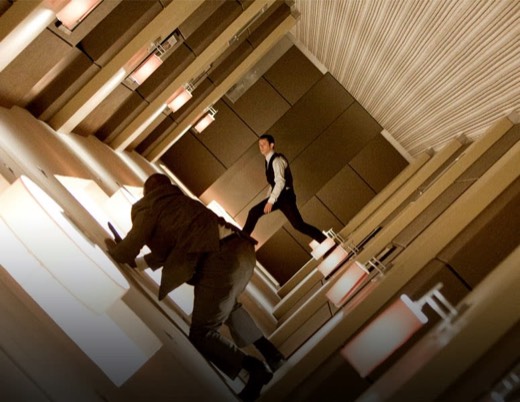
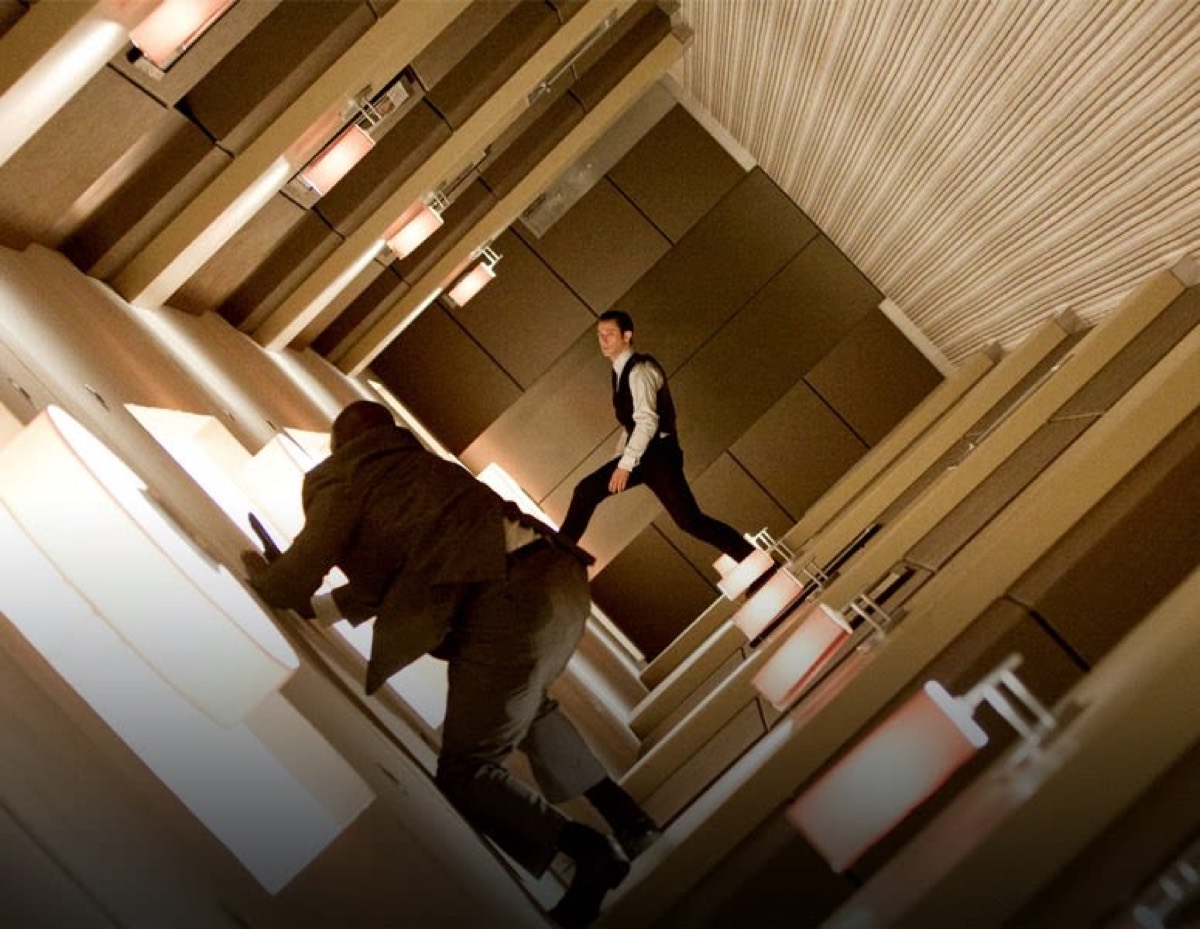
A hotel corridor fight with the room turned on its side
PrecedentFilm still, Inception, 2010
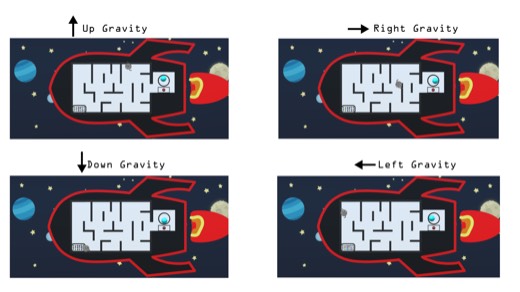
Four thumbnails of the rocket-ship maze with gravity arrows
Up, right, down, left
Gameplayloop, 720px

NuVu Studio · Fall 2018 · filmmaker Amro Arida · I conceived each piece, wrote the scripts, developed the visual narrative with NuVu's creative director, and did the voiceover and hand-work for most of them · 330,000+ views

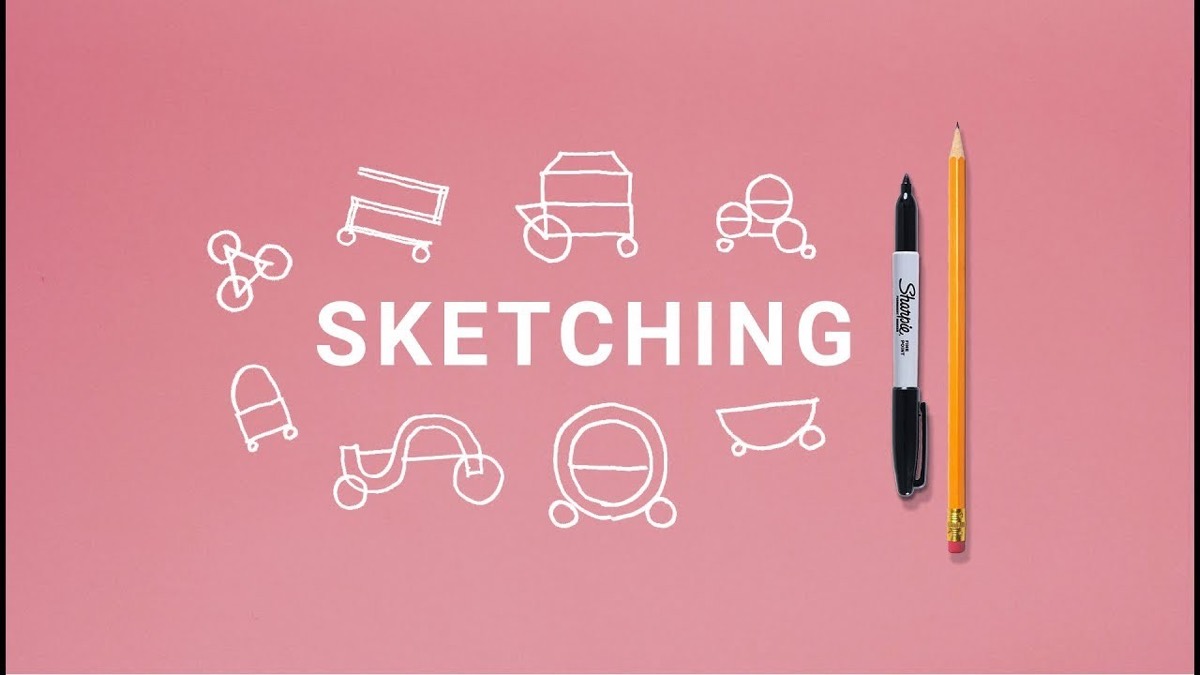
A series of short films for students, teachers, and partners. Sketching explains iterative sketching and diagramming as the core of the design process; NuVu coaches use it to learn the pedagogy, students to see the process, professional-development clients to approach project-based work. Studio Management Platform introduces the LMS and portfolio system that carried NuVu's pedagogy, curriculum, transcripts, and studio archive across the network, and was used by clients including the MIT Media Lab and the Wentworth Department of Architecture. The NuVu Toolbox series met a shop safety and productivity need: simple enough to train middle and high school students with no shop experience, and useful to partner-school teachers and clients as well.

platform
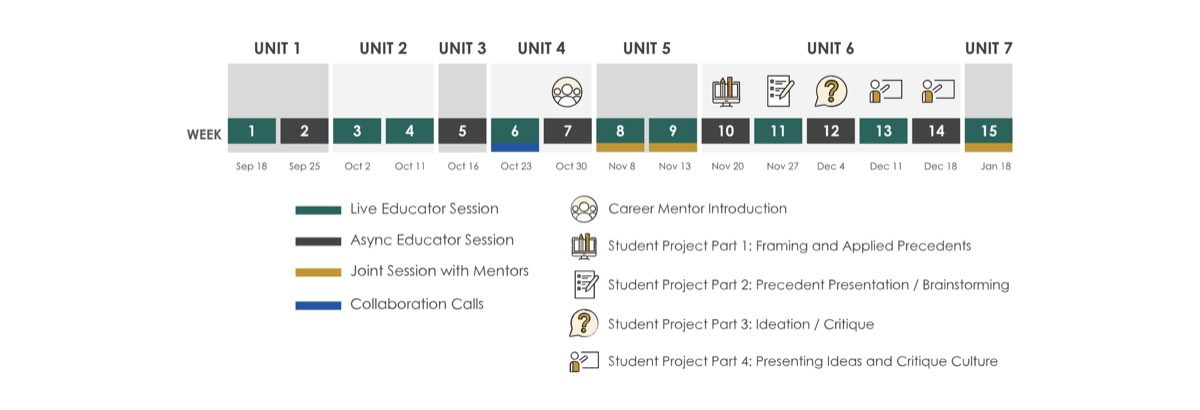
The platformFifteen weeks

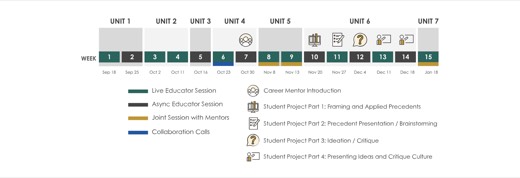
Citizen Schools · Fall 2023 · prototype program, 15 weeks · I designed the module and built the platform

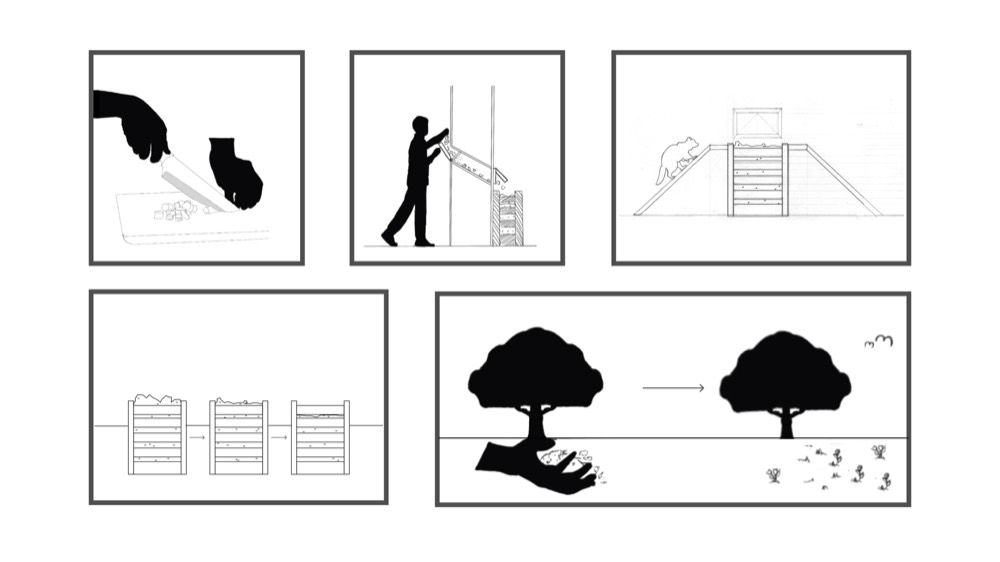
A prototype program to put the new Citizen Schools Learning Framework into practice, training our own team and a first cohort of partner educators in the experience-based learning pedagogy and curriculum. I bootstrapped a shared, studio-based learning platform from off-the-shelf tools on a budget of $250, to show what a collaborative learning space could be; it ran synchronous and asynchronous sessions, peer learning, and community engagement. Module 1 gave educators the creative process from the inside: they developed projects of their own, collaborated, and brought components into their classrooms, and came out ready to run authentic experience-based learning with external mentors and activated communities.

 
The platform

A shared, studio-based learning platform bootstrapped from off-the-shelf tools on a budget of $250.

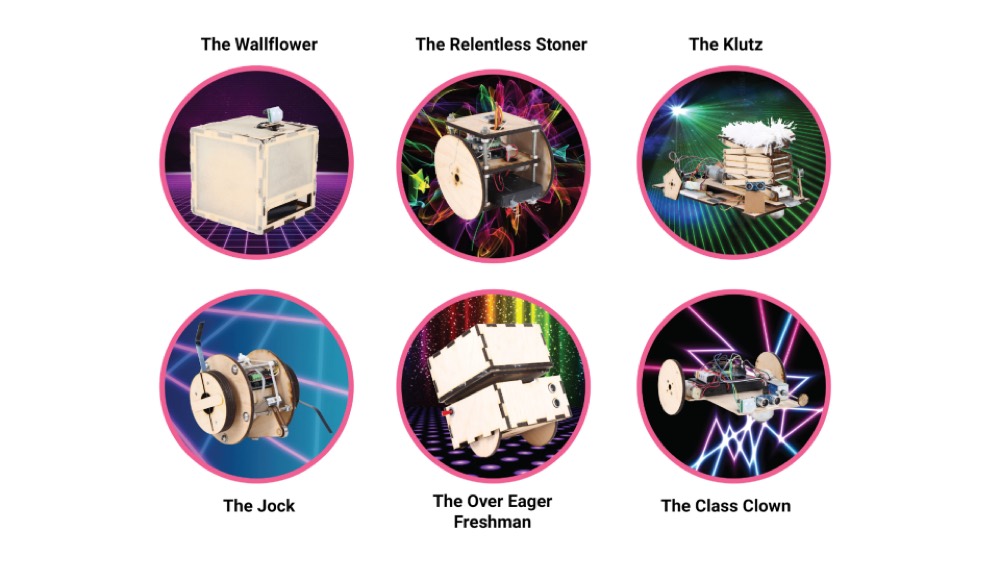
Robot Tro(U)(o)Pe

NuVu, Winter 2019

What is a robot, and what is a uniquely robotic personality? Students began with animated and mechanical caricatures, then read about and built Braitenberg vehicles, hypothetical self-operating machines with increasingly intricate and not always civilized behaviour. Through gestural mechanics they gave each robot a personality, introduced the robots to one another in short films in the manner of reality television, and fitted them with sensors and actuators to respond to the robots they liked and disliked. The result was a surrealist troupe improvising its personalities in public.

The troupe

Memory Vessels

NuVu, Winter 2019

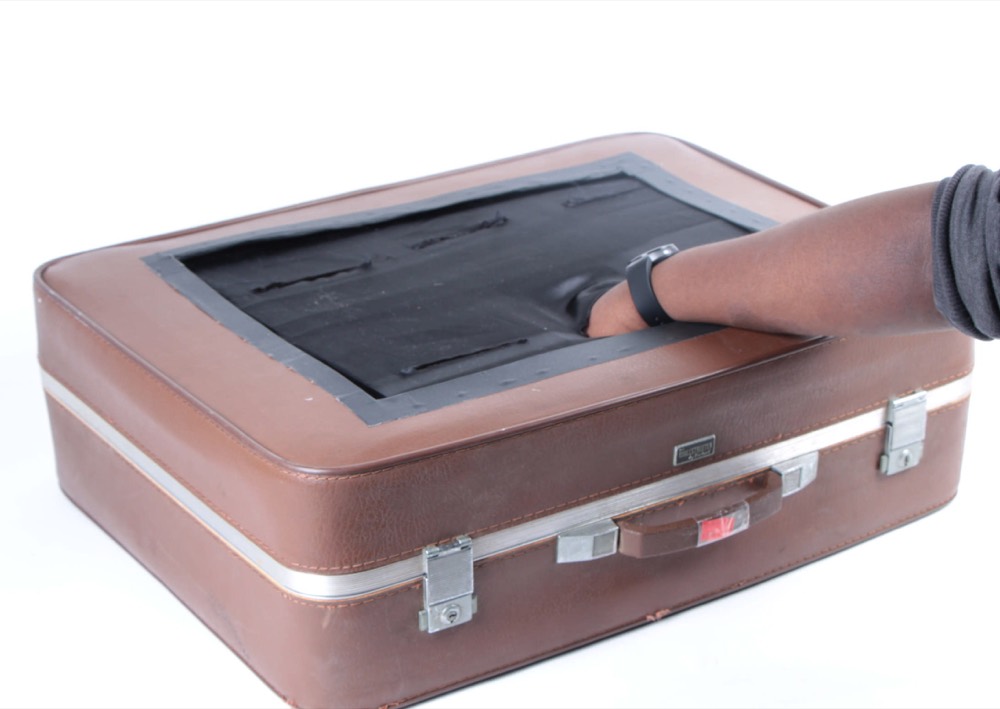
Memory, as narrative and sense experience, forms identity. Students first looked inward, abstracting their own stories to engage the senses, then worked with residents of Mt. Pleasant Home, an eldercare facility in Jamaica Plain, helping them express and record their stories, and built memory vessels to carry the depth and lived experience of those lives.
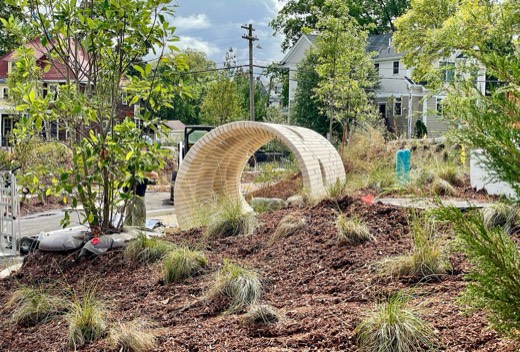
A memory vessel

Kinetic Prosthetics

NuVu, Spring 2017 (two studios)

Prosthetics as extensions of the self: how mechanical additions to the body change what we can do and how we present ourselves. Students identified a user, worked from that person's challenges and needs, and designed and built a kinetic prosthesis to extend ability or communication.

OCDevice
OCDevice, in useloop, 192px

Adaptive Myo Devices

NuVu, Spring 2016 · part of the NuVu Lab for Assistive Technology

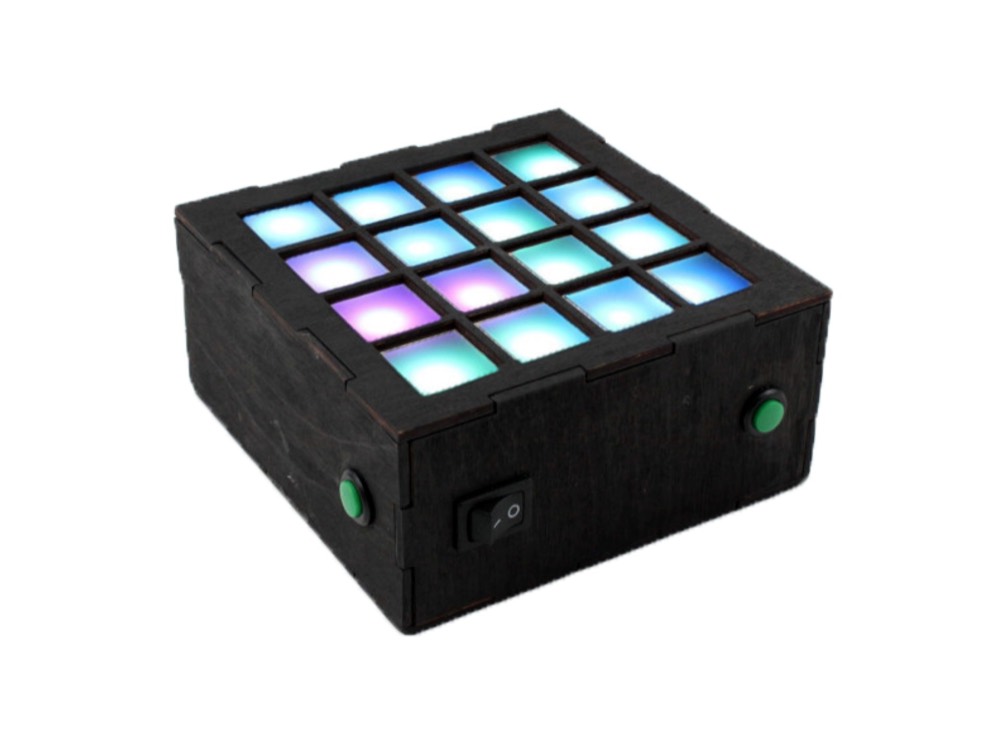
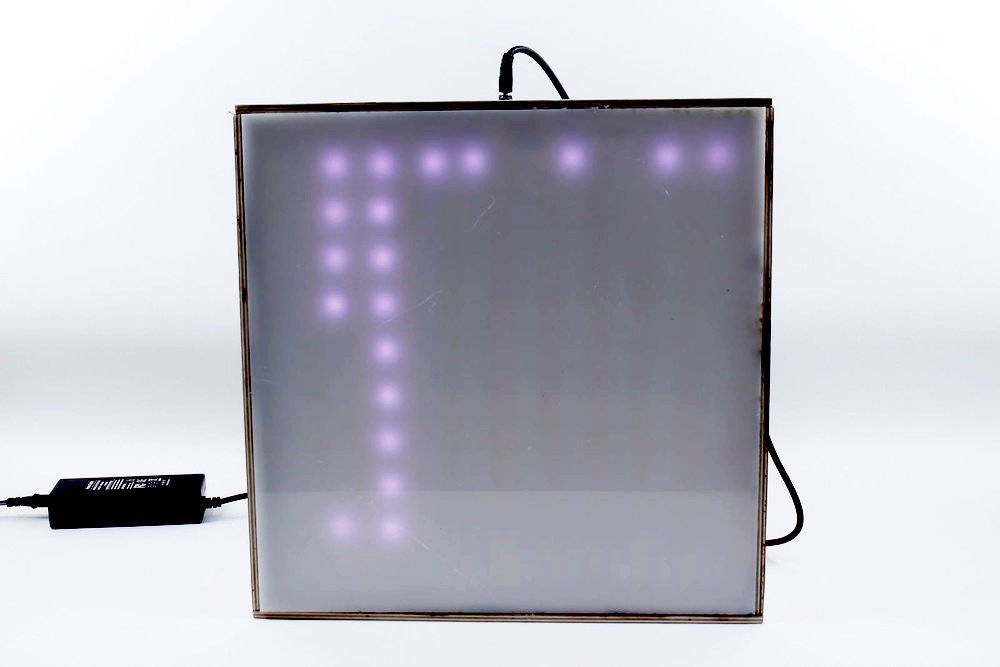
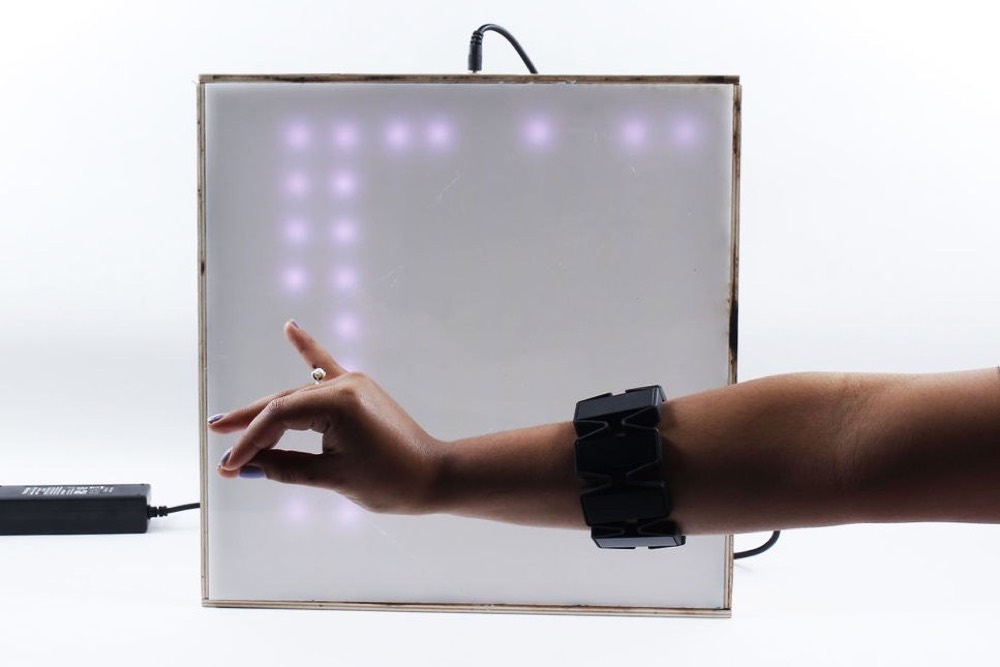
Adaptive design gives people with disabilities the custom adaptations they need for their developmental, social, academic, and vocational lives. Students built assistive hardware that responds to the body's movement through the Myo armband, whose EMG sensors read the forearm's muscles for gesture, motion, orientation, and rotation: electronics and Arduino, 3D modeling and fabrication, and open-source designs for others to use.

LED board
With the armband
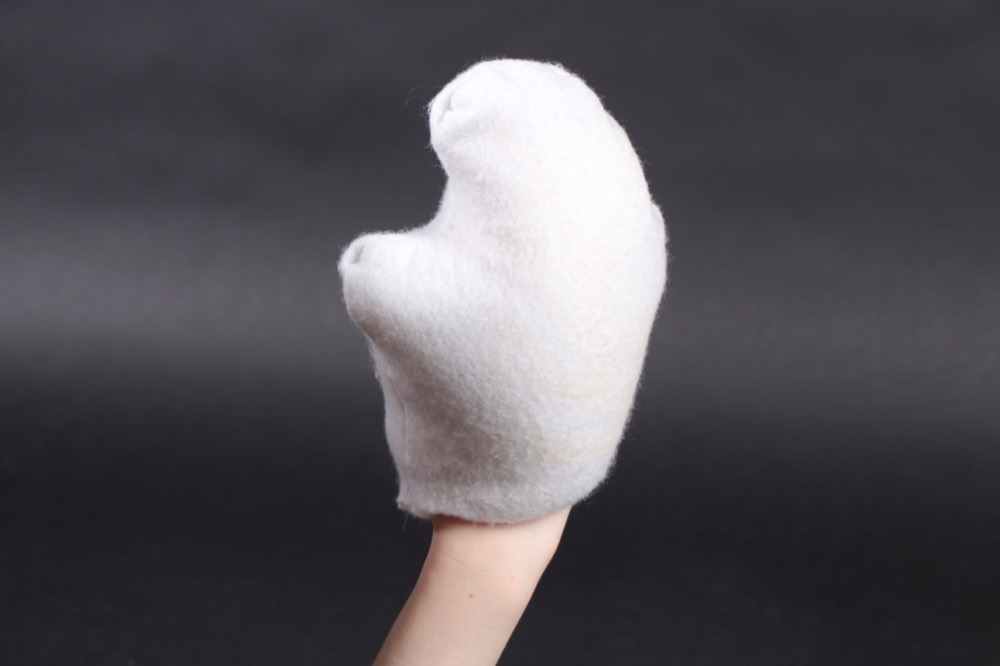
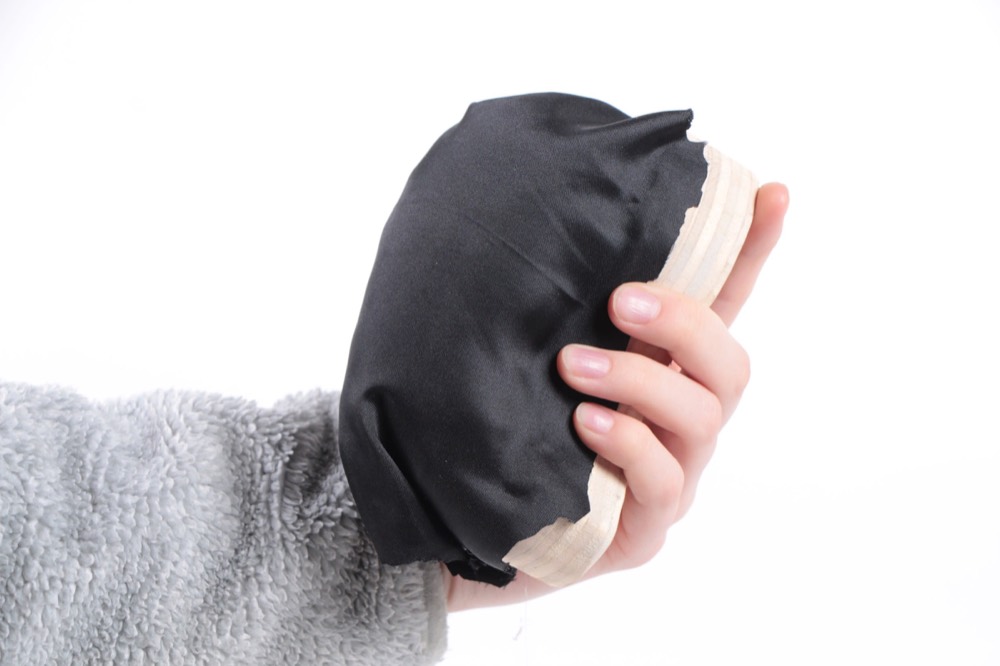
Glove prototype
Glove prototype

Denatured Design

NuVu, 2017 (Fall and Winter)

An introductory studio for middle school students with no design or technical experience, on how we experience the world and the biases in that experience. Students made maps and field recordings, read and built conceptual worlds from Calvino's Invisible Cities, and made tools and devices with which to map the world around them, learning rapid prototyping, programming, and basic electronics along the way. Wearables for performers, devices for artists and scientists, tools for everyday people.
Wearable
Model

Waking the City

NuVu, Spring 2018

How the city forms the imaginations of its inhabitants, and how their imaginations form the city. Students learned mechanical design, fabrication, electronics, and Arduino to build urban interventions, wearables, autonomous objects, enabling devices, that surprise, delight, and wake the city's inhabitants to what they no longer see.

A wearable in three states

Architecture After the Animal

NuVu, Spring 2019

Students hypothesized how an urban animal, now an external agent, could shape the way we build, and become part of the conversation. How do we design a window, a door, a wall to make affordances for other bodies? Taking the parallax view in which animal life plays a part, the studio expanded the vocabulary of architecture.

Storyboard

Architecture After the Anthropocene

NuVu, Fall 2019

The foundation for Architecture After Play: an architecture studio on building after the human era.

Architectural Asylum

also taught as Modular Shelters, and as Nomadic Architecture in India, 2013

Designing shelter for rapid deployment: nomadic and modular.

Adaptive Mechatronics

NuVu, Fall 2017 · with Access Sport America and Ross Lilley

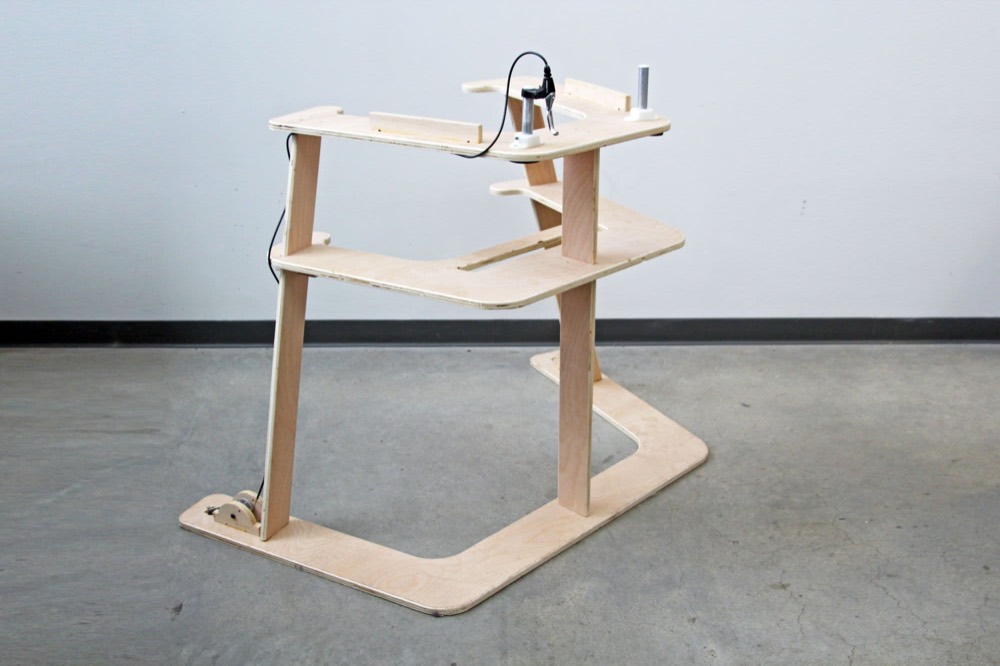
Traumatic brain injury contributes each year to a substantial number of deaths and permanent disabilities. Through Access Sport America, students worked with athletes living with brain injury, stroke, and other conditions, and fabricated enabling, non-traditional wearable mechanical and mechatronic devices, each designed for one person, so that they could take part again in an activity or experience.

Adaptive stand
Ankle rig
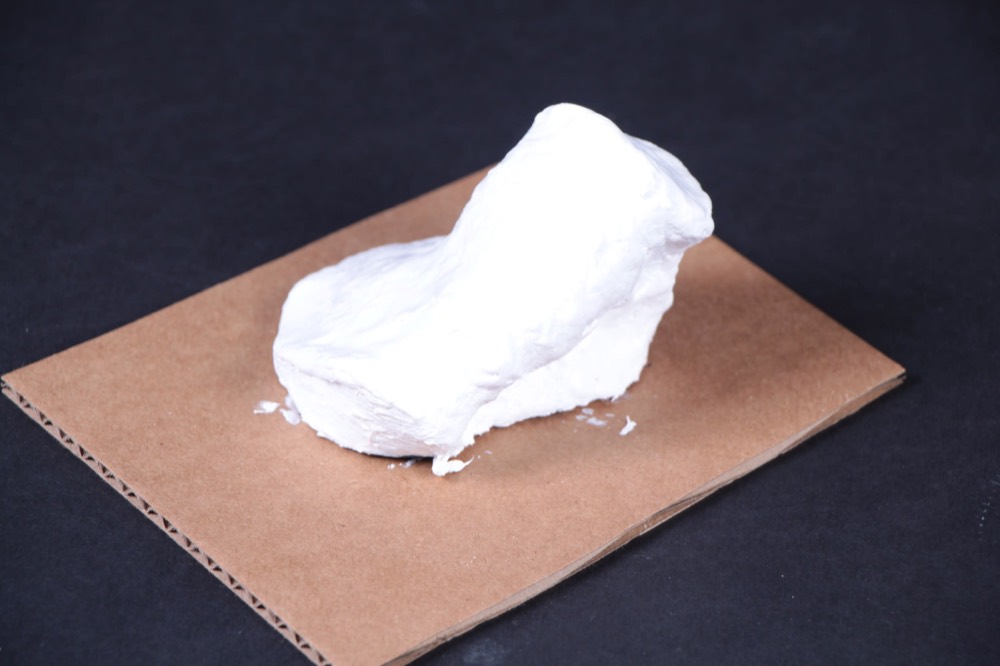
Hand rest, form study

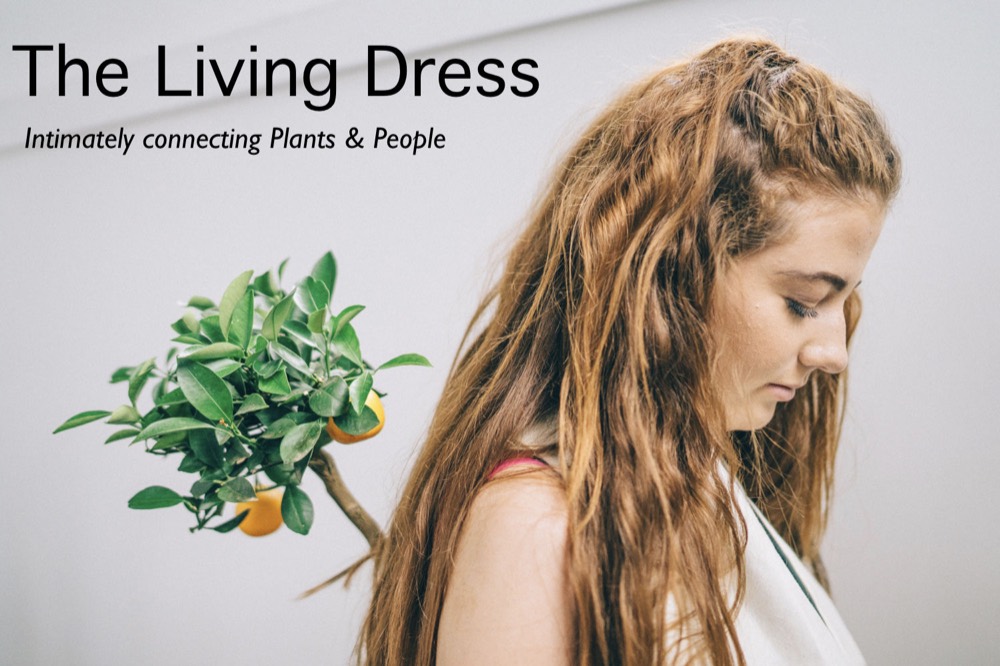
Biofashion

NuVu at Kelvinside, Summer 2017

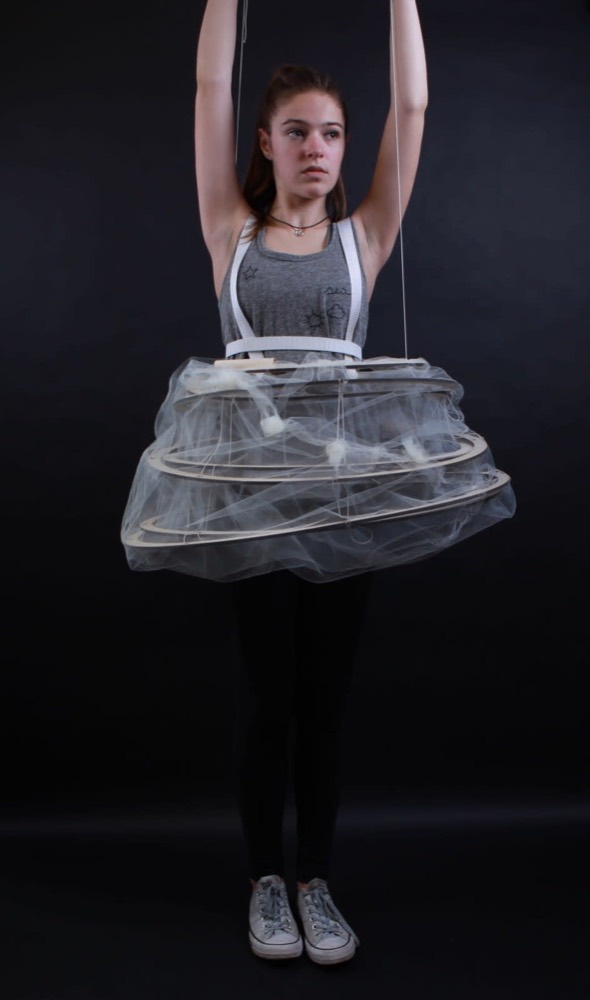
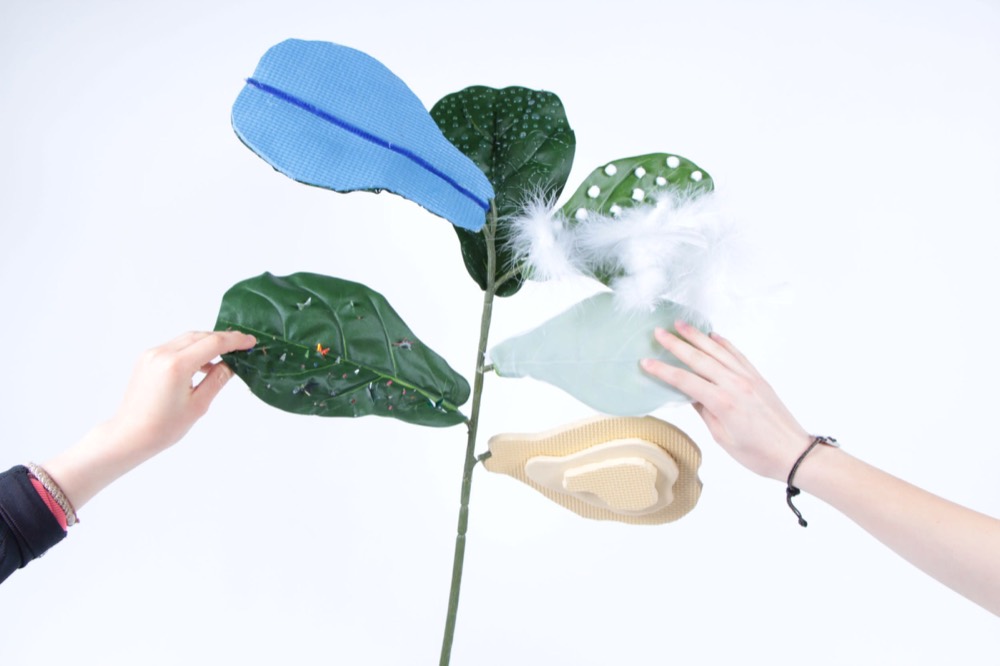
Nature is full of form, texture, and colour, from sea caterpillars to redwoods. Using biology as inspiration and digital design and rapid prototyping as the means, students made high-tech fashion for dancers, performers, musicians, and everyday people, with unusual materials, complex patterns, and robotics in the final pieces.

The Living Dress
Leaves in six materials

Reinvisioning Traditional Games: Brazil

NuVu, Winter 2016 · with Tencent and UNESCO

With the gamemaker Tencent, which has digitized traditional and folk games collected with UNESCO for the public domain, students studied what traditional games imply about the world-view of the civilizations that made them, and how those civilizations used games to teach, then transformed traditional Brazilian games for a younger generation with current technology and pedagogy.

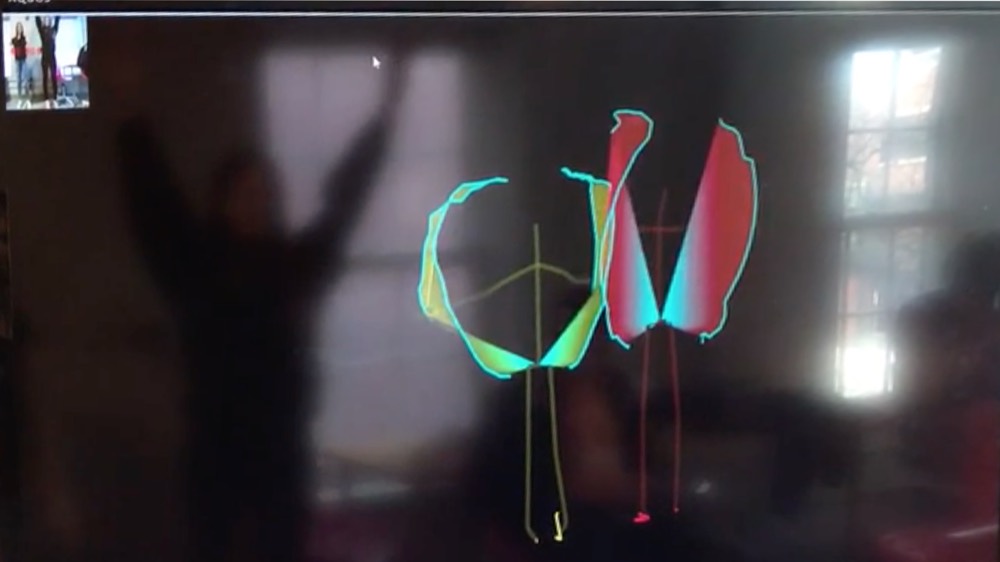
VR Interactive Capoeira

P.E.T. Patient Emotion Therapy

NuVu, Winter 2016

Fear and stress are linked to poorer outcomes for patients in surgery, procedures, clinic visits, and hospital stays. Students followed a 2D-to-3D iterative process to learn how to build emotion and feeling into objects, then made a functional companion device for an acute visit or a long hospital stay, an object that turns the patient's state toward calm through interaction.

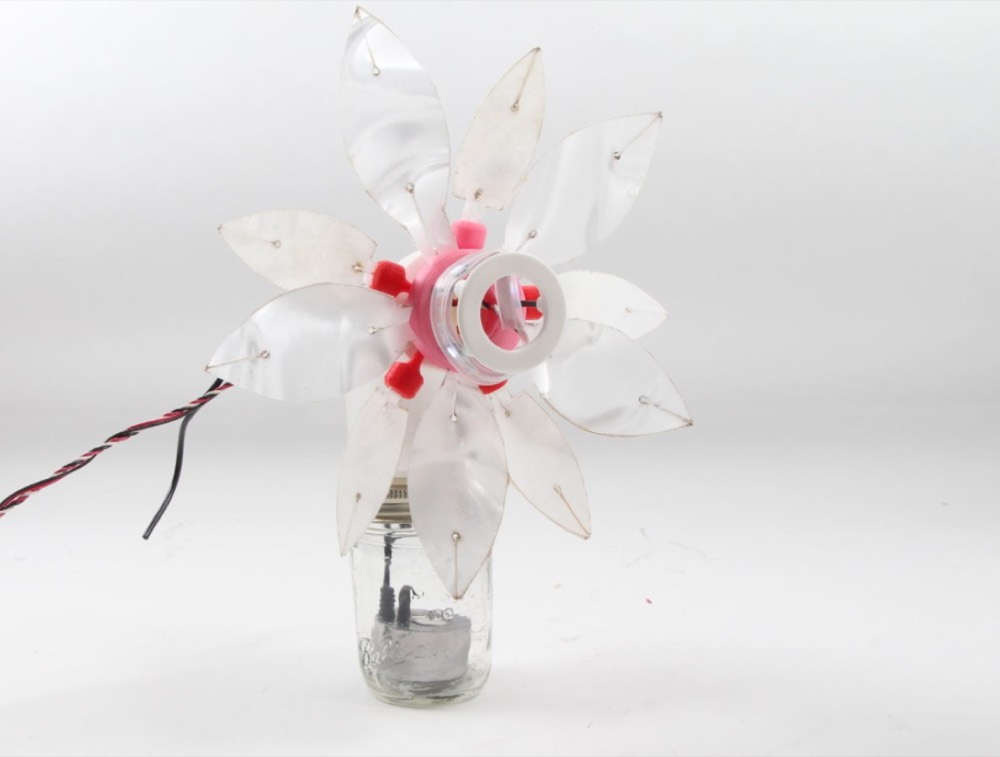
Kinetic flower

Easing Cerebral Palsy

NuVu, Winter 2014 (two studios) · with Instituto Nuevo Amanecer, Monterrey, and Javier Leal of Más Libertad Menos Barreras

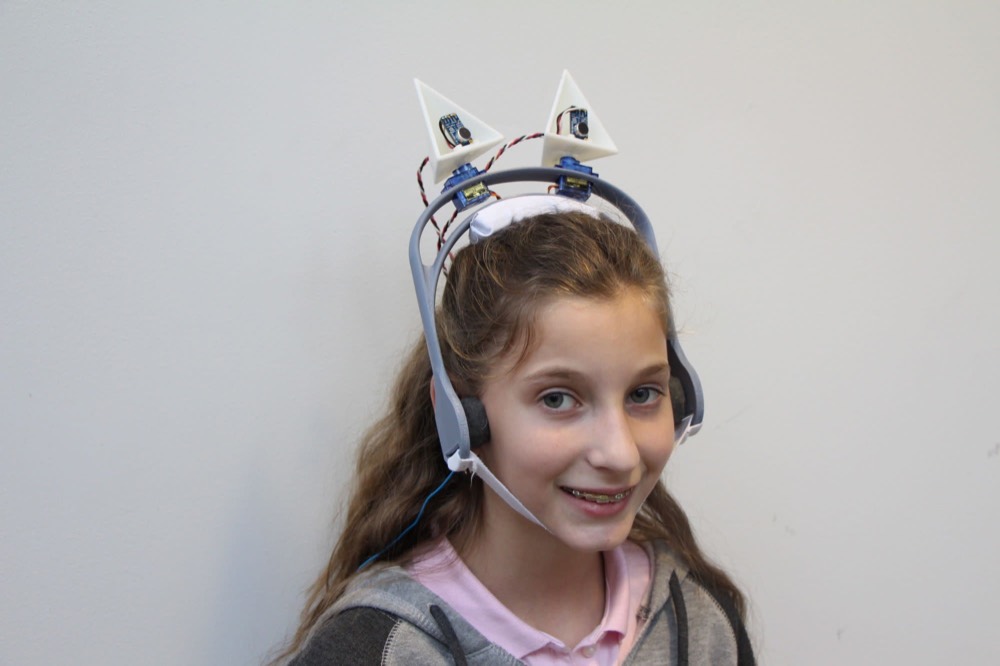
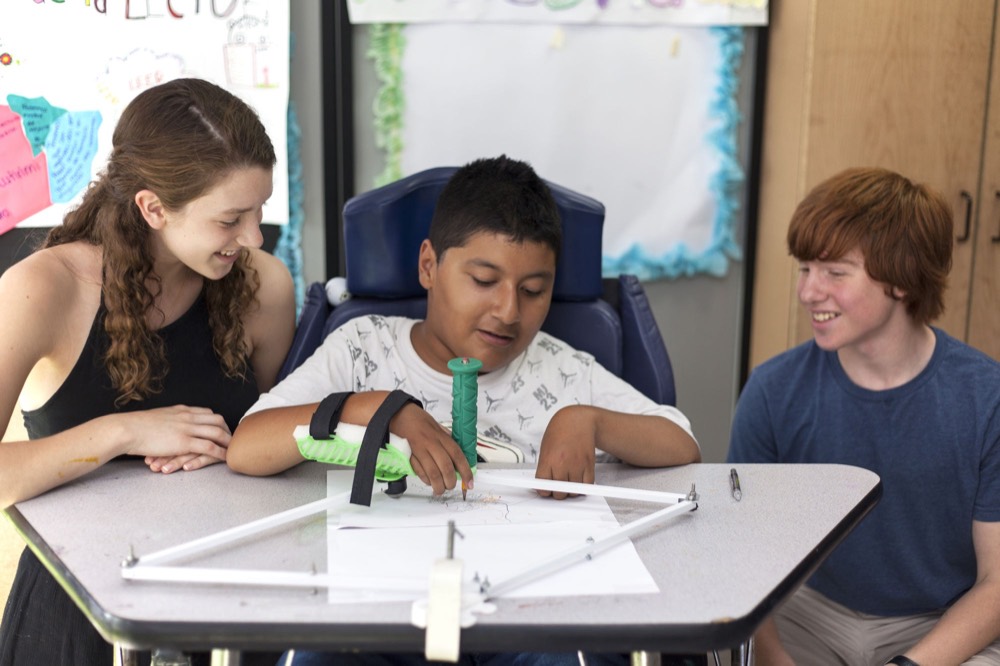
Students worked remotely with Instituto Nuevo Amanecer to create devices and wearables for children with cerebral palsy: two two-week studios full-time at NuVu, then a week in Monterrey working with the children directly, joined by students from Monterrey Tec. Three of the projects won Core77 Design Awards in the student category. My role was conceptual development for the studio and design consultation on the final projects.

Monterrey
The uncurated list, on NuVu →
Record
Teaching
Adjunct Professor of Design, Wentworth Institute of Technology, first year through thesis, 2010–2013 · Northeastern University, foundations studio and first-year seminar · NuVu Studio, Chief Academic Officer, 2012–2020, more than 200 studios and curricula · Teaching Assistant, Interrogative Design Workshop, MIT, with Krzysztof Wodiczko, 2003 · The Brearley School, 1998–99
Learning design
ARCK Boston, Managing Director, 2020–2021 · Citizen Schools, Director of Learning Design, 2021–2025
Mentorship and advising
NuVu college counseling, about 65 institutions, 100% acceptance · NCARB mentor
Speaking
TEXPO keynote on design education, Northeastern University, 2018
Juries
Harvard Graduate School of Design · MIT · RISD · Northeastern · Wentworth · Boston Architectural Center · Universitat Politècnica de Catalunya
Recognition
Alpha Rho Chi Medal · 330,000+ views on the instructional videos